

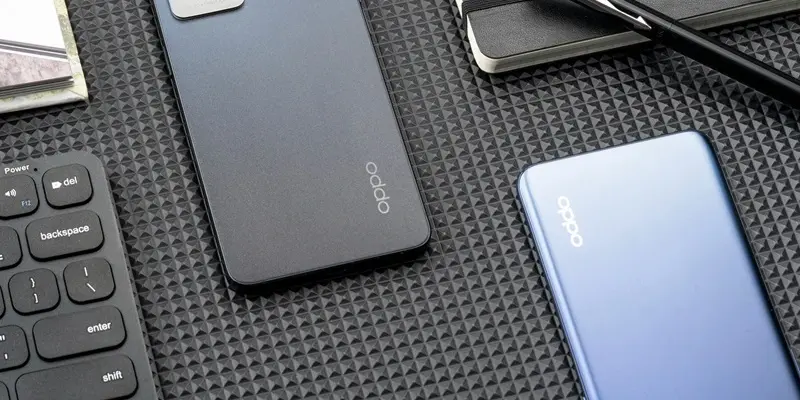
Images of Oppo’s yet-to-be-released Find N5 foldable phone have stirred the tech community with whispers of it being the world’s thinnest foldable device. The excitement heightens as Oppo executives Zhou Yibao and Pete Lau recently leaked images of the device, which exhibit its impressive slimness when compared side-by-side with the iPhone 16 Pro, a few coins, and even a stack of credit cards. This bold claim has piqued interest, raising anticipation for a thorough look at its features and overall capabilities. But does the Find N5 stand to be just the thinnest, or does it promise power to match?
Design and Display Innovation
The Find N5’s remarkable thinness is not just a point of bragging rights; it represents a significant feat in foldable phone design. In a market where foldables are often critiqued for their bulk, achieving such slimness while still embedding powerful hardware is a game changer. With foldables like Samsung’s Galaxy Z Fold series already making strides, Oppo’s apparent focus on a lightweight, portable design could provide them with a competitive edge. Images from the leaks show the device fitting snugly in scenarios where everyday items are used for size comparison. This visual confirmation helps consumers envision the ease of carrying such a device seamlessly in pockets and bags without considerable weight or bulk.
However, slimness does not come without its challenges. Maintaining durability while ensuring a hinge mechanism is robust enough to withstand repeated folding and unfolding motions requires advanced engineering. The Find N5 will need to reassure prospective buyers that its svelte design won’t compromise durability. The device’s potential delicacy might raise concerns, but Oppo’s engineering acumen often surprises tech enthusiasts. As such, their ability to blend form and function will be crucial in this competitive landscape.
Performance and Camera Capabilities
Despite the compact form factor, the Find N5 is expected to house substantial hardware, indicating that it aims to be more than just visually appealing. Recent Geekbench leaks showed a device with the model number OPPO PK#10, which is believed to be the Find N5. Impressively, it is set to feature a Snapdragon 8 Lite processor and a whopping 16GB of RAM. Those specs scored 3,083 points in single-core and 8,865 in multi-core tests. What stands out is that these impressive scores were achieved even with one core of the processor not functioning, hinting at robust performance potential.
One of the highlights has to be the exceptional three-camera setup. It is important to note that there is a substantial camera bump at the rear, presumably housing a 50-megapixel main sensor. This setup should cater to photography enthusiasts, signaling that Oppo does not plan on sacrificing camera quality for the sake of a thinner profile. Camera performance has often been a deciding factor for many smartphone users, and an advanced camera system will certainly enhance Find N5’s allure in the foldable market.
Launch Anticipation and Market Impact
Images of Oppo’s upcoming Find N5 foldable phone have ignited discussions across the tech world, with many buzzing about its potential to be the thinnest foldable device globally. This growing anticipation was fueled by recently leaked images shared by Oppo executives Zhou Yibao and Pete Lau. These photos showcase the device’s remarkable slimness when compared to everyday items like the iPhone 16 Pro, loose coins, and even a stack of credit cards. Such a bold claim has significantly piqued interest, leading many to eagerly await a comprehensive examination of its design, features, and overall performance. The central question on everyone’s mind: will the Find N5 only dazzle with its slim profile, or does it pack sufficient power to compete with other top-tier foldable devices? The tech community is keenly observing, wondering if Oppo’s latest innovation can strike a balance between sleek design and high performance, or if it will simply remain a conversation piece for its thinness alone.