

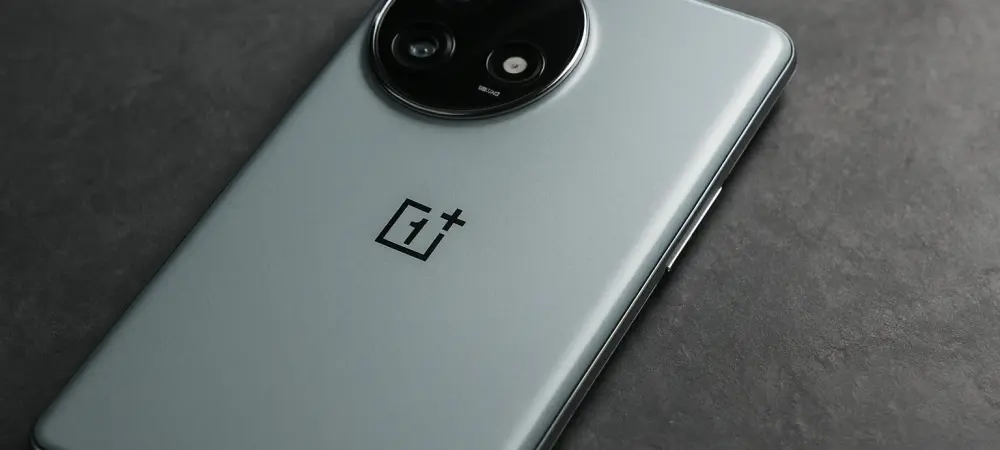
The relentless annual cycle of smartphone releases has conditioned consumers to expect subtle refinements rather than revolutionary leaps forward, creating a landscape where genuine innovation often feels stagnant. Against this backdrop of incremental updates, the newly announced OnePlus Turbo 6 series arrives not as a gentle step but as a potential tremor, challenging the industry’s definition of a flagship by prioritizing extreme endurance and raw, specialized power over minor aesthetic tweaks.
When Good Enough Stopped Being Enough
For several years, the smartphone market has operated on a predictable rhythm of marginal improvements. A slightly faster processor, a minor camera sensor upgrade, or a fractional increase in screen brightness have become the standard bearers of a “new” device. This has left many users questioning the value of upgrading annually, as the tangible benefits become increasingly difficult to discern from one generation to the next. OnePlus appears to be directly confronting this sentiment with a strategy centered on overwhelming specifications in key areas.
The New Battleground for Smartphone Supremacy
Consumer priorities are shifting. A growing segment of the market now demands performance that rivals top-tier flagships but without the associated premium price tag. In this fiercely competitive space, standout features are becoming the crucial differentiators. It is no longer enough to be fast; a device must now offer specialized advantages, whether through hyper-responsive gaming controls for a competitive edge, all-weather usability that inspires confidence, or multi-day battery life that removes charging anxiety from the equation.
A Tale of Two Turbos Unpacking the New Lineup
The premium OnePlus Turbo 6 is built around a stunning “Oriental Screen,” a high-end BOE panel featuring a blistering 165Hz refresh rate, 1,800 nits of peak brightness, and ProXDR support. Powered by a flagship Snapdragon 8 series chipset, it is engineered for an elite media consumption experience. Advanced technologies like Rain Touch and Glove Touch ensure the display remains functional even in challenging conditions, making it a uniquely versatile powerhouse. In contrast, the OnePlus Turbo 6V is a purpose-built gaming champion. It combines the efficient Snapdragon 7s Gen 4 chipset with a sophisticated Glacier Cooling System and a Lingxi Touch Chip to deliver a stable, ultra-responsive gaming session. Its 144Hz display provides the fluid motion competitive gamers demand, while the confirmation of running Android 16-based ColorOS 16 out of the box signals a commitment to future-proofed software. Both models share an uncompromising core, featuring a colossal 9,000mAh battery and an unprecedented combination of IP66, IP68, IP69, and IP69K ratings for ultimate protection against dust and high-pressure water.
Expert Analysis on This Game-Changing Approach
The durability specifications alone have captured the industry’s attention. A tech durability expert would note that achieving an IP69K rating, a standard typically reserved for industrial equipment, on a consumer device is a landmark achievement, suggesting resilience far beyond accidental spills. Likewise, display analysts point out that the Turbo 6’s screen specifications are formidable. The 165Hz refresh rate combined with high peak brightness and ProXDR creates a visual experience that rivals dedicated monitors. Early reports from the device’s initial launch in China also praise the practical application of its technology, with users describing the Rain Touch feature as remarkably effective for navigating the interface with wet hands.
A Buyer’s Framework for Choosing a Co-Pilot
Choosing between the two models comes down to user priority. The OnePlus Turbo 6 is the clear choice for the uncompromising power user whose focus is on the absolute best media experience and top-tier processing for everyday tasks. Its cutting-edge display and flagship chipset are designed for those who want the best of everything. However, the OnePlus Turbo 6V is the specialized weapon for dedicated mobile gamers, where its enhanced cooling, optimized touch response, and high-refresh-rate screen provide a tangible competitive advantage. For adventurers or any user whose primary concern is longevity, either model stands as a top contender, offering battery life measured in days and durability built to withstand the elements.
The launch of the OnePlus Turbo 6 series signaled a clear departure from the incremental updates that had characterized the market. By prioritizing extreme endurance and targeted performance, OnePlus drew a new line in the sand for what constitutes a “powerhouse” device. It was a bold strategy that not only catered to specific user demands but also challenged competitors to rethink their own product roadmaps. For consumers, the standard for what a modern smartphone should deliver had been irrevocably raised.