

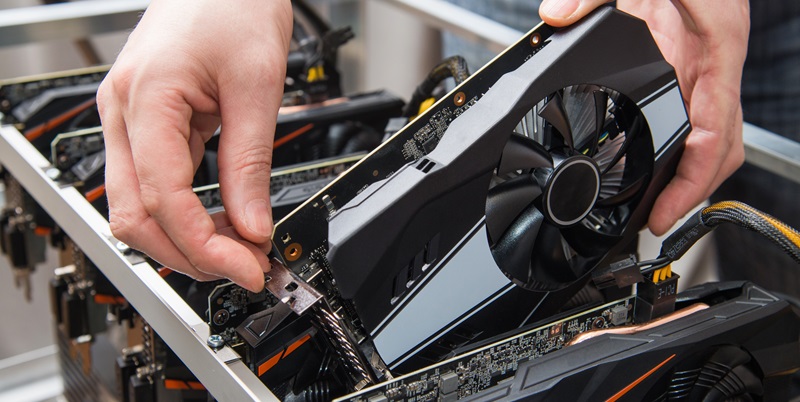
In the gaming realm, there’s a palpable sense of anticipation as Nvidia gears up to introduce its latest graphics marvel, the GeForce RTX 5090. This new entry is not just another incremental update; it’s rumored to shatter existing performance ceilings, leaving its powerful predecessor in the dust. As enthusiasts pore over every scrap of speculation, the GeForce RTX 5090 stands as the focal point of discussions, with many pondering its potential to revolutionize high-end gaming. Could this be the new benchmark for ultra-premium gaming experiences? The RTX 5090 is speculated to be a game-changer, offering cutting-edge performance that could redefine what gamers expect from top-tier graphics technology. The anticipation builds as the community eagerly awaits confirmation and details of this next-gen graphics behemoth’s capabilities.
Unprecedented Performance Leap
A leap in gaming technology could be imminent if the whispers around Nvidia’s RTX 5090 come to fruition. The speculative figures are nothing short of breathtaking—a rumored 70% increase in performance over the RTX 4090 is making waves among tech enthusiasts. Should these numbers hold true, the raw power of the RTX 5090 would demolish existing 4K gaming barriers, making ultra-high-definition gaming with maxed-out settings the new standard for the gaming elite. The industry is bracing for not just evolutionary, but revolutionary change, with the RTX 5090 at the forefront.
Enticing for gamers is the reported specification sheet of the RTX 5090. Talk has it boasting a monumental 192 streaming multiprocessors, equating to an unprecedented 24,576 CUDA cores. Combined with 192 ray tracing cores and a colossal 768 tensor cores, such a configuration would not just push the envelope—it would tear it apart. This boosts not only gaming but also applications in demanding pursuits such as 3D rendering and complex scientific computations, potentially placing the RTX 5090 as the crown jewel in workstation GPUs.
A Costly Affair
The RTX 5090 graphics card is expected to be a powerhouse with unrivaled capabilities, but it comes with a hefty price that could range from $2,000 to $2,500. This steep cost might be off-putting for many gamers, creating a significant financial hurdle. This high-end card’s pricing will likely set the tone for Nvidia’s entire RTX 5000 series, positioning the company at the top of the market, especially as AMD seems less focused on the premium GPU sector.
Although the top-of-the-line RTX 5090 will be expensive, Nvidia is likely to offer alternatives like an RTX 5080 or an RTX 5050 Ti for those seeking more affordable options. Despite the cost, Nvidia’s pricing strategy shows their confidence in their leading-edge technology and market dominance and aligns with their ambitions to further penetrate the AI industry as well as the gaming market.
Strategic Moves Beyond Gaming
The unrelenting stride of Nvidia towards AI applications could manifest prominently with the RTX 5090. Industry insiders suggest that fully enabled dies may be reserved primarily for AI rather than gaming. This highlights Nvidia’s focus on diversification, solidifying its footprint in the lucrative AI market while continuing to cater to its gaming base. As AI and machine learning workloads surge, the capability of the RTX 5090 could provide Nvidia with a competitive edge unmatched in terms of computational prowess.
Nvidia’s potential pivot toward AI does not mean a withdrawal from the gaming industry but a recalibration of their strategic approach. The scarcity of fully unlocked dies for gamers signifies that Nvidia is structuring its inventory in alignment with broader company goals, including its position in the graphics card market. This maneuvering by Nvidia might raise concerns among gaming purists but undoubtedly positions the company advantageously across multiple high-performance computing sectors.