

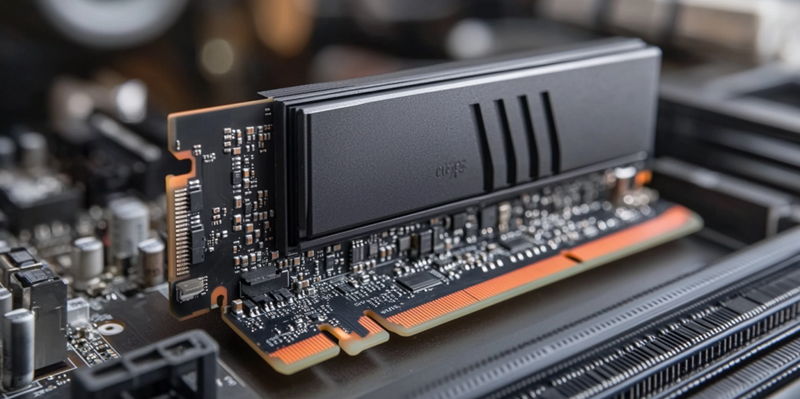
The KLEVV Genuine G560 2 TB PCIe 5.0 NVMe SSD has emerged as a significant player in the high-speed storage market. With the introduction of PCIe Gen5 NVMe SSDs in early 2023, the landscape of storage solutions has evolved rapidly, offering unprecedented read and write speeds. The KLEVV Genuine G560 SSD, with its impressive specifications and performance metrics, aims to set a new standard in this competitive segment. This advancement in storage solutions marks a new era for enthusiasts and professionals who demand peak performance from their systems.
Introduction to PCIe Gen5 NVMe SSDs
Evolution of SSD Technology
The advent of PCIe Gen5 NVMe SSDs marked a substantial leap in storage technology. Initial offerings in this category provided read and write speeds up to 10,000 MB/s, but the KLEVV Genuine G560 SSD pushes these boundaries further with sequential read speeds up to 14,000 MB/s and write speeds up to 12,000 MB/s. This progression highlights the maturation of Gen5 SSD technology and its increasing accessibility through mainstream AMD and Intel motherboards.
This leap in performance is attributed to significant advancements in NAND flash technology and PCIe bandwidth. The transition from Gen4 to Gen5 has essentially doubled the potential throughput, making tasks such as data transfer, gaming, and content creation much faster and more efficient. The impact of this evolution is notable in various fields, including tech-heavy industries requiring rapid data processing and seamless multitasking capabilities.
KLEVV’s Entry into the High-Speed SSD Market
KLEVV, a rapidly growing SSD manufacturer, showcased its Genuine G560 SSD at Computex 2024. The G560 is part of KLEVV’s new "Genuine" Gen5 SSD series, built on the NVMe SSD form factor. These SSDs employ the latest Micron 232-layer TLC 3D NAND flash, supporting capacities up to 4 TB and enhancing performance, effectively doubling that of previous Gen4 drives. The series also adheres to Microsoft’s DirectStorage API, ensuring compatibility with the latest technology standards.
KLEVV’s strategic entry into the fast-evolving SSD market with the G560 series signifies its commitment to pushing the boundaries of storage technology. By incorporating cutting-edge components and adhering to industry standards, KLEVV aims to deliver a product that not only meets but exceeds user expectations. This ambition is reflected in the high performance, reliability, and future-proofing capabilities integrated into the G560 series, making it a noteworthy contender against established brands.
Key Features of the KLEVV Genuine G560 SSD
Advanced Interface and Heatsink Design
The KLEVV Genuine G560 SSD features a PCIe Gen5x4 interface and a futuristic Duotone Aluminum Heatsink. The embedded DRAM Cache SSD, S.M.A.R.T. Condition Monitoring, and capacities reaching up to 4TB are standout features. The intelligent SLC Caching Technology and robust AES 256-bit Encryption further enhance its appeal, ensuring data integrity and security while maintaining peak performance.
The design of the heatsink is crucial in maintaining the SSD’s performance and longevity. The large rugged aluminum heatsink is engineered to manage heat efficiently, which is vital when dealing with high data transfer rates that could otherwise cause the drive to overheat and throttle performance. This focus on thermal management ensures that users can rely on consistent performance even during intensive tasks like gaming or large-scale data transfers.
Phison E26 Gen5 Controller
An essential feature integral to the SSD’s performance is its Phison E26 Gen5 controller, a popular choice in high-end Gen5 SSDs. The controller aids in achieving the high sequential read/write speeds alongside maintaining peak performance without thermal throttling, thanks to the large heatsink design. The heatsink, composed of rugged aluminum, is designed to minimize thermal buildup significantly.
The Phison E26 controller not only enables impressive read and write speeds but also supports advanced features such as dynamic SLC caching and end-to-end data path protection. These features contribute to the drive’s reliability and efficiency, ensuring that it can handle a wide range of workloads with ease. The controller’s role in optimizing performance while managing thermal output is a testament to the sophisticated engineering behind the G560 SSD.
Physical Specifications and Packaging
NVMe 2.0 PCIe Gen 5 x4 Interface
The physical specifications of the KLEVV Genuine G560 SSD include an NVMe 2.0 PCIe Gen 5 x4 interface in the M.2 2280 form factor. Capacities are available in increments of 1 TB, 2 TB, and up to 4 TB. The choice of Micron’s 3D TLC NAND flash ensures large storage volumes and top performance. Additionally, the inclusion of 8 GB LPDDR4 cache (utilizing 2GB of DDR4-2400 modules) helps in buffering data efficiently.
The combination of the NVMe 2.0 interface and the Micron 3D TLC NAND enables the drive to achieve its high-speed specifications. The M.2 2280 form factor is widely compatible with modern motherboards, ensuring easy integration into current high-end systems. The substantial LPDDR4 cache further enhances performance, particularly in scenarios requiring large data buffering and quick access to frequently used data.
Packaging and Heatsink Components
The product packaging includes detailed descriptions of the SSD’s features and performance metrics. Physically, the SSD comes pre-fitted with the heatsink which consists of two key components: a primary rugged aluminum heatsink block and a larger finned aluminum heatsink. These components ensure optimal heat dissipation and prevent thermal throttling during intensive use cases.
The attention to detail in the packaging highlights KLEVV’s commitment to providing a user-friendly experience. The pre-fitted heatsink simplifies installation, allowing users to quickly set up the drive without worrying about additional cooling solutions. This thoughtful design ensures that users can start benefiting from the high-speed performance of the G560 SSD immediately, making it a practical choice for those looking to upgrade their storage solutions.
Benchmarking and Performance Testing
Test Setup and Methodology
The article elaborates on the test setup used for benchmarking the SSD’s performance. The setup includes an Intel Core i9-13900K processor, MSI Z790 ACE motherboard equipped with a Gen 5.0 x4 NVMe slot, 32 GB of DDR5 memory from G.Skill (16 GB x 2), and an MSI GeForce RTX 4090 SUPRIM X GPU. This high-end system is ideal to rigorously evaluate the SSD’s performance under various conditions.
This setup reflects a premium environment tailored to push the SSD to its limits, ensuring that the test results are indicative of the drive’s true capabilities. The combination of top-tier components guarantees that any bottlenecks observed during testing are solely due to the SSD’s performance and not other system limitations. This meticulous approach allows for a clear and accurate assessment of the G560’s potential.
Benchmarking Tools and Tests
The testing methodology encompasses multiple benchmarking tools and tests, including:
- AS SSD Benchmark
- ATTO Disk Benchmark
- Crystal Disk Mark 7.0.0 x64
- File Transfer Speeds tests (using a 100 GB file)
- PCMark 10 Storage Benchmark
- Forspoken DirectStorage Benchmark
These varied tests provide a comprehensive view of the SSD’s performance across different scenarios. The AS SSD Benchmark focuses on measuring sequential and random read/write speeds, providing a clear indication of theoretical maximum speeds. The ATTO Disk Benchmark delves into performance across various file sizes, highlighting the drive’s versatility. Crystal Disk Mark offers additional insights into sequential and random performance metrics, ensuring a well-rounded evaluation.
Performance Results
Sequential Read and Write Speeds
In terms of performance, the KLEVV Genuine G560 2 TB SSD showcases impressive results across various benchmarks. It recorded peak sequential read speeds of 14,000 MB/s and write speeds of 12,000 MB/s. In AS SSD Benchmark, it performed exceptionally well, placing it among the top-tier Gen5 SSDs tested.
The impressive sequential read and write speeds confirm the drive’s capability to handle high data throughput efficiently. These metrics are particularly important for tasks such as loading large files, gaming, and video editing, where speed and reliability are crucial. The G560’s performance in AS SSD Benchmark places it among the elite in its category, underscoring its value proposition for consumers seeking high-performance storage solutions.
Real-World Application Performance
The KLEVV Genuine G560 2 TB PCIe 5.0 NVMe SSD has made a noteworthy impact in the high-speed storage market. The introduction of PCIe Gen5 NVMe SSDs in early 2023 marked a significant shift in storage technology, offering unprecedented read and write speeds. This advancement caters to both enthusiasts and professionals who require peak performance from their systems, setting a new standard in this competitive segment.
With a storage capacity of 2 TB, the KLEVV G560 promises ample space for various applications, whether for gaming, content creation, or intensive data processing. The PCIe 5.0 interface allows for blazing-fast data transfer rates, significantly reducing time for file transfers and application loads. This cutting-edge technology ensures that the SSD can handle demanding workloads with ease, providing users with a seamless and efficient experience.
Designed with durability in mind, the KLEVV G560 features advanced thermal management and error correction mechanisms, which contribute to its reliable performance. Additionally, its sleek design makes it a visually appealing addition to any high-performance setup.
In summary, the KLEVV Genuine G560 2 TB PCIe 5.0 NVMe SSD is a standout product in the rapidly evolving storage solutions market. It embodies the latest advancements in storage technology, offering exceptional speed, capacity, and reliability. As storage demands continue to grow, this SSD is poised to meet the needs of those who seek the ultimate in system performance.