

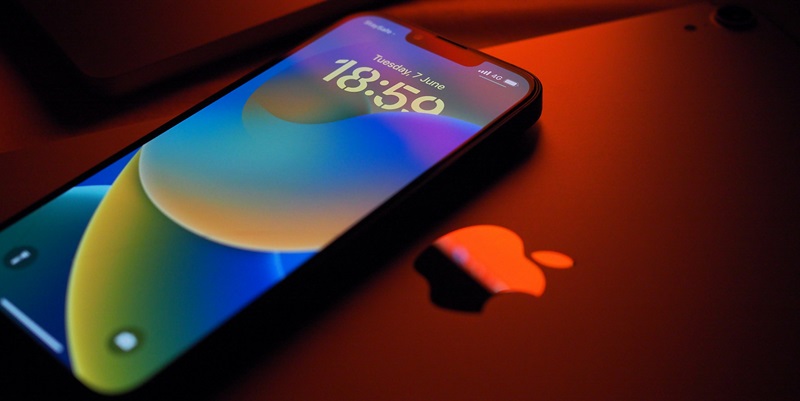
The tech world is buzzing with anticipation for the fall release of Apple’s iPhone 16 series, a leap forward in mobile technology. Apple’s latest endeavor is set to revolutionize the smartphone experience by integrating advanced artificial intelligence (AI) capabilities. These enhancements are not just incremental; they represent a transformative shift in the way users will engage with their devices.
While specifics are still under wraps, expectations are high for the iPhone 16 series to break new ground. The integration of AI is poised to offer more intuitive interactions, smarter assistance, and possibly redefine personal computing as we know it. It’s not merely about new features; it’s about fundamentally changing the human-phone relationship to be more seamless and efficient.
Apple’s commitment to pushing the boundaries of technology with the iPhone 16 promises to deliver an experience that’s not just updated but reimagined. As autumn approaches, the anticipation for this next-generation smartphone grows, signaling what could be the advent of a new era in mobile technology.
AI Enhancements Across the Board
Advanced Photography Features
The forthcoming iPhone models are poised to take mobile photography to the next level with a cutting-edge AI-driven camera system. These enhancements are not merely cosmetic. They promise to redefine the user experience by offering sophisticated photo quality akin to professional cameras. The new AI technology will be adept at adjusting to various lighting scenarios and subjects, fine-tuning settings instantaneously to capture the perfect shot.
Further, users will gain access to advanced editing tools right on their device, essentially negating the need for separate desktop editing software. This significant leap in camera intelligence will undoubtedly cement the iPhone’s status at the forefront of mobile photography innovation, establishing a benchmark that rivals will aspire to meet. With these iPhones, capturing stunning photos will become more intuitive and accessible, reflecting a confluence of technology and creativity.
Siri and Language Processing Innovations
The upcoming iPhone 16 series is set to revolutionize the capabilities of Apple’s virtual assistant, Siri, by incorporating cutting-edge machine learning innovations. These advancements aim to elevate Siri’s performance, delivering nuanced and contextually accurate interactions that rival natural human dialogue. Enhanced language processing technologies are anticipated as part of these improvements, which promise to refine transcription accuracy and foster more efficient real-time translation services. This leap in linguistic proficiency is poised to break down communication barriers, offering users around the globe a more seamless and inclusive experience. With these advancements, Siri stands on the cusp of a transformative era that will redefine user expectations and interactions with virtual assistants.
Enhanced Augmented Reality and Privacy Considerations
Augmented Reality Applications
The iPhone 16’s AR technology is gearing up to be a game-changer, with AI and the A18 chip pushing the boundaries of what’s possible. This potent combination enables a more fluid and captivating AR experience across various domains, be it gaming, learning, or professional uses. As the AR applications become more sophisticated, the virtual elements intertwined with our physical reality will appear more lifelike and interactive, enhancing user engagement. This leap in AR performance ushers in a plethora of possibilities that could transform how we interact with the digital world. With such an evolution in AR tech, the iPhone is on track to redefine mobile experiences, offering intuitive and hyper-realistic AR overlays that perfectly meld with our environment. The promise of these advancements is immense, suggesting a future where AR’s full potential is realized in ways we are yet to conceive.
Balancing AI and User Privacy
As AI becomes more intricate in the new iPhone series, Apple’s unwavering commitment to user privacy is tested anew. Integrating AI while upholding privacy standards is a complex challenge, but it’s one that Apple has consistently navigated with on-device processing to reduce reliance on cloud computing. The balance struck on the iPhone 16 will be closely watched as an indicator of how AI can evolve without compromising the private sanctuary that users expect from their personal devices.
Apple’s iPhone 16 is poised to signify more than just an incremental upgrade—it represents a visionary reimagining of the smartphone as an intelligent, adaptive partner in our digital lives. With its launch on the horizon, Apple aficionados and tech enthusiasts alike await with bated breath, ready to witness how the incorporation of AI will once again redefine the mobile experience.