

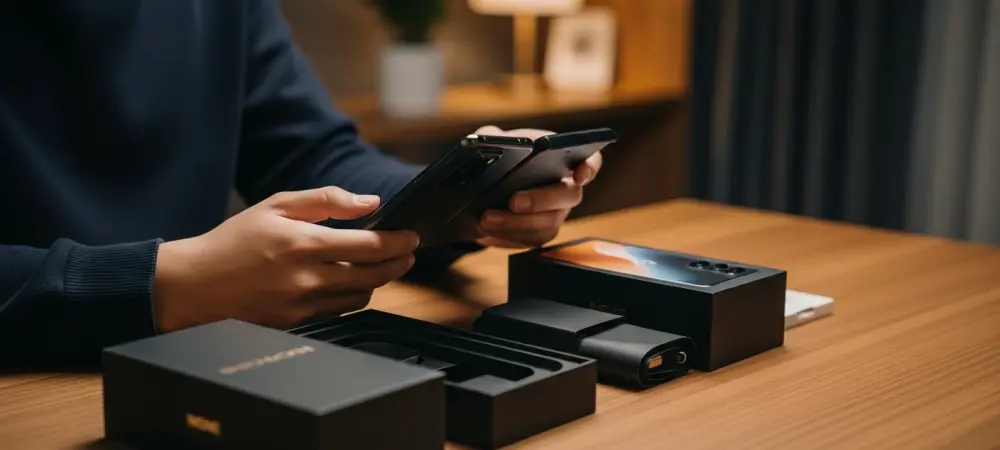
The annual unveiling of a new flagship smartphone often brings a wave of global anticipation, yet for many tech enthusiasts outside of China, this excitement is increasingly tempered by the reality of receiving a compromised version of the very same device. The rumored specifications for the international Xiaomi 17 Ultra have ignited this very debate, posing a critical question for prospective buyers: does paying a premium for a global variant mean settling for less? This situation highlights a growing pattern of regional differentiation that could reshape consumer expectations and brand loyalty in the competitive high-end market.
The Global Flagship Dilemma
A concerning trend is emerging where international versions of premium smartphones offer less value than their domestic counterparts. Leaks surrounding the Xiaomi 17 Ultra serve as the latest case study in this worrying development for global tech enthusiasts. The core of the issue lies in subtle yet significant downgrades for models sold outside of China, often accompanied by a higher price tag. This practice raises questions about brand strategy and whether international customers are being treated as a secondary market.
This strategic divergence is not new, but its application to a device positioned at the absolute peak of the market is notable. The Xiaomi 17 Ultra is being developed as a direct challenger to the anticipated Samsung Galaxy S26 Ultra, placing it in a high-stakes competitive landscape where every feature and price point is scrutinized. In this arena, even minor differences in battery capacity or cost can dramatically influence a device’s success and public perception, turning a potential champion into a questionable investment.
Deconstructing the Compromises
The most immediate concern for potential buyers is the sticker shock. Leaked information points to a staggering EUR 1,499 price tag for the 16GB/512GB global model. When contrasted with the expected lower price of the Chinese version, this creates a significant “global tax” that is difficult to justify, especially when the hardware is not identical. This pricing strategy places the device in direct competition with established players, making any perceived shortcomings all the more glaring.
Further fueling the debate is a reported discrepancy in battery capacity. The global variant is tipped to feature a 6,000mAh battery, a respectable size on its own. However, this is a notable 12% reduction from the rumored 6,800mAh cell in the Chinese model. For power users, this difference could translate into a tangible impact on daily usage and longevity, undermining one of the key selling points of an “Ultra” device. Adding to the list of divergences, the color palette for the international market will reportedly be limited to white, black, and green, omitting the distinct purple option available to domestic consumers.
The Unchanged High Performance Core
Despite the regional differences, the core performance hardware of the Xiaomi 17 Ultra is expected to remain a universal strength. All versions are rumored to be built around the next-generation Snapdragon 8 Elite Gen 5 chipset, ensuring top-tier processing power and efficiency. This formidable processor will drive a stunning 6.9-inch 1.5K 120Hz LTPO AMOLED display, promising a fluid and visually immersive user experience for everyone, regardless of region.
The device’s charging capabilities also appear to be consistent, with fast 90W wired and 50W wireless charging offering rapid power replenishment. Moreover, the highly anticipated Leica-branded camera system seems to be a key universal advantage. This powerful triple-camera array, featuring a 50MP primary sensor, a 50MP ultrawide lens, and a groundbreaking 200MP periscope telephoto lens, is designed to deliver exceptional photographic versatility. A premium 50MP selfie camera further solidifies its position as a top-tier imaging device across all markets.
A Potential Buyer’s Framework
For those considering the global Xiaomi 17 Ultra, the decision requires a careful assessment of priorities. The first step is to determine if the smaller battery is a deal-breaker. If all-day endurance under heavy use is a non-negotiable requirement, the 12% reduction in capacity compared to the Chinese model could be a significant deterrent. Prospective buyers must weigh their typical usage patterns against this hardware compromise.
The next step involves calculating the overall value proposition. Consumers must ask if the elite camera system, next-generation chipset, and premium display justify the high cost, especially in light of the reduced battery and higher price. Comparing these leaked specifications against upcoming competitors, such as the Samsung Galaxy S26 Ultra, will be crucial. Finally, the option of importing the Chinese model exists, but it comes with its own set of challenges, including software incompatibilities, warranty issues, and cellular band limitations that may not be worth the superior hardware.
The Verdict on Value
The evaluation of the global Xiaomi 17 Ultra presented a complex picture for international consumers. The device’s powerful core hardware, including its advanced chipset and impressive Leica camera system, established its credentials as a true flagship contender. This shared foundation promised a consistent high-performance experience across all regions. However, the analysis also highlighted significant compromises that tarnished its appeal outside of China. The combination of a higher price, a smaller battery, and fewer color options created a clear value disparity. The decision for a potential buyer ultimately rested on a personal calculation of whether the phone’s strengths outweighed its regional shortcomings, a dilemma that defined its place in the global market.