

Supporting up to 256GB of RAM across four DIMM slots allows this consumer-grade motherboard to bridge the gap between gaming rigs and professional content creation stations. The arrival of the Intel LGA 1851 socket has fundamentally altered expectations for mainstream computing, particularly with the introduction of the Core Ultra Series 2 processors. As the industry moves away from older architectures, this specific model from the TUF series establishes a new baseline for what a $219.99 motherboard should deliver. By offering flagship-level features without the exorbitant markups typically associated with premium enthusiast brands, it democratizes high-end computing for a broader demographic. This transition represents more than just a simple hardware refresh; it signifies a move toward a more integrated and capable ecosystem where stability and affordability are no longer mutually exclusive. Builders now have access to a platform that supports the massive computational demands of modern AI-driven applications and high-fidelity gaming.
Engineering for High-Performance Power Delivery
The backbone of any reliable system lies in its ability to manage electrical current under extreme stress, and the 16+1+2+1 power stage design addresses this requirement with clinical precision. Each stage is rated for 80 amperes, creating a theoretical limit of 1,280A that provides a massive safety margin for even the most demanding Arrow Lake processors. This electrical headroom is essential for maintaining system integrity during intense sessions of 3D rendering or complex simulations where sudden power spikes can lead to instability. By ensuring a steady flow of clean power to the CPU, the motherboard mitigates the risk of crashes and data corruption that often plague lesser components. This robust power delivery system is not merely for show; it acts as a primary insurance policy for hardware longevity, ensuring that the silicon operates within its optimal parameters regardless of the workload intensity. Consequently, the board remains a preferred choice for those who demand consistency.
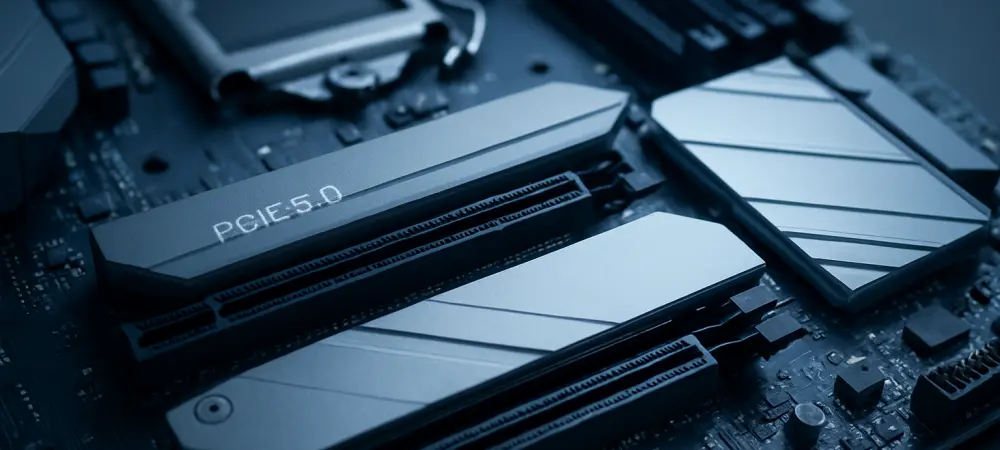
Managing the heat generated by such an advanced power delivery system requires a sophisticated thermal solution, which is why the enlarged VRM heatsinks play a critical role in the overall architecture. These cooling components are engineered with a larger surface area to dissipate thermal energy more efficiently, preventing the dreaded performance dips associated with thermal throttling. During sustained heavy operation, maintaining peak clock speeds is vital for productivity, and these heatsinks allow the system to run at full throttle without thermal limitations. This focus on heat management extends beyond the VRMs to include integrated cooling for M.2 storage slots, ensuring that the fastest drives do not lose speed during long file transfers. By prioritizing thermal stability through passive cooling designs, the motherboard avoids the noise and mechanical complexity of active fans while providing a silent yet effective thermal environment. This design choice highlights a commitment to building a durable foundation for long-term use.
Integrating Cutting-Edge Connectivity Standards
Future-proofing is a core philosophy behind the integration of PCIe 5.0 technology, which provides double the bandwidth of the previous standard to support the next wave of hardware. This high-speed interface is not just a luxury for the current year; it is a necessity for users planning to upgrade to next-generation graphics cards and ultra-fast NVMe storage solutions in 2027 and beyond. By eliminating potential data bottlenecks at the hardware level, the motherboard ensures that the rest of the system can operate at its maximum potential without being held back by outdated bus speeds. This increased bandwidth is particularly beneficial for data-intensive tasks such as high-resolution video editing and massive database management, where every millisecond of transfer speed contributes to overall efficiency. As storage technology continues to evolve toward higher read and write speeds, having a PCIe 5.0-ready slot ensures that the motherboard remains relevant and capable throughout its multi-year lifespan in a desktop rig.
Connectivity extends beyond internal lanes to encompass the latest standards in wireless and wired networking, specifically through the inclusion of WiFi 7 and 2.5G Ethernet. WiFi 7 represents a significant jump in wireless efficiency, offering lower latency and higher throughput that are crucial for lag-free online gaming and high-speed cloud synchronization. Complementing these networking features are the Thunderbolt 4 and 20Gbps USB ports, which transform the back I/O panel into a versatile docking station for a wide variety of external peripherals. Whether connecting professional-grade audio interfaces, high-speed external storage arrays, or multiple high-resolution displays, the motherboard provides the necessary throughput to handle multiple high-bandwidth connections simultaneously. This level of external connectivity ensures that the user is never limited by the number or speed of available ports, making it an ideal hub for a modern digital workspace. This integration reflects a deep understanding of the needs of today’s hyper-connected power users.
Strategic Design: Merging Performance and Practicality
The shift toward a more user-centric design is evident in the implementation of the Q-Design features, which simplify the physical assembly and maintenance of the PC. Innovations such as the tool-free M.2 installation mechanisms and the simplified PCIe slot release buttons significantly reduce the physical friction and complexity often encountered during a build. These features are particularly advantageous for those who frequently swap hardware or for first-time builders who may find traditional mounting screws and small plastic latches frustrating to navigate. By making the assembly process more intuitive, the design lowers the barrier to entry for high-end PC construction while maintaining the professional standards required for a reliable system. Furthermore, the support for overclocked DDR5 memory exceeding 9,066+ MT/s ensures that the hardware can keep pace with the fastest RAM modules on the market. This combination of physical accessibility and technical performance makes the board a versatile option for any builder.
Choosing a foundation for the LGA 1851 platform required a careful balance between cost, durability, and features, and the TUF series successfully navigated these competing demands. The motherboard provided the essential infrastructure for AI-ready builds, allowing users to leverage the integrated neural processing units of the latest Intel chips with ease. By focusing on the core necessities of the Z890 chipset, the design eliminated unnecessary aesthetic flourishes that often inflated the price of other product lines. This strategic positioning encouraged a broader adoption of the Arrow Lake architecture by providing a reliable and future-proof platform at a competitive price. Prospective builders were advised to pair this motherboard with high-performance DDR5 memory and adequate cooling to fully realize the benefits of the advanced power delivery and thermal systems. Moving forward, the emphasis on standardizing high-speed connectivity like WiFi 7 and PCIe 5.0 set a precedent for value-oriented boards. Investing in such a robust foundation ensured that systems remained capable for years.