

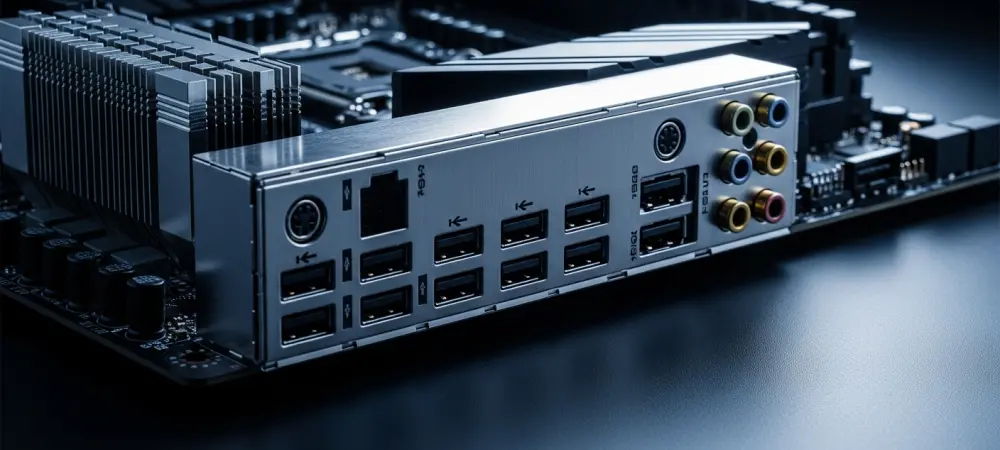
Selecting a motherboard for a high-performance build remains one of the most critical decisions an enthusiast can make, as this component serves as the nervous system for every other piece of hardware in the machine. The ASUS ROG Crosshair X870E Dark Hero arrives at a pivotal moment, specifically designed to harness the full potential of AMD’s Ryzen 9000 series processors. This board is not merely a component; it is a specialized platform that caters to those who demand the highest levels of performance, stability, and aesthetic refinement. By integrating advanced connectivity standards like Wi-Fi 7 and USB4, alongside sophisticated power delivery and cooling solutions, it seeks to justify its position at the top of the AM5 product stack. For builders looking to assemble a system that can handle both rigorous professional workloads and demanding modern gaming titles, understanding the capabilities of this flagship model is essential. The Dark Hero continues a legacy of excellence, offering a combination of hardware resilience and user-focused features that simplify the complexities of modern PC assembly and maintenance.
The Architecture: Understanding the X870E Chipset
The core of this motherboard is defined by the X870E chipset, where the “Extreme” designation highlights a dual-chipset architecture designed to maximize data throughput. Unlike mid-range options that may struggle with bandwidth limitations, this dual-chipset approach provides a significantly higher number of usable PCIe lanes, ensuring that multiple high-speed devices can operate simultaneously without performance degradation. This is particularly relevant for users who intend to utilize the latest generation of graphics cards alongside several high-speed storage drives. By providing a wider “pipeline” for data, the X870E ensures that the system remains responsive even under the heaviest multitasking scenarios. This architectural foundation is what allows the board to support a vast array of high-bandwidth ports on the rear I/O panel while still maintaining full speed for internal expansion slots, making it a cornerstone for future-proof computing.
Furthermore, the overall efficiency and feature set of the motherboard are intrinsically linked to the generation of the processor installed in the AM5 socket. While the board offers broad compatibility across several Ryzen families, unlocking its most advanced capabilities, such as full PCIe 5.0 support for both the primary graphics slot and the main storage bays, requires a Ryzen 7000 or 9000 series CPU. Users opting for entry-level or older processors may find that certain slots operate at reduced speeds or that some features are restricted based on the number of lanes provided by the CPU itself. This creates a tiered performance environment where the motherboard acts as a force multiplier for high-end silicon, rewarding those who pair it with flagship processors. Understanding these dependencies is crucial for builders to ensure they are getting the full value of the hardware and are not inadvertently creating bottlenecks within their internal data architecture.
Memory Performance: Pushing the Limits of DDR5
Memory management on the Dark Hero is engineered to handle the staggering speeds of modern DDR5 modules, providing a stable environment for both standard operation and aggressive overclocking. A key innovation included in this iteration is the refined signal routing, which minimizes electrical interference and allows for higher clock speeds with greater stability. The board supports specialized overclocking profiles that simplify the process of reaching the performance “sweet spot,” typically found around 6000MT/s to 6400MT/s for the current generation of Ryzen processors. This focus on memory optimization ensures that data-intensive tasks, such as high-resolution video rendering or complex scientific simulations, can proceed without the stuttering or instability often associated with high-speed RAM. For enthusiasts who enjoy fine-tuning their hardware, the BIOS provides granular control over every aspect of memory timing, allowing for a highly customized computing experience.
Beyond raw speed, the motherboard also addresses the physical and electrical challenges of high-frequency memory through enhanced slot durability and improved power delivery to the DIMM slots. This ensures that even when running at maximum capacity with all slots filled, the system remains rock-solid during long-duration workloads. The inclusion of specialized technologies like NitroPath DRAM helps in maintaining signal integrity, which is vital as memory speeds continue to climb through 2026 and beyond. By focusing on the synergy between the processor’s memory controller and the motherboard’s physical layout, the design team has created a platform that not only supports the fastest kits currently available but is also prepared for future advancements in memory technology. This level of preparation provides peace of mind for users who want a system that will remain competitive and capable throughout the entire lifecycle of the AM5 platform.
Aesthetic Refinement: The Stealth Design Language
The visual identity of the Dark Hero is a deliberate departure from the loud and often distracting aesthetic common in the gaming industry. It embraces a “stealth” philosophy, utilizing a monochromatic, matte black finish across its extensive array of heatsinks, armor plates, and shrouds. This sophisticated look is designed to blend seamlessly into a wide variety of build themes, making it an ideal choice for professional workstations or high-end gaming rigs where a more mature appearance is desired. The absence of bright colors or contrasting accents allows the physical textures of the board—such as the brushed metal surfaces and geometric patterns—to take center stage. This design choice reflects a broader trend toward minimalist hardware that emphasizes build quality and material selection over flashy gimmicks, catering to a demographic that values subtle elegance and professional presentation in their workspace.
Despite its understated appearance, the motherboard does not entirely eschew visual flair, incorporating a sophisticated lighting module known as the Polymo Lighting system on the I/O cover. This feature utilizes layers of micro-structural elements to create deep, textured lighting effects that appear three-dimensional rather than a simple flat glow. The lighting is fully customizable through software, allowing users to sync the board with the rest of their internal lighting ecosystem or turn it off entirely for a complete blackout look. Additionally, the board provides multiple headers for external lighting strips, ensuring that users have the flexibility to add illumination exactly where they want it. This balance between a dark, professional base and customizable lighting highlights the board’s versatility, proving that high-performance hardware can be visually stunning without being overbearing or clashing with other components in a modern build.
Thermal Engineering: Managing Power and Heat
To maintain stability under the most demanding conditions, the Dark Hero employs a massive power delivery system that ensures a clean and consistent flow of energy to the processor. This is achieved through a high-count power stage configuration that can handle the massive current draws required by flagship CPUs during intense overclocking or sustained heavy workloads. The reliability of this system is backed by premium components, including high-durability capacitors and alloy chokes, which are designed to operate efficiently even at high temperatures. By over-engineering the power delivery, the motherboard reduces the risk of voltage fluctuations that could lead to system crashes or hardware damage. This focus on electrical integrity is a primary reason why professional overclockers and high-end builders consistently choose flagship boards for their most critical projects, knowing the foundation is built for resilience.
Effective heat management is the necessary partner to powerful energy delivery, and this board utilizes a sophisticated cooling array to keep temperatures in check. Massive metal heatsinks cover the power components, connected by a dedicated heatpipe that facilitates rapid thermal transfer across a larger surface area. This passive cooling approach is highly effective and avoids the need for small, high-pitched VRM fans that can fail or become noisy over time, ensuring a silent and reliable operation even during extended gaming or rendering sessions. Furthermore, the motherboard features an innovative vapor chamber heatsink for the primary M.2 storage slot, which is a significant upgrade over traditional solid metal blocks. This vapor chamber provides much faster heat dissipation, preventing the latest Gen5 storage drives from reaching thermal throttling limits. This comprehensive approach to cooling ensures that every critical component can maintain its peak performance indefinitely, regardless of the ambient environment.
Storage Capabilities: Speed and Ease of Access
The storage configuration on the Dark Hero is designed for users who require both extreme speed and significant capacity, offering a total of five M.2 slots for solid-state drives. A highlight of this setup is the primary slot’s support for the latest PCIe 5.0 standard, providing the massive bandwidth necessary for ultra-fast data transfers and near-instant loading times. The remaining slots provide ample room for secondary storage, allowing for massive libraries of games, media, or professional project files to be kept on high-speed internal storage rather than slower external drives. This flexibility makes the motherboard an excellent choice for content creators who deal with large raw video files and gamers who want to take advantage of DirectStorage technology. By providing so many high-speed slots, the board eliminates the need for compromise, allowing users to build a storage sub-system that is as fast as it is expansive.
In addition to raw performance, significant attention has been paid to the physical process of installing and upgrading storage drives. The motherboard features tool-less M.2 covers and specialized locking mechanisms that eliminate the need for tiny, easily lost screws. This “Q-Latch” and “Q-Release” system allows users to secure their drives or remove the large heatsink covers with simple finger-operated clips, greatly reducing the frustration of building in a cramped chassis. This focus on accessibility is a welcome quality-of-life improvement for both professional system integrators and DIY enthusiasts who frequently swap hardware. By streamlining the physical assembly process, the board makes high-speed storage more accessible and manageable, reinforcing the idea that premium hardware should not only perform better but also be easier to work with than its mid-range counterparts.
Networking Excellence: Connectivity for the Modern Era
Networking is another area where this motherboard sets itself apart, offering connectivity options that rival those found on dedicated workstation hardware. It features a dual-Ethernet configuration, including a 10Gb port and a 5Gb port, providing the high-speed wired connections necessary for moving massive files across a local network or to a high-performance NAS. In addition to the wired options, the board is fully equipped for the latest wireless standards, supporting Wi-Fi 7. This provides faster speeds, lower latency, and better reliability in crowded wireless environments, ensuring that gamers and streamers can enjoy a stable connection even without a wired cable. The included directional antenna further optimizes signal strength, allowing users to fine-tune their wireless reception for the best possible experience.
The rear I/O panel is equally impressive, dominated by two USB4 ports that offer up to 40Gbps of bandwidth each, supporting high-speed peripherals and external displays. These ports represent the pinnacle of current connectivity standards, allowing for the connection of advanced docking stations and external storage arrays that require massive throughput. For front-panel connectivity, the board includes a header that supports 60W USB Power Delivery, enabling the rapid charging of smartphones, tablets, and even some laptops directly from the PC case. It is important to note that this high-speed charging feature requires an extra PCIe power cable to be connected to the motherboard, a small requirement that reflects the significant power being moved. This comprehensive suite of internal and external connectivity ensures that the Dark Hero can serve as the central hub for a complex modern ecosystem of devices, providing the bandwidth and power needed for any professional or enthusiast task.
Builder Convenience: The Q-Design Ecosystem
One of the most significant advantages of choosing a premium board like the Dark Hero is the inclusion of numerous features designed to simplify the PC building and troubleshooting process. The “Q-Design” ecosystem includes the Q-Release Slim mechanism for the primary PCIe slot, which allows the graphics card to be removed by simply pulling it from the front rather than having to reach for a hidden latch behind the card. This is a major improvement for systems using large, modern GPUs that often block access to the motherboard’s release tab. Additionally, the Q-Antenna for the Wi-Fi module uses a simple push-to-fit connection instead of traditional screw-on terminals, making the setup process faster and less prone to cross-threading. These small but meaningful innovations reflect a deep understanding of the challenges faced by builders and a commitment to making the assembly process as smooth as possible.
Troubleshooting is also addressed through a suite of on-board tools that provide immediate feedback if a problem arises during the boot process. A dedicated Q-Code LED display shows specific hexadecimal error codes, allowing users to pinpoint exactly which component—whether it be the CPU, memory, or storage—is causing a failure. This is complemented by a set of physical buttons on the motherboard, including Power, Reset, and a “FlexKey” that can be customized to perform various functions like toggling lighting or entering the BIOS. For those who enjoy fine-tuning their systems, these physical controls are invaluable, as they allow for quick testing and recovery without needing to bridge pins with a screwdriver. By integrating these professional-grade diagnostic and convenience features, the board ensures that users can spend less time fixing their computers and more time using them for work or play, enhancing the overall ownership experience.
Audio Fidelity and Advanced Component Integration
The internal audio system of the Dark Hero is engineered to provide a high-fidelity listening experience that rivals dedicated sound cards, making it an excellent choice for both gamers and media professionals. It utilizes the SupremeFX ALC4082 codec paired with a high-quality ESS ES9219 digital-to-analog converter, which ensures clean, powerful sound with minimal distortion. This setup is capable of driving high-impedance headphones, automatically sensing the load and adjusting the output to provide the best possible frequency response. For gamers, this means more immersive soundscapes and better positional awareness, while for music lovers, it provides a level of detail and clarity that is often missing from standard integrated audio solutions. The physical isolation of the audio components from the rest of the motherboard further reduces electromagnetic interference, ensuring that the signal remains pure and free from background hiss or noise.
Beyond hardware, the audio system is supported by a suite of software enhancements that allow for deep customization of the sound profile to suit different tasks. Whether it is emphasizing footsteps in a competitive shooter or creating a balanced soundstage for classical music, the board provides the tools necessary to tailor the output to the user’s preference. The microphone input also benefits from advanced noise-canceling technology, which helps clear up voice communication by filtering out background noises like keyboard clicks or fan whirring. This focus on audio quality is another example of how the Dark Hero attempts to be a complete, all-in-one solution for the enthusiast, eliminating the need for many external add-ons. By providing professional-grade sound directly from the motherboard, it simplifies the desk setup and ensures that every aspect of the user’s sensory experience is of the highest possible caliber.
Technical Trade-Offs: Navigating Lane Sharing
Despite its extensive feature set and high bandwidth, the Dark Hero is still subject to the physical limitations of the AM5 platform, which requires careful management of available PCIe lanes. When multiple high-speed devices are connected, the motherboard must share the bandwidth provided by the CPU and chipset, which can lead to certain trade-offs that users need to understand. For instance, using the second PCIe slot for a secondary graphics card or high-speed expansion card often results in the primary slot dropping from sixteen lanes down to eight. Similarly, some of the M.2 slots and the USB4 controllers may share the same data paths, meaning that using the fastest settings for one might reduce the available bandwidth for the other. These constraints are common in high-end motherboards, but they require builders to plan their hardware configuration carefully to ensure that their most important components are receiving the priority they need for peak performance.
Understanding these technical nuances is essential for anyone looking to fully populate all five M.2 slots and every rear USB port. If a user installs a PCIe 5.0 NVMe drive in a slot that shares lanes with the USB4 controller, they might see a reduction in external transfer speeds when both are being used heavily. The motherboard manual provides detailed diagrams of how these lanes are allocated, and consulting these before purchasing additional storage or peripherals is a wise move for any serious builder. While these limitations might seem like a drawback, they are a necessary consequence of the current state of consumer hardware architecture, where the demand for high-speed connectivity often exceeds the number of lanes provided by the processor. By being transparent about these trade-offs and providing the tools to manage them, the board allows enthusiasts to make informed decisions about their system’s internal balance.
Strategic Deployment: Practical Steps for Builders
The ASUS ROG Crosshair X870E Dark Hero proved to be a formidable foundation for any high-end PC build, offering a comprehensive suite of features that addressed both performance and user experience. For those who decided to invest in this flagship platform, the first step involved ensuring that the chosen processor was a Ryzen 9000 series model to fully unlock the PCIe 5.0 capabilities that defined the board’s value proposition. It was also critical to select a power supply with an additional PCIe cable to support the front-panel 60W charging feature, as this was often overlooked during the initial assembly phase. Planning the storage layout was another essential task, as understanding which slots shared lanes with the USB4 ports allowed users to avoid unexpected bandwidth bottlenecks. These proactive steps ensured that the motherboard operated at its peak efficiency from the moment the system was first powered on. Looking back, the adoption of this board served as a strategic move for builders who wanted to maximize the longevity of the AM5 platform through 2027 and the following years. By prioritizing the latest standards in networking and storage, the Dark Hero remained relevant even as newer peripherals and faster SSDs entered the market. The investment in superior thermal management and robust power delivery paid dividends by allowing the system to remain stable during heatwaves or during the installation of more power-hungry future components. For enthusiasts, the lesson was clear: choosing a high-quality motherboard was not just about the features used on day one, but about providing the headroom necessary for future growth. Consequently, the Dark Hero established itself as a benchmark for what a premium enthusiast board should provide, balancing extreme hardware capability with the thoughtful design elements that made high-end PC building a more rewarding and accessible endeavor.