

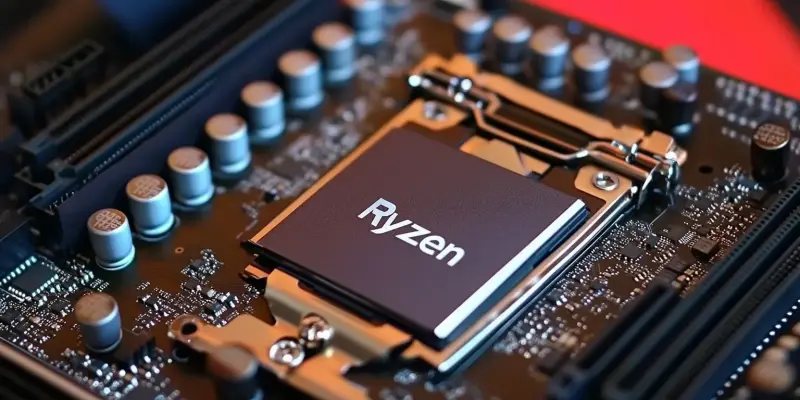
In an era where technology advances at an unprecedented pace, the AMD Ryzen AI 7 350 emerges as a notable contender in the affordable laptop segment. This 8-core/16-thread Accelerated Processing Unit (APU) is built on the Zen 5 architecture and aims to provide a balance between performance and cost-efficiency. With a base clock of 2.0 GHz and a boost clock reaching up to 5.0 GHz, it promises a 3.6% improvement in single-core performance over its predecessor, the Ryzen 7 8845HS. However, it may lag in multi-threaded tasks. Its inclusion of Radeon 860M graphics, coupled with its thermal design power (TDP) ranging from 15W to 45W, makes it a strong candidate for gamers and budget-conscious consumers alike. Set to be priced under $1000, it teeters on the edge of being an ideal choice for affordable yet capable computing.
Performance and Potential
While initial benchmarks suggest that the Ryzen AI 7 350 excels in single-core performance, it is essential to note that detailed results for its integrated GPU (iGPU) are still awaited. The iGPU, based on Radeon 860M graphics, could potentially match the performance of the preceding generation’s Radeon 780M. This aspect will be crucial for consumers, particularly gamers, who seek decent graphics performance without splurging on premium models. Positioned within the Krackan Point lineup, the Ryzen AI 7 350 differentiates itself from AMD’s higher-end Strix Point models. This strategic placement allows AMD to cater to a broader audience, providing powerful options across various price points. The appearance of a secondary 6-core/12-thread variant on Geekbench further exemplifies AMD’s commitment to offering a range of performance options within budget constraints.
Market Position and Consumer Appeal
The introduction of the Ryzen AI 7 350 marks AMD’s continued dedication to providing value-driven solutions in the competitive CPU market. Expected to feature in devices like the ASUS Vivobook, this APU is anticipated to hit the market shortly after the Krackan Point lineup’s release. Its allure lies not just in the raw processing power but also in its affordability. For consumers, particularly students and entry-level gamers, having access to a processor that balances cost and performance is invaluable. The Zen 5-based APUs manifest this balance impressively, catering to those who yearn for adequate computing capabilities without the premium price tag. In conclusion, while further benchmarks will be necessary to comprehensively gauge its prowess, the Ryzen AI 7 350 promises to be a strong contender in the realm of budget-friendly laptops. Its introduction could potentially redefine expectations in this segment, offering a compelling blend of performance, efficiency, and affordability.