

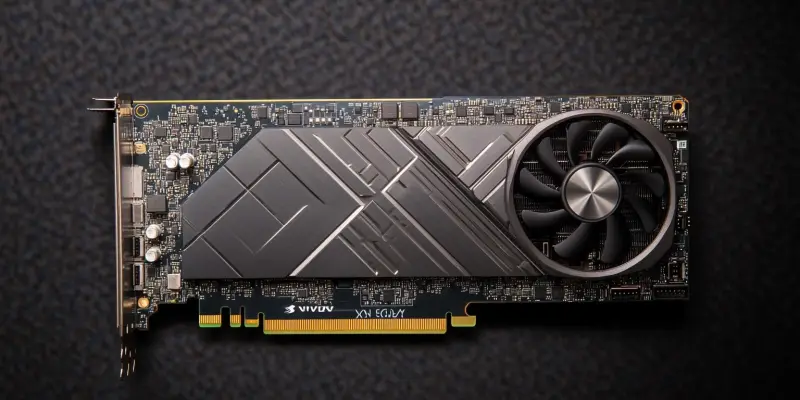
The tech community has been buzzing about the latest leaks and rumors surrounding AMD’s soon-to-be-released Radeon RX 9070 XT GPU. Interest is particularly high in how it stacks up against NVIDIA’s much-anticipated RTX 4080 Super, especially in terms of gaming performance with ray tracing enabled. Recent leaks suggest that the RX 9070 XT might deliver performance levels that are comparable to NVIDIA’s offerings, leading many to wonder if AMD has finally closed the gap in the high-end GPU market. However, the absence of verified benchmarks casts some doubt on these early reports, leaving both excitement and skepticism in the air.
Leaked Performance Benchmarks
According to information shared by a Chiphell forum member, the RX 9070 XT was put through its paces in popular, graphically demanding titles like Cyberpunk 2077 and Black Myth: Wukong. These tests excluded upscaling techniques but had ray tracing turned on, serving as a rigorous test for any modern GPU. The leaked data revealed that the RX 9070 XT achieved results that were nearly identical to NVIDIA’s RTX 4070 Ti Super, with figures of 85 fps at 1080p, 52 fps at 1440p, and 26 fps at 4K resolution in Cyberpunk 2077. While these numbers are impressive, especially for 1080p gaming, it’s worth mentioning that the RX 9070 XT falls short of the RTX 4080 Super, particularly at higher resolutions where the performance gap widens.
Further analysis shows that in another test, the RX 9070 XT managed 97 fps at 1080p, 73 fps at 1440p, and 30 fps at 4K. These numbers, while close to the RTX 4080 Super, indicate a slight performance lag, especially noticeable at 4K resolution. Interestingly, the RX 9070 XT demonstrated a 7-11% performance edge over the RTX 4070 Ti Super at native resolutions, suggesting it is still a very competitive option in its bracket. However, enthusiasts and potential buyers are advised to approach these results with a degree of caution due to the lack of concrete evidence and corroborated benchmarks.
Anticipated Official Launch
As the official launch date of the RX 9070 XT approaches, the anticipation for more definitive performance data is at an all-time high. The leaked benchmarks have certainly stirred up excitement, but the community remains divided on the reliability of these early numbers. Past experiences have shown that pre-release benchmarks can sometimes be off the mark, either overstating or understating a GPU’s true capabilities. Therefore, while the initial data is promising, it’s prudent to wait for verified benchmarks from trusted sources before forming any concrete opinions.
The upcoming launch will not only shed light on the RX 9070 XT’s real-world performance but will also potentially redefine AMD’s standing in the high-end GPU market. If the RX 9070 XT can deliver performance close to or even surpassing the RTX 4070 Ti and competing closely with the RTX 4080 Super, it would be a significant win for AMD. However, the gaming community and industry analysts will be closely watching for any signs of inconsistencies or limitations that might affect the RX 9070 XT’s competitiveness.
Conclusion
The tech community is abuzz over the latest leaks and rumors about AMD’s upcoming Radeon RX 9070 XT GPU. Enthusiasts are particularly eager to see how it compares to NVIDIA’s highly anticipated RTX 4080 Super, especially in gaming performance with ray tracing enabled. Recent leaks hint that the RX 9070 XT might offer performance levels close to NVIDIA’s, stirring speculation that AMD could finally be bridging the gap in the high-end GPU market. However, the excitement is tempered by a lack of verified benchmarks, fueling both anticipation and skepticism. This leaves the enthusiasts excited yet cautious, eagerly awaiting official performance metrics to see if AMD’s new GPU can indeed keep pace with NVIDIA’s offerings. The potential of the RX 9070 XT to match or even surpass the RTX 4080 Super in some aspects could significantly impact the GPU market, driving competition and potentially leading to more options and better prices for consumers. All eyes are now on the release, hoping for a game-changing performance revelation.