

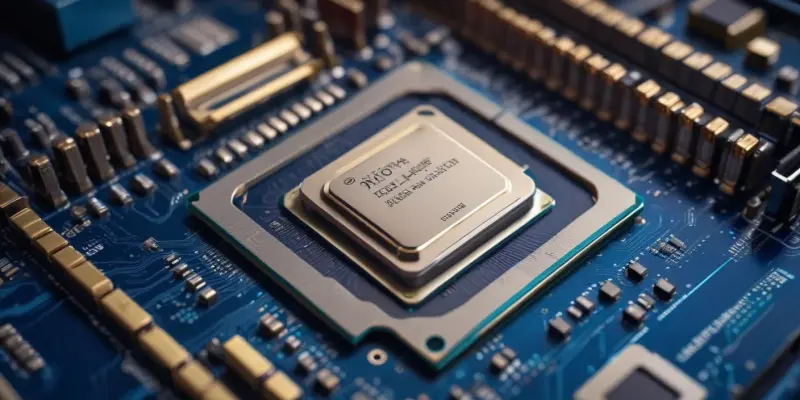
The tech world is rife with speculation and intrigue surrounding SPARKLE’s rumored 24GB Arc Battlemage GPU, aimed at the professional market rather than gamers. Initial whispers hinted at a significant development by Intel’s partner, SPARKLE, sparking interest among professionals reliant on high-capacity GPUs for intensive AI workloads. The situation took a more intriguing turn when SPARKLE appeared to confirm these rumors on a user thread on Bilibili, only to subsequently retract their statements and erase the post, leaving the tech community puzzled and questioning the credibility of SPARKLE’s communication.
Conflicting Information and Speculation
The initial excitement stemmed from the belief that SPARKLE was indeed working on the highly anticipated 24GB Arc Battlemage GPU. Such a GPU would represent a breakthrough for professionals in fields like machine learning, data science, and other AI-intensive tasks, where high VRAM capacity and robust processing power are critical. SPARKLE’s apparent confirmation on Bilibili added fuel to the fire, suggesting that an official release could be imminent. However, the sudden retraction and deletion of the post led to significant confusion, prompting discussions about why SPARKLE would backtrack on what seemed to be a monumental announcement for the tech industry. One theory is that SPARKLE might have mistakenly breached a Non-Disclosure Agreement (NDA) with Intel, leading to the hasty retraction. NDAs are standard practice in the tech industry, protecting sensitive information until companies are ready for an official launch. Should this be the case, it raises questions about SPARKLE’s internal communication and the protocols surrounding confidential information. Alternatively, the retraction could indicate that the project is still in its early stages, and SPARKLE was simply not prepared to handle public scrutiny and inquiries at this point in the development process.
Potential Implications and Future Outlook
If the 24GB Arc Battlemage GPU does indeed come to fruition, it could mark a significant leap forward in the capabilities available to professionals requiring exceptional computing power. The GPU’s large memory capacity would make it highly suitable for handling massive datasets, complex simulations, and multi-layer neural networks, providing advantages over existing products on the market. Speculation also suggests that the GPU could potentially feature enhanced architectures and improved efficiency, positioning it as a leader in the professional GPU space.
In the context of SPARKLE’s communication debacle, Intel’s silence further complicates the situation. As the primary stakeholder, Intel’s position and any forthcoming statements will be critical in determining the validity of the rumors. For now, the tech community can only wait and analyze the clues, fully aware that the release of such a powerful GPU could significantly impact the industry. Competitors might rush to develop their own high-capacity GPUs, leading to increased innovation and potentially lower prices for end-users as competition intensifies. The back-and-forth statements from SPARKLE have undoubtedly left a lasting impression, creating a narrative shrouded in uncertainty and high expectation. Whether the retraction was a misstep or a strategic move to comply with an NDA, the strong initial confirmation hints that the tech industry could be on the cusp of witnessing a groundbreaking product. Given the professional market’s demand for advanced GPU capabilities, the anticipated release of SPARKLE’s 24GB Arc Battlemage GPU will remain a focal point of speculation until more definitive information emerges.
Summary of Key Takeaways
The tech industry is buzzing with rumors and speculation surrounding SPARKLE’s purported 24GB Arc Battlemage GPU, which appears to be designed more for professional use than for gaming. These early murmurs suggested a major advancement by Intel’s partner, SPARKLE, catching the attention of professionals who depend on high-capacity GPUs for demanding AI tasks and other intensive computational work. The narrative grew even more captivating when SPARKLE seemed to affirm these rumors on a user thread on the Chinese platform Bilibili. The triumphant confirmation was short-lived, as SPARKLE soon retracted their statements and deleted the post, leaving the tech community bewildered and raising questions about SPARKLE’s credibility and communication strategy. This abrupt reversal has led to even more intrigue as experts and enthusiasts grapple with understanding the true status of the 24GB Arc Battlemage GPU and its potential impact on the professional sector. The confusion amplifies the curiosity and anticipation surrounding the GPU and SPARKLE’s future moves.