

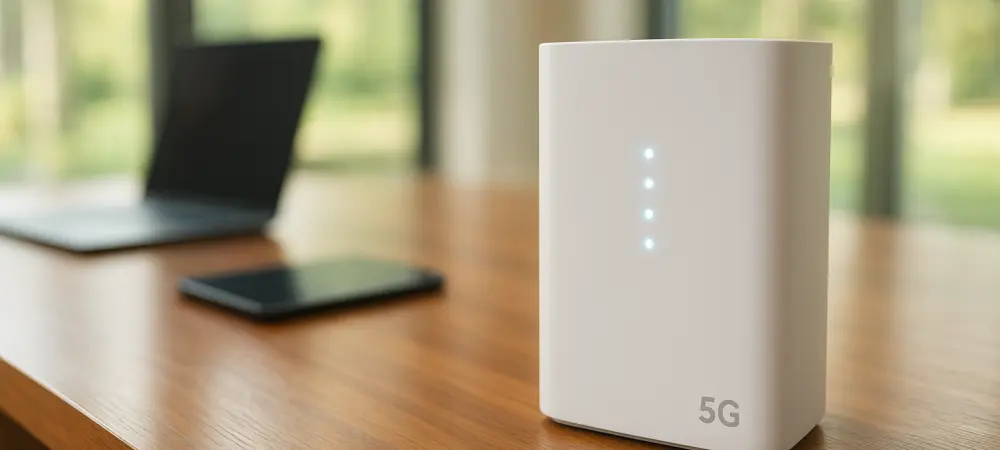
The 5G Max Home WiFi package includes fifteen days of unlimited data and a free Smart SIM to eliminate the immediate need for additional data purchases after setup. This introductory offer reflects a broader trend in 2026 where telecommunications providers prioritize seamless onboarding to capture a highly mobile workforce. As the digital landscape evolves, the demand for high-capacity wireless broadband has eclipsed traditional fixed-line services in several key demographics. Households now prioritize low-latency connections that can support simultaneous 8K video conferencing, cloud gaming, and a multitude of smart home devices. The move to include an initial period of unmetered usage serves as a strategic buffer, allowing users to stabilize their home networks before committing to specific data tiers. Moreover, this approach mitigates the common frustration of technical setup delays, providing a turnkey solution that functions immediately upon unboxing. In a competitive environment, such incentives are no longer just perks but essential components of a customer retention strategy designed to showcase network reliability from the very first hour.
1. Technical Performance: Hardware and Network Integration
The hardware provided in this package leverages the latest WiFi 6 standards, ensuring that internal network congestion remains a thing of the past even in device-heavy environments. Equipped with advanced 5G Sub-6GHz and mmWave compatibility, the router is designed to maintain high-speed connectivity across varying signal conditions. The inclusion of Multiple-Input Multiple-Output (MIMO) technology allows the device to communicate with several users at once, effectively doubling the potential throughput compared to older hardware versions. Furthermore, the unit features multiple Gigabit Ethernet ports, which are crucial for users who require a dedicated, wired connection for high-stakes tasks like professional stock trading or large-scale data synchronization. Heat dissipation has also been a focal point of the 2026 design, with passive cooling systems that prevent thermal throttling during peak summer hours. These technical specifications collectively ensure that the router acts as a robust gateway for the modern household ecosystem.
Beyond the physical hardware, the performance of the 5G network itself has reached a state of maturity that offers impressive stability in both urban and rural settings. Average download speeds consistently hover between 400 and 700 Mbps, while upload speeds have seen a marked improvement to support the surge in user-generated content and live broadcasting. Latency, a frequent concern for previous generations of wireless broadband, now rivals fiber optics, often dipping below 15 milliseconds in areas with dense cell site deployment. This responsiveness is vital for real-time applications, such as augmented reality overlays used in remote education and collaborative industrial design. Network slicing technology further enhances this experience by dedicating specific bandwidth to the home WiFi router, protecting the user from the speed fluctuations typically associated with mobile network congestion. Consequently, the transition from fixed-line broadband to a 5G-centered home office has become a viable reality for the majority of the population.
2. Strategic Implementation: Assessing Value and Accessibility
Economic flexibility remains a primary driver for consumers selecting this 5G home solution over traditional long-term contracts. The absence of a lock-in period provides a significant advantage for individuals living in temporary residences or students who only require connectivity for specific academic semesters. Users can manage their subscriptions through a streamlined mobile application, allowing for real-time monitoring of data consumption and the ability to purchase additional credits as needed. This modular approach to data budgeting allows households to scale their internet costs based on their actual usage patterns rather than paying for a flat rate that may exceed their needs. Additionally, the portability of the device means that the home network can technically move with the user, provided there is 5G coverage at the new destination. This versatility has made it a preferred choice for the nomadic professional segment that values consistency across different geographic locations without the hassle of scheduling new installations.
Prospective buyers analyzed the long-term benefits of this wireless ecosystem by comparing the total cost of ownership against the depreciating value of fixed-line infrastructure. Decision makers determined that the initial investment in high-quality 5G hardware justified the savings found in reduced installation fees and service maintenance. Future considerations suggested that as the 5G infrastructure expands into 2027 and 2028, the integration of satellite backup systems might become a standard feature to ensure absolute uptime. Industry experts advised users to conduct signal strength audits prior to purchase to maximize the efficacy of the WiFi 6 capabilities. The transition toward these flexible, high-capacity systems indicated a permanent shift in consumer expectations toward autonomy and rapid deployment. Users who successfully implemented the 5G Max Home WiFi discovered that the elimination of physical cabling simplified their living spaces while providing a level of performance that supported the most demanding digital workflows. Final evaluations emphasized the importance of monitoring data packages to match the evolving needs of a multi-user household.