

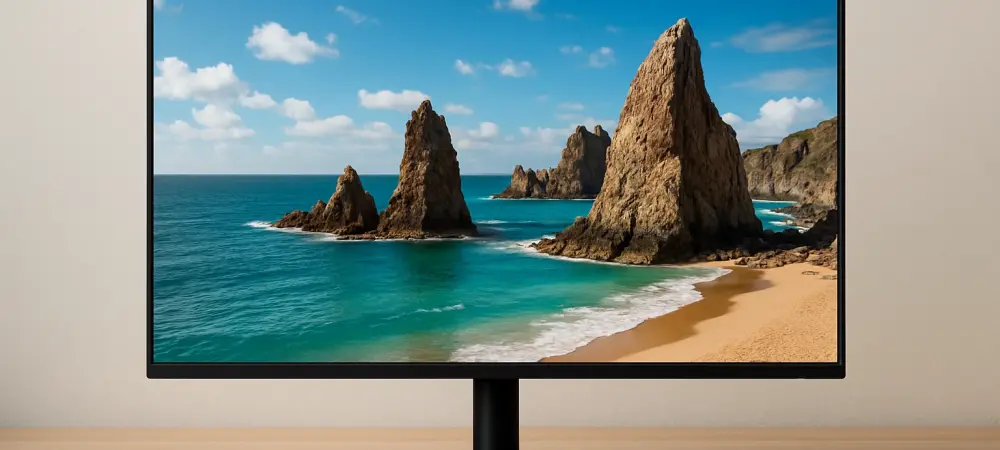
In today’s fast-paced work environments, cluttered desks with tangled cables and mismatched dual-monitor setups have become a common frustration for professionals seeking efficiency. Picture a workspace where one massive screen replaces the chaos, offering clarity and focus with a single glance. Samsung’s latest innovation, a 37-inch 4K monitor, steps into this arena with bold promises of transforming office productivity. Could this oversized display truly redefine how tasks are managed, or is it merely a striking but impractical addition to the desk?
Why Are Oversized Monitors Dominating Office Conversations?
The shift toward large-format monitors has sparked intense discussions among tech enthusiasts and office managers alike. With cramped workspaces becoming the norm, especially in hybrid and remote setups, the appeal of a single, expansive screen is undeniable. Samsung’s 37-inch 4K display emerges as a potential game-changer, aiming to eliminate the hassle of juggling multiple screens while maximizing desk real estate.
This trend isn’t just about aesthetics; it’s rooted in a growing demand for efficiency. As professionals seek tools to streamline complex workflows, the idea of consolidating everything into one giant display resonates strongly. The question remains whether this solution addresses real needs or simply captivates with its sheer size.
The Bigger Picture: Relevance of Large-Format Displays Today
Behind the buzz lies a strategic push by tech giants like Samsung and LG to cater to evolving workplace dynamics. With remote work solidifying its place, the need for seamless, distraction-free setups has surged. Large monitors are pitched as the answer, promising to reduce visual clutter and simplify connectivity in ways dual setups often fail to achieve.
The pain points are clear: mismatched resolutions, excessive cables, and constant neck strain from swiveling between screens plague many users. These oversized displays aim to tackle such issues head-on, offering ergonomic benefits and a unified visual field. Samsung’s entry into this space positions itself as a direct response to these modern challenges, though its effectiveness is yet to be universally proven.
Unpacking the ViewFinity S8: Features Tailored for Office Excellence
At the heart of Samsung’s offering is a 37-inch 4K UHD VA panel, boasting a crisp 3840 x 2160 resolution at a 60Hz refresh rate. This setup ensures larger text visibility compared to 32-inch alternatives, a boon for professionals poring over documents or spreadsheets for hours. Yet, the true test lies in whether this translates to tangible clarity gains for every user.
Ergonomic design takes center stage with Smart Eye Protection technology, reducing blue light and flicker, validated by TÜV Rheinland certification. Connectivity also shines, featuring USB-C with 90W charging, a LAN port for shared wired internet, and a KVM switch for controlling two devices with ease. Modes like Picture-by-Picture (PBP) and Picture-in-Picture (PIP) cater to multitaskers—think of a graphic designer viewing dual inputs simultaneously—though their practical impact varies by workflow.
A critical lens reveals potential gaps; while the features sound impressive, not every office role may benefit equally. For instance, users with minimal multitasking needs might find such capabilities redundant. This balance of innovation and necessity forms the crux of evaluating the monitor’s office appeal.
Expert Insights and User Concerns: Does It Match the Hype?
Samsung claims that wider screens like this one cut down on window switching, potentially boosting productivity by significant margins. However, skepticism persists about how these benefits hold up outside ideal demo conditions. Real-world application often uncovers unforeseen hurdles that polished marketing might overlook.
Consider a financial analyst managing sprawling datasets—does the expansive display genuinely reduce toggling between tabs, or does the monitor’s hefty 8.9 kg weight and 25 cm thickness turn it into a cumbersome desk fixture? Compared to LG’s similar 36.5-inch model, Samsung’s strict focus on business utility, with robust Windows 11 compatibility and a competitive price of $579.99, sets it apart, though its stationary design could deter users needing flexibility.
Industry observers note that while the concept of a single large screen aligns with current productivity trends, its success hinges on user adaptation. The monitor’s niche positioning avoids entertainment extras like LG’s WebOS, sharpening its professional edge. Still, doubts linger about whether its physical bulk and targeted features resonate with a broad enough audience.
Optimizing Your Workspace: Practical Tips for Using the ViewFinity S8
For those eyeing this large-format monitor, a strategic approach to integration is essential. Start by assessing specific job demands—roles heavy on multitasking, such as project management, can leverage PBP and PIP modes or the KVM switch for seamless device control. Identifying these needs upfront ensures the monitor’s capabilities aren’t underutilized.
Desk space and mobility are equally critical considerations. Given its substantial build, ensure the workspace can accommodate such a fixture without compromising comfort or accessibility. Pairing it with a laptop via USB-C for a clutter-free setup or utilizing the LAN port for reliable internet in shared offices can optimize its utility in constrained environments.
Finally, prioritize tasks that benefit from 4K resolution and eye comfort features. Long sessions of data analysis or document editing align perfectly with the monitor’s strengths, reducing strain and enhancing focus. Tailoring its use to such activities, while evaluating fit for individual routines, helps maximize return on investment in this specialized tool.
Reflecting on a Workspace Evolution
Looking back, the exploration of Samsung’s 37-inch 4K monitor revealed a bold attempt to reshape office dynamics through large-format displays. Its array of features, from ergonomic design to robust connectivity, targeted real frustrations faced by professionals navigating cluttered setups. The journey underscored a pivotal shift in how technology seeks to address productivity in an era of hybrid work.
The next steps for users involve careful evaluation—matching workspace needs with the monitor’s unique offerings proved essential. For businesses and individuals alike, the challenge is to test this tool in diverse scenarios, identifying where its strengths truly shine. Moving forward, staying attuned to evolving monitor trends and user feedback promises to refine the balance between innovation and practicality in office environments.