

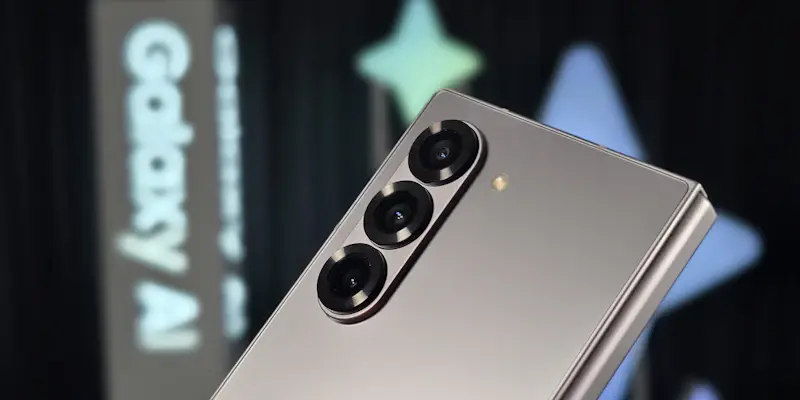
Samsung’s new project, the Galaxy G Fold, is set to push the boundaries of foldable smartphone technology, potentially positioning the company as a leader in this rapidly evolving market. The Galaxy G Fold, developed alongside the Galaxy Z Fold 7 and the Galaxy Z Flip 7, showcases Samsung’s enduring commitment to innovation in the foldable smartphone market. This ambitious device aims to offer a fresh approach to foldable technology with its unique G-style triple-panel folding mechanism, setting it apart from competitors like Huawei, which has pioneered tri-fold smartphones such as the Mate XT Ultimate Edition.
The Galaxy G Fold boasts a sophisticated triple-panel inner display that measures 9.96 inches when fully opened, with each panel hidden when the phone is folded, unlike Huawei’s S-style folding design. Additionally, the device will feature a 6.49-inch outward-facing cover display, similar to the one found on the Galaxy Z Fold 7. These anticipated features highlight Samsung’s efforts to deliver a seamless user experience, enhancing the possibilities of what foldable smartphones can achieve. As competition in the foldable phone market intensifies, Samsung’s strategy focuses on creating products that cater to diverse consumer needs while pushing the limits of current technological capabilities.
Innovative Design and Technological Advancements
The Galaxy G Fold’s design represents a significant advancement from Samsung’s previous foldable models. Incorporating a triple-panel inner display measuring 9.96 inches expands the screen size and offers unmatched versatility for users when fully opened. This design innovation ensures that all panels remain concealed when the device is folded, presenting a sleeker, more cohesive look compared to other foldable smartphones currently available. The inclusion of an outward-facing 6.49-inch cover display mirrors the design of the Galaxy Z Fold 7, indicating that Samsung intends to maintain some continuity in user experience across its foldable lineup.
This shift toward a more complex folding design denotes Samsung’s strategic move to establish itself as a front-runner in the foldable phone market. The Galaxy G Fold’s triple-panel system, departing from the singular fold mechanisms of the Galaxy Z Fold 7 and Z Flip 7, underscores Samsung’s dedication to offering sophisticated and unprecedented user experiences. By pushing the envelope with its design choices, Samsung aims to set new industry standards and attract a broader audience seeking multifunctional and adaptable devices.
Market Trends and Competitive Dynamics
The current market trends in foldable phone technology emphasize experimentation and diversity in form factors, and Samsung’s Galaxy G Fold epitomizes this trend. The Galaxy G Fold’s unique design signals a departure from more traditional foldable phones, driving the competition between key players like Samsung and Huawei. As a prominent competitor, Huawei has previously introduced tri-fold smartphones such as the Mate XT Ultimate Edition, pushing the boundaries of what foldable devices can accomplish. However, Samsung aims to differentiate itself with a G-style folding mechanism that could redefine industry expectations and set new benchmarks for innovation.
If successfully realized, the Galaxy G Fold has the potential to encourage widespread shifts towards more sophisticated and user-centric designs. This device could drive industry-wide transformations by setting a higher standard for versatility and functionality in foldable smartphones. As major tech companies vie for supremacy in the foldable phone market, they are compelled to innovate and refine their offerings, resulting in a broader array of choices for consumers. Samsung’s strategic decisions in developing the Galaxy G Fold may lead to an era defined by enhanced adaptability and multifunctionality in smartphone design.
Production Plans and Consumer Response
Samsung’s production plans for the Galaxy G Fold indicate cautious optimism, with parts procurement scheduled for April and a potential launch aligned with the Galaxy Z Fold 7 and Galaxy Z Flip 7 in mid-July. However, it is essential for consumers to temper their expectations regarding the device’s availability, as Samsung has a history of limited regional releases for new models. For instance, the Galaxy Z Fold SE was only released in South Korea and China, which could signal a similar approach for the Galaxy G Fold.
To gauge consumer response, Samsung might initially produce around 200,000 units of the Galaxy G Fold before considering a broader distribution. This careful and measured approach allows the company to evaluate market reception and make necessary adjustments while minimizing potential risks. The strategy of first testing the waters reflects Samsung’s intent to ensure the device resonates with consumers and meets their expectations before committing to large-scale production. Such a methodical rollout demonstrates Samsung’s pragmatism in navigating the complexities of bringing a groundbreaking product to market.
Samsung’s Broader Foldable Lineup
In addition to the Galaxy G Fold, Samsung continues to expand its foldable lineup with the Galaxy Z Fold 7 and Galaxy Z Flip 7. These devices adhere to more traditional foldable concepts, featuring book-style and clamshell-style designs respectively. Both models are slated for mid-July releases and contribute to Samsung’s comprehensive approach to offering diverse foldable phone options. The company’s dedication to innovation in the foldable phone market is evident in the range of products designed to appeal to various user preferences and needs.
The development of these models underscores Samsung’s commitment to staying at the forefront of the foldable phone industry. By continuously refining and diversifying its product offerings, Samsung strives to maintain consumer engagement and enthusiasm. The variety within the foldable lineup allows Samsung to cater to different segments of the market, meeting the demand for both cutting-edge and conventional designs. This comprehensive strategy highlights Samsung’s efforts to consolidate its leadership in the foldable smartphone space.
Potential Competition from Apple
Samsung’s latest venture, the Galaxy G Fold, aims to redefine foldable smartphone technology, potentially establishing the company as a leader in this swiftly advancing market. Developed in tandem with the Galaxy Z Fold 7 and Galaxy Z Flip 7, the Galaxy G Fold highlights Samsung’s unwavering dedication to innovation within the foldable smartphone arena. This groundbreaking device features a unique G-style triple-panel folding mechanism, distinguishing it from competitors like Huawei, known for tri-fold smartphones like the Mate XT Ultimate Edition.
The Galaxy G Fold flaunts an intricate triple-panel inner display that spans 9.96 inches when fully opened, with each panel concealed when folded, unlike Huawei’s S-style design. Additionally, it includes a 6.49-inch outward-facing cover display, reminiscent of the Galaxy Z Fold 7. These advanced features underscore Samsung’s mission to enhance the user experience and expand the potential of foldable smartphones. As competition heats up in the foldable phone market, Samsung’s strategy is to develop products meeting diverse consumer needs while pushing current technological boundaries.