

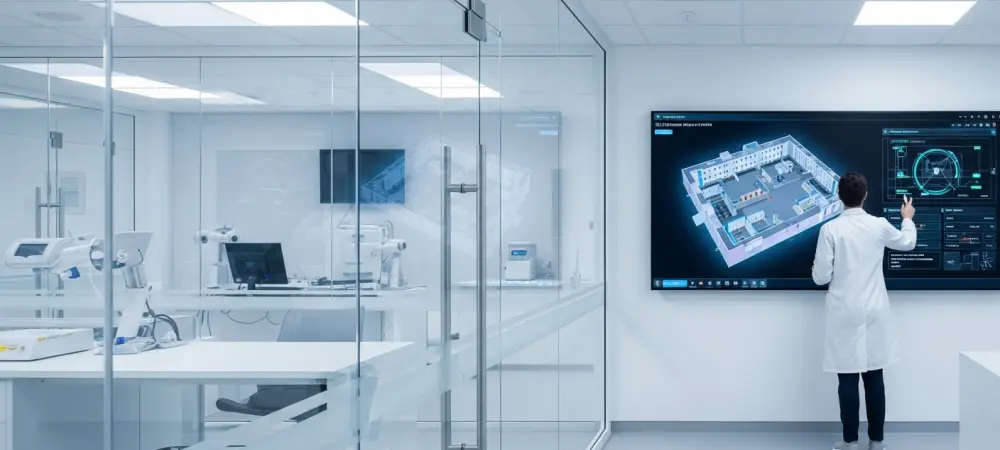
The digital industrialization of global manufacturing hubs and healthcare facilities has transitioned from a peripheral experiment into a core strategic mandate for organizations seeking to harness artificial intelligence. As modern facilities integrate millions of sensors and autonomous systems, the limitations of traditional public networks and legacy Wi-Fi protocols have become glaringly apparent in high-density environments. Private 5G networks have emerged as the critical infrastructure layer that bridges the gap between massive data generation and real-time algorithmic execution. By providing a dedicated, high-capacity spectrum, these networks ensure that mission-critical AI applications receive the deterministic performance required for safety and efficiency. This shift represents a fundamental departure from the one-size-fits-all approach of previous cellular generations, moving instead toward a bespoke model where connectivity is tailored to the specific operational demands of a factory, hospital, or logistics hub.
Integrating Real-Time Data with Industrial Automation
The demand for ultra-low latency and massive machine-type communication has driven a surge in the adoption of private 5G architectures across the industrial sector. In a smart factory environment, where autonomous mobile robots must navigate dynamic floor plans while avoiding human personnel, the network must deliver sub-millisecond response times to prevent collisions. Unlike public 5G, which shares resources among thousands of consumers, a private implementation guarantees that bandwidth remains available for internal telemetry and control signals. This reliability is the bedrock upon which generative AI models and digital twins are built, as these technologies require a constant stream of high-fidelity data to function accurately. By utilizing dedicated radio access network equipment, companies have effectively bypassed the congestion of public airwaves, ensuring that their AI-driven predictive maintenance systems can identify potential mechanical failures before they lead to costly downtime. This consistency allows for continuous operation without the risk of external interference.
Furthermore, the integration of advanced computer vision systems within these private networks has revolutionized quality control processes on assembly lines. High-definition cameras streaming 4K video feeds require massive uplink capacity that traditional network configurations often struggle to provide consistently. Private 5G facilitates this by allowing administrators to configure the network for asymmetric data flows, prioritizing the uplink from the factory floor to the localized edge servers. These servers, often equipped with specialized AI accelerators like NVIDIA Jetson or Qualcomm Cloud AI units, process the visual data locally to identify defects in real time. This architecture minimizes the need for backhauling vast amounts of raw data to a centralized cloud, which would otherwise introduce unacceptable lag and increase operational costs. Consequently, the combination of private 5G and edge AI has enabled a new tier of automated precision that was previously impossible to achieve in high-volume environments.
Strategic Evolution of Network Operations
The transition toward private 5G as the primary medium for enterprise intelligence demonstrated that connectivity had to be treated as a strategic asset rather than a utility. Organizations that successfully deployed these systems moved away from traditional procurement cycles and instead adopted an agile lifecycle management approach for their infrastructure. They integrated automated network slicing to partition resources for various AI applications, ensuring that critical safety systems always had priority over non-essential diagnostic traffic. This transition was facilitated by a shift in internal culture, where IT and operational technology departments collaborated to design a unified architecture. Early adopters focused on building a scalable foundation that could handle the increasing density of connected devices without requiring a complete overhaul of the physical layer. By prioritizing localized edge computing nodes alongside the 5G rollout, these companies established a robust ecosystem capable of supporting future software-defined upgrades.
Moving forward, the focus shifted toward optimizing these networks through self-healing algorithms that predicted and resolved signal interference before it impacted performance. Companies began to leverage the rich telemetry data provided by their 5G cores to fine-tune their AI models, creating a feedback loop that continuously improved both the network and the applications it supported. The successful implementation of these blueprints required a commitment to open standards and interoperability, allowing for the seamless integration of hardware from multiple vendors. Leaders in the field invested in training their workforce to manage these hybrid environments, bridging the gap between cellular engineering and data science. This proactive approach ensured that the infrastructure remained resilient in the face of changing technological demands and evolving business requirements. Ultimately, the integration of private 5G and AI provided a clear pathway for achieving the high levels of efficiency and innovation necessary for modern industry.