

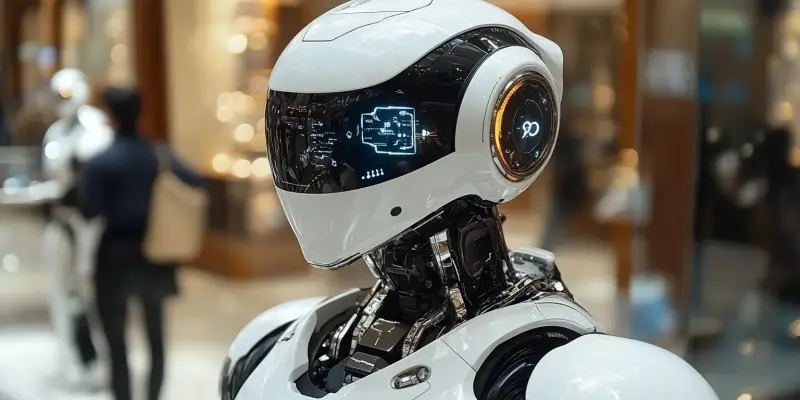
OpenAI’s recent ventures have taken a significant shift, marking its foray into humanoid robots, augmented reality (AR) glasses, virtual reality (VR) headsets, smart jewelry, wearables, and spatial computing devices. This strategic move highlights an understanding that AI’s future lies not just in software advancements but in its seamless integration into the physical world. Devices that bridge Artificial Intelligence with Extended Reality (XR) and spatial computing are viewed as the key to this evolution. Embracing these new hardware forms, OpenAI aims to enhance AI’s interaction and integration with the real world, capturing sensory inputs, spatial awareness, and contextual understanding.
The Shift Towards Spatial Computing
Data Gathering and Model Training
One of the core reasons behind OpenAI’s hardware investments is data gathering and model training at scale. Spatial computing and XR devices enable extensive acquisition of real-world data, which is paramount for training AI models. This data includes depth perception, environmental mapping, gesture tracking, and object recognition—all necessary for advancement in AI capabilities. The integration of hardware and AI allows for the optimized collection of training data, fostering models with superior contextual awareness and decision-making abilities, and this approach marks a groundbreaking shift in AI’s developmental landscape.
By capturing sensory inputs from various devices, OpenAI’s models can learn how to interpret and react to the environment much like humans. This comprehensive data gathering is not only pivotal for refining existing AI models but also instrumental in developing next-generation AI systems that can seamlessly interact with their surroundings. As AI seamlessly integrates with spatial computing, it ensures an immersive experience where digital and physical landscapes coalesce, providing users with sophisticated yet natural interactions.
AI-First Interfaces
The push towards AI-first interfaces represents a monumental shift from traditional screens to more immersive and interactive modalities. Existing AI-driven interfaces, such as voice assistants Siri and Alexa, have set preliminary stages but remain relatively limited in their interaction capabilities. In contrast, spatial computing and XR propose a more engaging interface where AI becomes an active and responsive agent within physical spaces. These interfaces can respond to gestures, eye movements, and environmental changes in real-time, thereby enhancing user interaction and overall experience. The potential of AI-first interfaces lies in their ability to create a seamless bridge between human activities and digital assistance.
As AI-first interfaces further develop, they are poised to surpass the conventional smartphone or desktop experience, placing AI directly in our environment and making it an integral part of our daily lives. This integration ensures that technology is no longer a tool that one uses but an inherent part of everyday activities, capable of anticipating needs and reacting accordingly.
Physical AI: Moving Beyond Screens
Humanoid Robots and Wearables
The emergence of Physical AI directly ties into OpenAI’s hardware investments, focusing on AI that can move, see, and interact physically within the world. This concept of AI transforming into a physical entity rather than being confined to digital screens is groundbreaking. AI-powered devices like augmented reality glasses and wearable smart technology could provide real-time assistance, overlay digital information on physical spaces, and facilitate comprehensive interactions in ways that extend beyond mere text or voice commands. This transformative step from passive AI tools to active physical agents marks a significant milestone in AI evolution and opens new avenues for human-AI collaboration.
Imagine humanoid robots equipped with advanced AI that can navigate complex environments, carry out intricate tasks, and interact with humans in a lifelike manner. Such advancements are not just futuristic fantasies but are on the verge of becoming a reality. Wearables, on the other hand, bring AI closer to users, offering personalized assistance, health monitoring, and even enhancing real-world interactions with digital augmentations. These developments indicate a future where the lines between physical and digital blur, leading to a cohesive interaction pattern where AI is omnipresent and seamlessly integrated into everyday life.
The Race to Replace Mobile Phones
There is an anticipated race to replace the mobile phone, which has long been the dominant form of personal tech. The introduction of AI-integrated hardware could spark an economic boom similar to what the mobile phone industry achieved. New era devices powered by spatial computing and AI are poised to potentially set the groundwork for new AI models, architectures, and functionalities that significantly alter lifestyle, communications, and the global economy. As OpenAI and other tech innovators explore this frontier, it opens the door for unprecedented interactions and connectivity, driving the next wave of technological advancement.
AI in Fashion and Luxury
Smart Jewelry and Wearables
AI-powered accessories like smartwatches and smart jewelry could redefine personal expression through technology. High-end fashion brands have previously embraced innovations like virtual clothing and NFTs, indicating their readiness to adopt AI-integrated accessories. These smart wearables represent a fusion of fashion and technology, offering not just aesthetic appeal but functional benefits like health tracking, notifications, and real-time information. The combination of cutting-edge AI technology with luxury fashion signifies a pivotal shift in how we perceive and use wearable tech.
Personalized Fashion Experiences
An intelligent, aesthetically designed accessory could move beyond basic functionalities to become a status symbol imbued with advanced AI capabilities. These wearables could offer deeply personalized experiences, making real-time fashion recommendations, and blending digital aesthetics with physical style seamlessly. This integration of AI in fashion could lead to a new era of personalized and interactive fashion experiences, where technology is not just an add-on but an intrinsic part of personal style. By providing tailor-made solutions and real-time adaptability, AI could make fashion more dynamic and aligned with individual needs and tastes.
The Future of AI and Hardware Integration
Building Physical Infrastructure
OpenAI’s venture into hardware signifies a pivotal shift towards the next evolution in AI, where the focus is on developing spatial understanding and physical interaction. It explicitly underlines the necessity of building the physical infrastructure to support these advanced AI functionalities. As the technology world leans towards newer, more interconnected trends, AI’s evolution will not merely depend on better algorithms but on the intertwined dynamics of intelligent hardware and spatial computing. This holistic approach exemplifies how future innovations will be characterized by their ability to integrate seamlessly into the physical world.
Building the necessary infrastructure involves designing and deploying various devices and systems that can support the vast amounts of data required by advanced AI models. OpenAI’s initiative in developing this infrastructure signals a commitment to pushing the boundaries of what AI can achieve, driving towards a future where human-AI interactions are intuitive, immersive, and highly integrated into everyday life.