

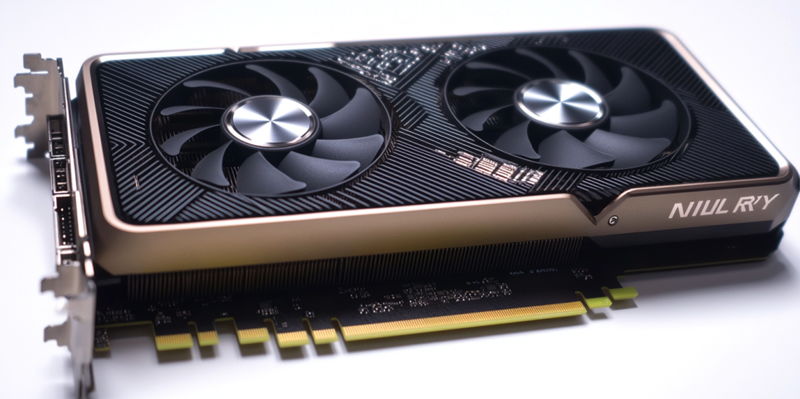
In the ever-evolving and highly competitive world of graphics processing units (GPUs), NVIDIA has managed to carve out a dominant position that raises important questions about the future of its industry leadership. As evidenced by various retail statistics and surveys, the company’s products remain the top choice for gamers and tech enthusiasts alike. According to the Steam Hardware Survey from October and data from retail websites, NVIDIA’s GeForce RTX 3060 has emerged as the most popular GPU, commanding a 7.46% market share. This figure marks a substantial increase from the previous month, driven by the affordability and high performance of the RTX 3060, especially its 12 GB version, which has become a favorite for budget-conscious gamers. This popularity is starkly contrasted with the current market status of AMD and Intel, both of which have seen a noticeable decline in their discrete GPU sales.
NVIDIA’s Continued Success
NVIDIA’s success is not limited to a single product; the company has multiple GPUs that are performing exceptionally well in the market. The RTX 4060 is particularly noteworthy, with both its desktop and laptop variants ranking high in consumer preference. The laptop version of the RTX 4060 has secured the second spot in Steam’s hardware survey with a 5.61% share, while the desktop variant follows closely with a 5.25% share. This broad appeal can be attributed to NVIDIA’s ability to offer high performance at competitive prices, making their GPUs an attractive option for a wide range of users, from casual gamers to professional developers.
What truly sets NVIDIA apart is its meticulous market strategy, which focuses on balancing performance with price. The RTX 3060’s 12 GB model, for instance, has captured the budget gaming segment by offering superior performance at a fraction of the cost of its high-end counterparts. Moreover, NVIDIA has consistently innovated with each generation of GPUs, enhancing features like ray tracing and AI capabilities, which further solidify its hold on the market. These strategic moves are proving to be compelling differentiators, allowing NVIDIA to maintain and even expand its market share while its competitors struggle to keep up.
AMD and Intel’s Struggles
On the other side of the spectrum, AMD and Intel have faced significant challenges in gaining consumer traction in the discrete GPU market. Retail statistics from the German retailer Mindfactory highlight this struggle vividly. In a snapshot of sales data, AMD managed to sell 655 units, holding a 41.72% share, whereas NVIDIA sold 915 units, claiming a 58.28% share. Revenue figures tell a similar story, with AMD pulling in €348,236 (37.54%) compared to NVIDIA’s €579,379 (62.46%). These numbers indicate a troubling trend for AMD, which once posed a serious challenge to NVIDIA’s dominance.
Intel’s situation appears even more precarious. The company has struggled to establish its discrete GPU lineup, with no Arc Alchemist GPUs sold at Mindfactory in the specified week and only one GPU appearing on Amazon’s top 100 list, positioned rather low. The future of Intel’s discrete GPUs, including the anticipated Battlemage lineup, is clouded by uncertainty, especially following recent developments and statements from Intel’s CEO. The company’s inability to gain a foothold in the GPU market despite significant investments underscores the challenges new entrants face in dethroning an established leader like NVIDIA.
The Implications and Future Outlook
On the flip side, AMD and Intel have struggled to make significant headway in the discrete GPU market. German retailer Mindfactory’s sales data illustrate their difficulties clearly. During one sales period, AMD sold 655 units, capturing a 41.72% share, while NVIDIA sold 915 units, holding a 58.28% share. The revenue figures echo this sentiment: AMD earned €348,236 (37.54%), whereas NVIDIA made €579,379 (62.46%). These figures point to a troubling trend for AMD, which used to challenge NVIDIA’s dominance more effectively.
Intel’s situation is even more precarious. The company has had a tough time gaining traction for its discrete GPU offerings. During that same week at Mindfactory, no Arc Alchemist GPUs were sold, and only one of Intel’s GPUs was listed in Amazon’s top 100, situated relatively low. The future of Intel’s discrete GPUs, including the anticipated Battlemage lineup, remains uncertain, especially following recent developments and statements from Intel’s CEO. Despite considerable investments, Intel’s difficulties in breaking into the GPU market highlight the substantial challenges new competitors face when trying to unseat an industry leader like NVIDIA.