

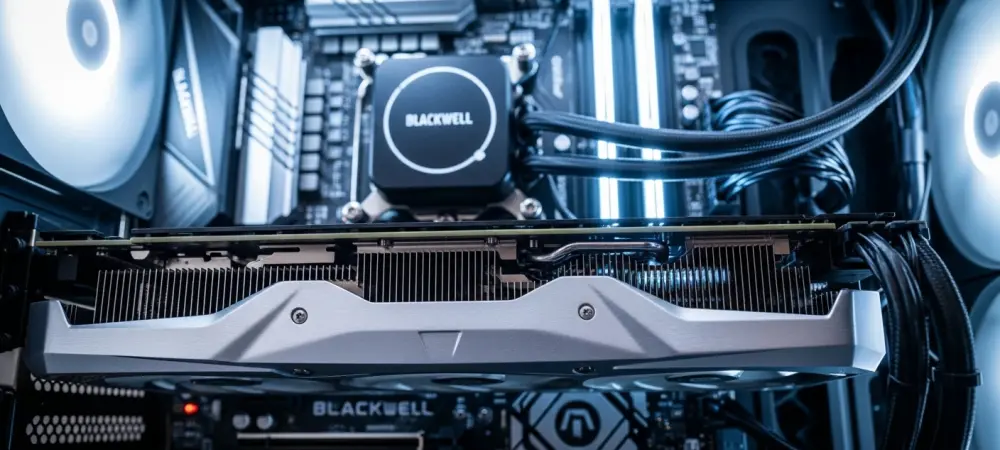
The landscape of entry-level gaming hardware is undergoing a subtle yet profound transformation as recent reports suggest a pivotal shift in the memory configuration of the forthcoming GeForce RTX 5050. While initial rumors pointed toward a standard 8 GB GDDR6 setup, new industry insights indicate that NVIDIA is pivoting to a more advanced 9 GB GDDR7 configuration for its entry-level Blackwell-based graphics card. This change is not merely a play for higher numbers on a retail box but appears to be a calculated response to the fluctuating supply and production costs of older memory standards in the current market. As the industry moves toward more efficient and high-bandwidth solutions, maintaining legacy GDDR6 production lines becomes less economically viable for manufacturers compared to scaling up the newer GDDR7 standard. Consequently, this technical adjustment allows the company to modernize its entire product stack while simultaneously navigating the logistical complexities of global component availability.
Engineering Adjustments: The Move to GDDR7
Technical Foundations: High-Density 3 GB Modules
The transition to a 9 GB capacity is fundamentally driven by the adoption of high-density 3 GB GDDR7 memory modules, which represent a significant leap over previous iterations. By utilizing these denser chips, the manufacturer can achieve non-traditional memory capacities that were previously difficult to balance without awkward bus configurations. However, the move to GDDR7 for the entry-level segment is widely seen as a necessity rather than a luxury, given that the production of GDDR6 has begun to taper off in favor of more advanced and power-efficient technologies. This shift ensures that even the most affordable cards in the Blackwell family benefit from the latest architectural improvements, providing a more cohesive experience across the entire lineup. While the change might seem minor to casual observers, it signals a broader commitment to phasing out older memory standards across the board, ensuring that budget-conscious gamers are not left behind in the rapid cycle of technological advancement.
Beyond the desktop environment, this focus on 3 GB memory modules is becoming increasingly visible in the mobile sector, where leaked listings for various laptop GPUs show similar configurations. The consistency between mobile and desktop hardware strategies suggests that NVIDIA is streamlining its manufacturing processes to reduce overhead and improve reliability across different form factors. By standardizing on specific memory densities, the company can leverage economies of scale, which is crucial for maintaining competitive pricing in the entry-level market where margins are historically thin. This unified approach also simplifies the development process for board partners, who can now design cooling solutions and PCB layouts that are optimized for a specific type of high-density memory chip. Furthermore, the adoption of GDDR7 in the RTX 5050 ensures that the card can maintain its relevance in an era where modern gaming titles demand increasingly higher bandwidth and more sophisticated memory management to deliver smooth frame rates.
Strategic Trade-offs: The 96-Bit Bus Width
To facilitate the 9 GB memory capacity while maintaining clear performance tiers between the RTX 5050 and its more powerful siblings, the memory bus width is reportedly being adjusted to 96-bit. This reduction from the traditional 128-bit bus found in previous generations serves as a vital tool for market segmentation, preventing the entry-level card from encroaching on the performance territory of the mid-range offerings. While a narrower bus might initially raise concerns regarding total bandwidth, the inherent speed advantages of the GDDR7 standard are expected to compensate for this bottleneck, resulting in a net performance gain over the outgoing 8 GB GDDR6 models. This delicate balance of hardware specifications allows the company to provide a more modern feature set and a slight increase in VRAM capacity without disrupting the overall pricing structure of the Blackwell series. It represents a sophisticated engineering compromise that prioritizes modern standards over raw throughput, which is often less critical for 1080p gaming targets.
Despite the significant overhaul of the memory subsystem, the core underlying hardware of the RTX 5050 is expected to remain largely consistent with the original design specifications. The card will continue to utilize the GB207 die, which features 2560 CUDA cores, ensuring that the primary processing power remains robust enough to handle modern graphics workloads and AI-driven enhancements. By keeping the core count stable while upgrading the memory type, NVIDIA can focus on optimizing the interplay between the Blackwell architecture and the high-speed GDDR7 modules. This strategy minimizes the risk of unforeseen hardware conflicts and allows for a more predictable performance profile across different software environments. The integration of 9 GB of VRAM also provides a slight buffer for textures and assets in modern games, which have grown increasingly demanding over the last few years. While it is not a 12 GB configuration, the 9 GB choice provides a meaningful step up from the previous 8 GB limit, catering to the evolving needs of budget users.
Market Positioning: Performance and Efficiency
Economic Implications: Supply Chain Realities
The decision to pivot toward GDDR7 is largely perceived as a reaction to the shifting landscape of global semiconductor manufacturing and the availability of legacy components. As major memory suppliers transition their fabrication plants to focus on high-performance GDDR7 and HBM solutions, the cost of sourcing older GDDR6 chips can paradoxically rise due to reduced supply. By embracing the newer standard early, the manufacturer secures its supply chain for the coming years, avoiding the volatility associated with dwindling legacy inventories. This forward-looking approach ensures that the production of the RTX 5050 remains stable throughout its lifecycle, protecting both the manufacturer and the consumer from sudden price spikes or stock shortages. Moreover, using high-density 3 GB modules allows for a more efficient use of physical space on the circuit board, which can lead to smaller, more power-efficient card designs that are ideal for compact gaming setups or budget-friendly pre-built systems that prioritize thermal efficiency.
Furthermore, the introduction of a 9 GB variant serves to differentiate the Blackwell entry-level tier from competing products that may still rely on older 8 GB configurations. In a market where consumer perception is heavily influenced by technical specifications, having a higher memory number can be a decisive factor for buyers choosing between similar price points. This strategy effectively positions the RTX 5050 as a more future-proof option, even if the primary performance gains come from architectural efficiency rather than the memory capacity alone. By carefully timing this update for a major industry event like Computex, the company maximizes the impact of the announcement, generating significant momentum for the entire 50-series lineup. This move also forces competitors to reassess their own budget strategies, potentially accelerating the industry-wide adoption of GDDR7. Ultimately, the shift reflects a broader trend of bringing premium technologies down to the entry-level segment to maintain market dominance.
Future Outlook: Navigating the New Entry-Level
The potential launch of the updated RTX 5050 at Computex in Taipei suggested a strategic realignment for the budget gaming market. Stakeholders and consumers had to consider how this 9 GB GDDR7 configuration influenced long-term value, specifically regarding driver support and game optimization for non-standard memory sizes. System builders were advised to evaluate whether the increased memory density and the newer standard justified the expected price point compared to previous-generation discounts. As high-density modules became the new standard, the industry prepared for a shift where legacy 8 GB cards faced faster obsolescence in the wake of more demanding software requirements. Prospective buyers monitored official announcements to confirm how the 96-bit bus impacted real-world performance in high-refresh 1080p scenarios. This transition period marked a critical moment for the entry-level segment, where efficiency and modern standards finally began to outweigh the reliance on aging component inventories and traditional hardware configurations.