

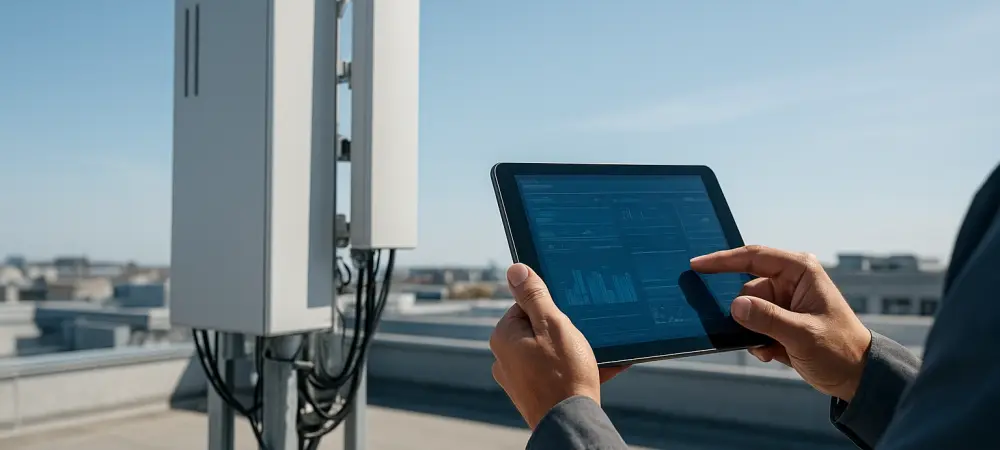
Nokia’s intellectual property strategy provides a stable financial cushion that protects the company against the cyclical nature of hardware sales in the telecom industry. This strategic foundation has allowed the Finnish giant to move beyond its identity as a handset maker, a transition that has redefined the company’s role in the global economy by 2026. While the nostalgic ringtone of the early 2000s still resonates with many, the Nokia of today is a high-tech powerhouse focused on the fundamental layers of digital communication. By divesting from consumer hardware and licensing its brand to HMD Global, the corporation has successfully pivoted to high-margin, business-to-business sectors. This evolution is not merely a survival tactic but a calculated pursuit of dominance in the infrastructure that powers everything from cloud computing to autonomous systems. The current focus on the underlying “plumbing” of the internet ensures that Nokia remains essential to the very existence of modern connectivity across all global markets.
Strategic Partnerships: The Microsoft Collaboration
In late 2026, Nokia formalized its position at the forefront of network automation through a strategic partnership with Microsoft, a move that integrated deep telecommunications data expertise with massive cloud-based AI capabilities. This collaboration created a unified data foundation that leverages the Nokia Data Suite alongside Microsoft Fabric to solve one of the industry’s most persistent challenges: fragmented data silos. Historically, telecommunications operators spent weeks of manual effort to provision data and extract actionable insights from their sprawling networks. By using this integrated approach, the time required to analyze network performance has been slashed from several weeks to just a few minutes. This efficiency gain allows for nearly real-time adjustments to network resources, providing a level of responsiveness that was previously impossible. Such a leap in operational velocity is essential as networks become increasingly complex and demand for bandwidth continues to soar across diverse regions.
The practical application of this AI-native platform is currently revolutionizing the management of Voice over New Radio services within established 5G networks. Through the deployment of sophisticated AI agents, Nokia’s systems can now autonomously detect service irregularities that would have previously required human intervention to identify. These systems utilize advanced “geo-experience” capabilities to cross-reference customer usage patterns with radio frequency metrics, pinpointing exactly where signal quality is degrading with surgical precision. This transition to predictive maintenance allows the infrastructure to anticipate potential hardware failures or congestion points before they affect the end-user experience. Consequently, the role of human technicians has shifted from reactive troubleshooting to high-level strategic oversight. This approach ensures that the network remains resilient and high-performing, even under the extreme stress of modern data consumption patterns often driven by industrial AI.
Technological Foundations: Building the 6G Reality
While 5G optimization is a current priority, Nokia has already positioned itself as a leading architect for the forthcoming 6G standard by pioneering the development of AI-RAN technology. In a deep technical collaboration with NVIDIA, the company has integrated the Aerial RAN Computer into its infrastructure to conduct extensive field trials across North America, Europe, and the Asia-Pacific region. These trials have yielded a breakthrough in spectral efficiency, demonstrating a 20 percent enhancement over traditional methods. In an industry where spectrum is a finite and incredibly expensive natural resource, such a gain represents a significant economic and technical advantage for mobile operators. This efficiency allows for more data to be transmitted over existing frequencies, reducing the need for costly new spectrum acquisitions. The success of these trials confirms that the integration of heavy-duty computing power directly into the radio access network is the viable path forward for global communications.
These technological advancements signal that 6G will be an AI-native generation where artificial intelligence is no longer an external management tool but is embedded directly into the physical layer of radio transmissions. This integration allows the network to perform dynamic optimization at the microsecond level, adapting to the specific radio environment of every individual user. By leading these developments, Nokia is ensuring that it remains the dominant provider of the critical segments that connect billions of user devices to core global infrastructure. The move toward an AI-native physical layer represents a departure from the static configurations of previous wireless standards. As the industry moves toward 2027, the focus is shifting toward creating networks that can sense their environment and reconfigure themselves automatically. This self-healing and self-optimizing capability is the cornerstone of Nokia’s vision for the 6G era, providing a robust platform for the future.
Regional Growth: The Zankore Initiative in Indonesia
Nokia’s global influence is prominently showcased through large-scale infrastructure projects in emerging markets, most notably the Zankore initiative in Indonesia. This collaborative effort involving Indosat Ooredoo Hutchison, the Ooredoo Group, and NVIDIA aims to build a massive AI computing infrastructure tailored for the specific needs of the Asia-Pacific region. The project is designed to handle an unprecedented processing capacity, with targets reaching up to one gigawatt for the NVIDIA DSX AI Factory. This scale of development indicates that Nokia has evolved far beyond traditional cellular networking and is now a primary provider of the high-capacity computing environments required for the next decade of digital growth. By establishing these regional powerhouses, the company is enabling local economies to develop their own high-end processing capabilities. This project serves as a blueprint for how telecommunications providers can transition into broader technology facilitators. The Zankore project specifically addresses the surging demand for sovereign AI capabilities, allowing nations to manage and process data within their own borders using enterprise-level computing. This diversification into “agentic AI” support and large-scale data processing further distances Nokia from its legacy as a handset manufacturer and highlights its new role as an industrial backbone provider. The infrastructure built in Indonesia provides the computational muscle needed for complex AI models that require localized, low-latency processing to function effectively. Such initiatives are critical for sectors like finance, healthcare, and manufacturing, which increasingly rely on real-time data analysis to maintain competitive edges. By providing the foundational hardware and software for these AI factories, Nokia is securing a central position in the industrial value chain of the Asia-Pacific region. This move not only expands the company’s market reach but also builds long-term strategic dependencies.
Economic Viability: Profitability in a Shifted Market
The success of this strategic pivot is clearly reflected in Nokia’s financial resilience, which is characterized by substantial growth within the AI and cloud infrastructure sectors. During the second quarter of 2026, the company reported net sales of 4.815 billion euros, representing an 8 percent increase compared to the previous year. What is most striking is the source of this revenue; sales to customers specifically in the AI and data center markets surged by an impressive 105 percent. This triple-digit growth underscores the company’s pivotal role in fueling the global AI boom, providing the necessary network and storage solutions for hyperscale cloud providers. While traditional mobile infrastructure remains a large part of the business, the rapid expansion of the cloud segment indicates where the future profitability lies. The company’s ability to capture this market during a period of intense global competition demonstrates the effectiveness of its transition toward a B2B model.
Beyond physical hardware, the company’s long-term financial stability is underpinned by a massive portfolio of tens of thousands of patent families. Following decades of heavy investment in research and development, which totaled approximately 160 billion euros since the turn of the millennium, Nokia earns significant revenue through licensing fees paid by competitors. This stream of income acts as a stabilizer, providing a financial buffer that allows the company to continue its R&D efforts even when hardware sales cycles are in a downturn. In the first half of 2026, while the net profit was impacted by restructuring costs, the comparable operating profit reached 735 million euros, marking a 28 percent increase. This indicates that the underlying business operations are increasingly efficient and lean. The intellectual property business effectively turns Nokia’s historical innovations into a perpetual revenue machine, ensuring that every advancement in global telecommunications contributes to the Finnish company’s bottom line.
The Strategic Path Forward: Implications for Global Networks
The transformation of Nokia from a dominant handset manufacturer to an invisible giant of global infrastructure represented a masterclass in corporate adaptability. By focusing on the essential connectivity that powered the digital world, the company successfully detached itself from the volatile consumer electronics market. The strategic shift toward AI-native networks and the development of 6G standards provided the necessary foundation for the next decade of technological progress. Analysts observed that the company’s reliance on high-margin business-to-business services created a more sustainable financial model than its previous hardware-centric approach. The partnerships established with leaders like Microsoft and NVIDIA proved to be decisive in securing a foothold in the emerging AI economy. As a result, the infrastructure that supported global communications became increasingly dependent on Finnish engineering and intellectual property, solidifying the company’s role as the silent architect. It was determined that as the industry moved toward 2027 and 2028, stakeholders in the telecommunications sector needed to prioritize the integration of AI at the physical layer to remain competitive in an increasingly automated landscape. Enterprises and cloud providers sought to leverage unified data foundations to overcome the inefficiencies of legacy data silos, mirroring the models deployed in the Microsoft-Nokia collaboration. The industry’s path forward was defined by the expansion of regional AI factories, similar to the Zankore project, which provided the sovereign computing power necessary for the next generation of autonomous agents. For investors and technologists alike, the lesson from this era was clear: value migrated from the device in the user’s hand to the intelligent systems and spectral efficiencies that made communication possible. Future infrastructure development was set to be driven by these invisible advancements, requiring a focus on R&D as the primary driver of stability.