

Many organizations leveraging the robust enterprise resource planning capabilities of Microsoft Dynamics 365 Business Central discover that its native “Jobs” module can present significant limitations for managing complex, multi-faceted projects. While the platform excels at core financial and operational tasks, its project management features often fall short, forcing businesses into a difficult decision: either invest in costly and time-consuming custom development or consider abandoning the integrated Microsoft ecosystem for a disparate, standalone project management solution. This dilemma highlights a critical gap between the general ERP functions and the specific, nuanced requirements of project-based work, particularly in areas like detailed budgeting, dynamic resource allocation, and flexible client billing. However, a third and often more strategic path exists through integrated add-on solutions designed to enhance and extend the platform’s native capabilities, transforming it into a powerful, specialized project management hub without sacrificing its core strengths.
Achieving Superior Financial Control and Auditability
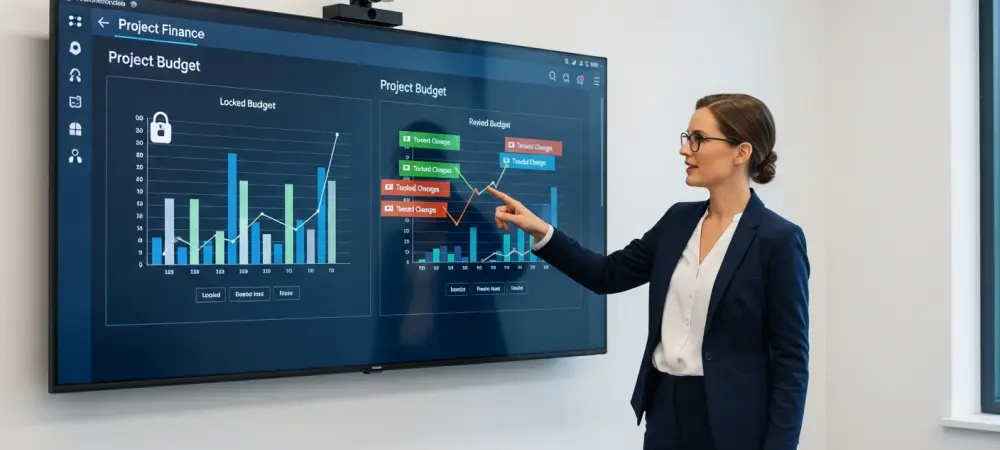
A fundamental challenge that project managers frequently encounter within the standard Business Central environment is the difficulty of maintaining the integrity of an approved budget throughout a project’s lifecycle. The native system’s structure can lead to the original budget being overwritten as change orders and revisions are introduced, making it nearly impossible to track scope creep or perform accurate variance analysis against the initial baseline. Advanced enhancements address this critical vulnerability by implementing a more sophisticated control system. This approach locks the initial, board-approved budget, establishing it as an immutable baseline. From that point forward, project managers can create and document an unlimited number of revisions, each tracked as a separate entity. This method not only preserves the original financial plan for comparison but also provides a clear and comprehensive audit trail, offering stakeholders precise insight into how, when, and why the budget evolved, a level of financial transparency that is essential for modern project governance.
This enhanced financial control extends beyond high-level budgeting to the granular details of cost allocation, a process that is often manual and error-prone in a standard setup. For organizations with a high volume of transactions, requiring employees to manually select the correct General Ledger (GL) codes or apply specific contractual rates for their time and expenses introduces significant risk and inefficiency. Specialized solutions streamline this intricate process by allowing administrators to pre-define cost categories that automatically drive GL assignments and productivity tracking based on the project’s specific contractual terms. These rules operate seamlessly in the background. When a team member enters their time or submits an expense, the system intelligently applies the correct coding and rates without requiring any manual input. This automation removes the burden of complex financial decisions from employees, ensures data consistency and accuracy across the board, and dramatically simplifies the subsequent reporting and billing cycles.
Optimizing Resource and Contractual Management
Effective resource allocation is another critical area where the standard functionalities of Business Central can be augmented for superior project outcomes. Native tools often provide limited visibility into resource availability and workload, making it difficult for managers to prevent bottlenecks or address potential burnout proactively. To resolve this, a dynamic and intuitive capacity dashboard can be introduced, offering a clear, visual representation of the entire team’s utilization. Using a straightforward color-coded system, these dashboards instantly indicate whether a resource is available, fully booked, or overbooked for any given period. This visual clarity empowers managers to rebalance assignments, make informed staffing decisions, and ensure that project timelines are realistic and achievable. Furthermore, by integrating data from the project backlog and sales pipeline, this tool enables strategic forecasting of future resource needs, aligning operational capacity with emerging business priorities and sales commitments.
In addition to resource planning, the ability to accommodate diverse and complex client agreements is paramount for project-based organizations, yet this is an area where standard ERP billing structures can be overly rigid. Projects rarely adhere to a single billing model, and forcing them into one can create administrative burdens and client dissatisfaction. Integrated project management add-ons resolve this by supporting a multitude of billing methods that can be used concurrently within a single project. This includes models such as time and material, fixed price, milestone-based, and recurring calendar-based billing. This inherent flexibility allows a business to tailor its invoicing approach to the unique terms of each contract without resorting to cumbersome manual workarounds or external spreadsheets. For firms managing a high volume of invoices, the addition of a batch invoicing feature further streamlines the process, allowing for the consolidation and processing of multiple invoices at the end of a billing cycle, which saves significant administrative time and accelerates cash flow.
Unifying Project Execution and Data Capture
One of the most significant operational hurdles in a standard ERP environment is the disjointed process of tracking and attributing project-related expenses. Often, this requires employees to use external applications or spreadsheets, leading to delays, data entry errors, and a complicated reconciliation process to link those expenses back to specific projects and tasks. A fully integrated expense management module, built directly into the timesheet functionality, elegantly solves this problem. This all-in-one approach provides a single, unified interface where team members can seamlessly submit and track both their time and their expenses. Each expense can be directly coded to a project, cost category, and task, ensuring that all billable and non-billable costs are captured accurately at the source. The system can also be configured to automatically apply specific markups based on pre-defined project rate cards, guaranteeing that all costs are billed correctly according to contractual agreements without manual oversight.
By centralizing these critical functions, an enhanced project management solution transforms Business Central from a collection of related but separate modules into a truly cohesive and powerful platform. The integration of budgeting, resource planning, billing, and expense management into a single, unified system eliminates the data silos and process inefficiencies that plague many project-based businesses. This holistic approach ensures that every piece of data, from an initial budget revision to a final expense report, is captured within the same environment, providing a single source of truth for all project-related activities. This not only improves operational efficiency and data accuracy but also provides decision-makers with real-time, comprehensive insights into project health, profitability, and performance, enabling more strategic and proactive management.
A More Strategic Path Forward
In retrospect, the decision-making process for organizations that found their project management needs outgrowing the native capabilities of Business Central was often a pivotal one. Rather than immediately resorting to extensive customizations or a complete platform migration, many discovered that leveraging a specialized, integrated add-on provided the most effective and cost-efficient solution. By directly addressing the core limitations in budget control, resource visibility, billing flexibility, and expense tracking, these enhancements allowed businesses to retain the powerful, familiar Microsoft ecosystem while gaining the granular control and sophisticated functionality required for complex project delivery. This strategic upgrade ultimately empowered them to unlock greater efficiency, improve financial oversight, and drive project profitability.