

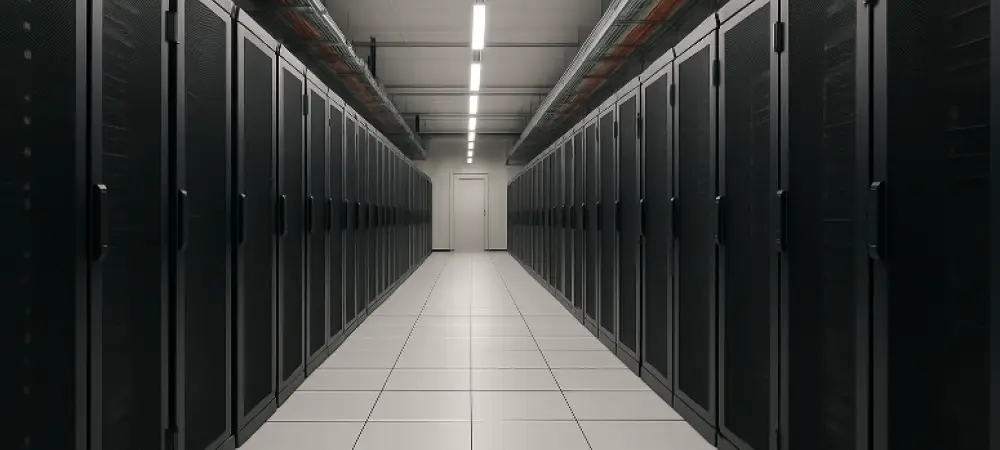
In a significant move reshaping the tech landscape of Manchester and the surrounding region, UK-based operator Datum Datacentres has launched its second data center in Wythenshawe. With a facility capable of hosting up to 1,200 racks and tolerating densities as high as 30kW, Datum’s new MCR2 center marks a notable expansion in their operations. The development of this data center took nearly two years, following the company’s acquisition of Teledata, which had initially set the project’s wheels in motion. Datum decided to demolish the existing Simon House building and construct an entirely new two-story, purpose-built structure, thus slightly delaying its initial timeline but yielding a more strategic facility with roughly 44,700 square feet of space.
Emphasizing Local Growth and Sustainability
Boosting Economic Development
The inauguration of MCR2 signals Datum’s dedication to enhancing local economic opportunities, underscored by the presence of Councillor Emma Taylor at the opening ceremony. Her remarks highlighted the data center’s role in fostering local investment and contributing to the economic revival of Wythenshawe. The councilor also voiced appreciation for the positive ripple effects expected from the project, which could accelerate growth in the area. Datum’s initiative aligns with a broader trend in embedding sustainability within technological infrastructures, reflecting an industry-wide pivot toward greener technologies and practices. By adopting these strategies, Datum is not only contributing to environmental stewardship but also signaling its commitment to corporate social responsibility.
Keysource Partnership and Design Excellence
The collaboration with Salute-owned Keysource for the design and construction of MCR2 was pivotal, focusing on enhancing operational resilience and sustainability. Keysource’s expertise ensured the facility not only meets current industry standards but also sets new ones, pushing the boundaries of environmental responsibility. This partnership underscores how structural innovation can be coupled with eco-friendly practices, framing a narrative of progress in sustainable development within data center operations. The facility strategically integrates cutting-edge technology while maintaining a reduced carbon footprint, thus upholding Datum’s objectives of technological advancement intertwined with ecological preservation.
Strategic Expansion and Industry Trends
Continuity and Innovation
Alongside the newly assembled MCR2, Datum continues to operate the MCR1 facility, established previously in 2007, further fortifying its prominence in the Manchester area. Additionally, the Farnborough-based Datum FRN1 center remains a testament to the company’s sustained industry presence. These developments, backed by funding managed by UBS Asset Management since its acquisition of Datum, signify a steadfast approach to growth through innovation. The expansion of Datum’s footprint is a calculated move that reflects strategic adherence to evolving market dynamics emphasizing green practices, innovation, and regional economic integration.
Broader Market Alignment
Datum’s endeavors mirror a global industry trend, where data centers increasingly pursue sustainability as part of their core operational strategies. Keysource Managing Director Jon Healy emphasized the collaborative synergy between Datum and Keysource, illuminating an era of architectural and environmental excellence. Through their combined efforts, both entities have underscored the potential of integrating cutting-edge technology and sustainable practices. This approach not only meets current needs but also anticipates future demands, further aligning with the rapid pace of technological evolution. Datum’s focus on expanding its reach while maintaining eco-friendly standards is poised to set benchmarks for future data center projects.
Envisioning the Future of Data Centers
In a momentous move altering the tech landscape in Manchester and its neighboring areas, Datum Datacentres, a UK-based operator, has launched its second data center in Wythenshawe. This new facility boasts the capacity to house up to 1,200 racks, withstanding densities as high as 30kW, representing a significant advancement in Datum’s operations. The creation of this center took nearly two years, spurred by the company’s acquisition of Teledata, the catalyst for this undertaking. Datum opted to demolish the existing Simon House building to construct a brand new, two-story, purpose-built structure. This decision delayed the initial project timeline slightly but resulted in a more strategically designed facility, offering approximately 44,700 square feet of space. The new MCR2 center signifies a pivotal growth step for Datum, further solidifying Manchester’s status as a critical hub in the data industry. With such strategic advancements, Datum is well-positioned to meet increasing demands in the data sector.