

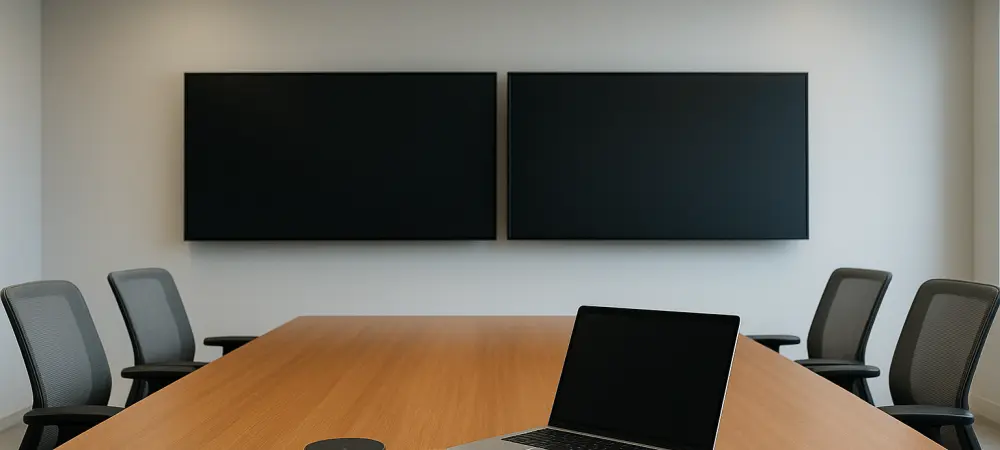
New voice isolation technology filters out ambient noise to ensure that remote participants can hear speakers clearly without the distraction of office background sounds. This innovation represents just one facet of the modern collaborative landscape where hardware and software must harmonize perfectly. For many organizations, the challenge has shifted from simply providing a video link to ensuring that every participant, whether in the room or working remotely, feels like an equal contributor. The Bring Your Own Device movement has matured significantly from 2026 to 2028, pushing manufacturers to bridge the gap between personal laptops and dedicated room systems. Barco has positioned its ClickShare line as the essential conduit for this transition, specifically targeting the Microsoft Teams user base. By eliminating the reliance on cumbersome cables and complex docking stations, the focus remains entirely on the meeting content rather than the underlying technical hurdles. This synergy creates a frictionless environment where a single button click activates high-definition audio and video peripherals instantly.
Seamless Connectivity: The New Standard for Meeting Rooms
Achieving a consistent user experience across diverse office locations requires a standardized approach to hardware interaction that minimizes troubleshooting time for IT departments. ClickShare technology addresses this by providing a unified interface that works across various laptop models and operating systems, ensuring that employees do not need specialized training for every room they enter. The integration with Microsoft Teams has reached a point where the software automatically recognizes the ClickShare Base Unit as the primary hub for all audiovisual inputs and outputs. This level of automation means that once the button is inserted or the app is launched, the room’s high-end cameras and microphones are immediately available within the Teams interface. Consequently, the transition from a private desk to a collaborative huddle space happens in seconds, maintaining the momentum of the working day without the typical delays associated with traditional AV setups. This reliability has become the benchmark for professional-grade wireless presentation systems.
Beyond the immediate convenience for the end user, the architectural simplicity of this wireless approach significantly reduces the physical clutter often found in conference rooms. Standardizing on a wireless BYOD model allows facilities managers to design cleaner, more flexible spaces that are not tethered to a specific floor plan or cable run. As organizations look toward 2027 and beyond, the ability to repurpose rooms quickly becomes a competitive advantage in the race for talent and efficiency. The ClickShare CX series utilizes high-bandwidth wireless protocols to maintain low latency, which is critical when streaming high-resolution video or complex spreadsheets during a Teams call. Furthermore, the system’s ability to provide dual-screen support and touch-back functionality allows presenters to interact with their content directly from the room’s display. This creates a more dynamic and engaging environment where digital tools feel like a natural extension of human interaction rather than a barrier to communication, ultimately fostering an inclusive culture.
Strategic Implementation: Practical Steps for Deployment
Organizations that successfully navigated the shift toward hybrid models prioritized user feedback and technical reliability during their initial rollout phases. It was determined that the most effective deployments began with a pilot program in high-traffic huddle rooms to gather data on common pain points and usage patterns. From these initial tests, IT leaders established a clear set of guidelines for room configurations, ensuring that audio levels and camera angles were optimized for the wireless interface. They also invested in comprehensive training materials that emphasized the one-click nature of the system, which helped overcome initial resistance to moving away from traditional wired connections. By standardizing the equipment across all regional offices, these companies eliminated the confusion of varying tech stacks, allowing traveling employees to remain productive regardless of their physical location. The focus on a cohesive user journey proved to be the deciding factor in achieving high adoption rates and positive sentiment.
Final assessments of these collaborative systems highlighted the necessity of aligning hardware procurement with long-term digital transformation goals rather than short-term fixes. Decision-makers recognized that the flexibility of a BYOD approach, when supported by reliable wireless technology, provided the greatest return on investment by accommodating a wide variety of guest devices and software platforms. They implemented a tiered support model where common issues were resolved through automated self-help tools, freeing up technical staff for more complex strategic projects. Looking forward, the emphasis shifted toward environmental sustainability, with a preference for low-power hardware and modular components that allowed for easy upgrades without replacing entire systems. The transition toward an integrated Microsoft Teams environment was completed by ensuring that all peripherals were certified for seamless operation. These steps ensured that the workspace remained adaptable to evolving needs, creating a resilient foundation for communication.