

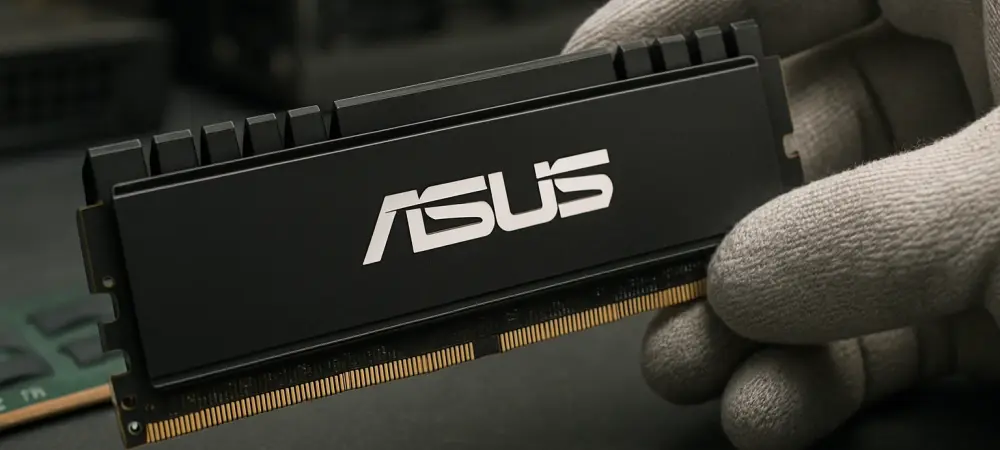
The silent hum of a global supply chain grinding to a halt has pushed one of the world’s largest PC makers toward an unprecedented and high-stakes decision: manufacturing its own core components. A persistent rumor suggests that ASUS, a giant known for assembling powerful systems, is now contemplating the audacious leap into producing its own DRAM memory. This pivot from component buyer to component builder signals a potentially massive shift in the PC industry, born from a crisis that threatens to paralyze production lines worldwide.
When Giants Consider Building the Bricks
The unexpected whisper shaking the PC world is that a leading component assembler is on the verge of becoming a fundamental component manufacturer. This move would represent a significant strategic shift for a company like ASUS, which has built its empire on designing and integrating parts sourced from other specialized firms. It forces the industry to confront a critical question: in a market defined by volatility, is vertical integration the final recourse for ensuring corporate survival?
For ASUS, the consideration is not about market expansion but about securing its foundation. The ability to control a critical part of the supply chain offers a powerful defense against the whims of external suppliers and geopolitical disruptions. This strategic pivot, if realized, could set a new precedent for how major technology brands navigate an increasingly unpredictable global economic landscape, transforming a defensive maneuver into a new model for resilience.
Anatomy of the Memory Bottleneck
The global DRAM shortage is not a singular event but a perfect storm of interconnected pressures. Lingering supply chain disruptions from recent global events have collided with a staggering surge in demand, creating an environment of scarcity and rapidly escalating prices. This has turned what was once a readily available commodity into the new bottleneck for the entire technology sector, affecting everything from smartphones to high-end gaming rigs. Exacerbating this issue is the “AI Effect,” where the voracious appetite for high-performance memory for servers and data centers is effectively starving the consumer PC market. As tech giants invest billions in AI infrastructure, they are consuming a disproportionate share of the available DRAM supply. This trend shows no signs of slowing, with industry forecasts now predicting that memory shortages and the associated price instability could persist well into 2028, making long-term planning a nightmare for consumer electronics companies.
ASUS’s Audacious Plan for Self Sufficiency
According to the circulating rumor, ASUS is exploring a strategic initiative to launch its own DRAM manufacturing facilities, with a target operational date of Q2 2026. This ambitious project is designed with a singular primary objective: to insulate the company’s flagship product lines—including its ASUS, ROG, and TUF gaming brands—from the crippling production delays and price volatility that currently plague the market. By taking manufacturing in-house, ASUS aims to create a predictable and cost-effective supply of this essential component.
However, this monumental undertaking is reportedly a contingency plan. Its execution hinges on the continued instability of the global memory market. Should suppliers stabilize production and prices return to manageable levels, ASUS might shelve the project. This makes the move a calculated gamble on a future of continued chaos, a strategic hedge against a supply chain that has proven to be fundamentally unreliable.
A Divergence in Corporate Strategy
The credibility of this rumor is bolstered by its origin: a technology outlet known for its history of accurate industry predictions. This isn’t just idle speculation; it reflects a plausible response to real-world market pressures. The potential strategy stands in stark contrast to the recent actions of established memory titans like Micron. Micron recently pivoted away from the consumer market by discontinuing its popular Crucial memory brand, choosing instead to focus its resources on the more lucrative high-margin enterprise and data center sectors.
This divergence highlights two different survival strategies. While Micron is streamlining to chase higher profits, ASUS is considering a massive investment to ensure its own production can continue uninterrupted. This frames the potential move by ASUS not as an aggressive grab for market share in the memory industry, but as a defensive necessity. It is a strategic imperative designed to guarantee the company can continue to build and sell its core products without being held hostage by the market.
The High Stakes Gamble of DRAM Fabrication
Embarking on semiconductor fabrication is a formidable challenge, fraught with immense financial and technological hurdles. Building a modern DRAM fab requires billions of dollars in capital investment and access to highly specialized expertise, a far cry from ASUS’s core business of system assembly and design. The company would be entering a fiercely competitive arena dominated by a handful of established players.
Yet, the potential rewards could be transformative. If ASUS were to succeed and generate surplus capacity, it could pivot from being a customer to a competitor, potentially supplying memory to other PC companies struggling with the same shortages. Such a development would have profound implications for the entire PC manufacturing ecosystem, potentially reshaping supply dynamics and influencing consumer pricing for years to come. The decision facing ASUS is not merely about sourcing parts; it is about redefining its role in the industry.
The exploration of this radical move by ASUS highlighted the extreme pressures facing the modern technology industry. The analysis revealed a market where supply chain sovereignty has become as critical as product innovation. Whether ASUS ultimately builds its own fabrication plants or not, the fact that such a plan was seriously considered marked a turning point. It demonstrated that in an era of persistent scarcity, the old rules of specialization were being rewritten, forcing even the largest companies to contemplate remaking themselves from the ground up to secure their future.