

Introduction
The once-unshakable foundations of Silicon Valley’s tech hierarchy are experiencing significant tremors as a steady stream of top-tier talent reorients its compass from established giants toward the magnetic pull of artificial intelligence. This phenomenon, particularly the migration from Apple to OpenAI, signals a potential power shift with profound implications for the future of consumer technology. This article aims to dissect this trend by addressing key questions surrounding the “brain drain,” exploring its impact on both companies and what it reveals about the industry’s next frontier.
Key Questions or Key Topics Section
What Is Driving This Talent Migration from Apple to OpenAI
The movement of high-profile executives and engineers is not coincidental but a result of strategic recruitment and shifting industry priorities. OpenAI is aggressively expanding its scope beyond software, aiming to create integrated hardware that redefines human-computer interaction. This ambition creates a compelling new frontier for innovators, drawing experts like Cheng Chen, whose optics knowledge was central to the development of the Apple Vision Pro.
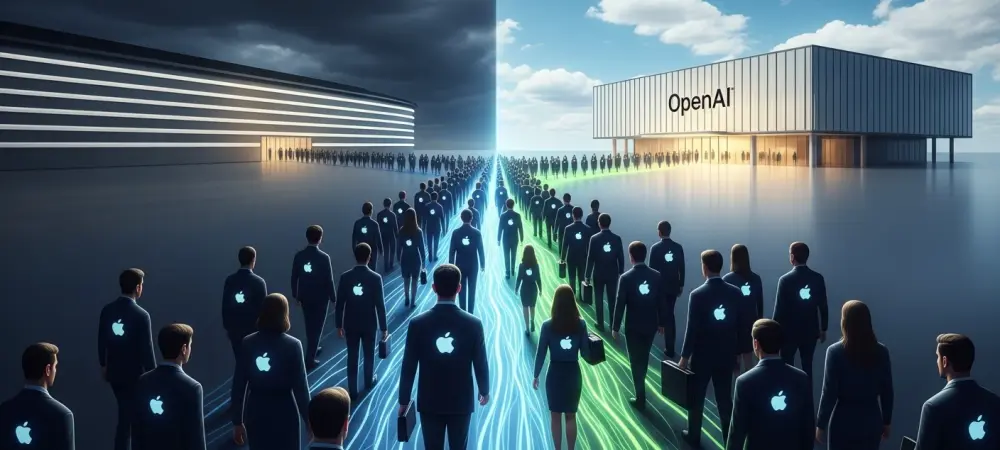
This aggressive hiring spree reveals a clear pattern. OpenAI is not just attracting a few individuals but systematically recruiting dozens of engineers from Apple’s most crucial divisions, including iPhone, Mac, and silicon design. These professionals are drawn by the unique opportunity to build foundational AI-native devices from the ground up, a challenge that represents the cutting edge of technological development.
How Significant Are the Departures for Apple
For a company built on secrecy and integrated product design, the loss of key personnel represents a significant blow. The departures are not merely a reduction in headcount but a hemorrhage of institutional knowledge and creative leadership from teams responsible for the company’s most successful products. This exodus erodes the deep expertise that has long been Apple’s competitive advantage in a crowded market.
Moreover, each high-profile exit creates a ripple effect, potentially unsettling remaining team members and making it harder to retain top talent. The loss of visionaries who have shaped Apple’s iconic products threatens to slow its innovation pipeline, particularly as it navigates complex new categories like spatial computing and on-device artificial intelligence, where specialized experience is paramount.
What Does This Reveal About OpenAI’s Ambitions
OpenAI’s focused recruitment is a clear declaration of its intent to compete directly in the hardware space. By poaching talent specifically from Apple’s hardware and silicon design teams, the company is assembling a world-class group capable of building a physical product. This strategic move suggests OpenAI believes that the full potential of AI can only be realized through tightly integrated software and hardware, a philosophy long championed by Apple itself.
The reported collaboration with Jony Ive, Apple’s former chief design officer, further solidifies these ambitions. The goal appears to be the creation of a new category of AI-centric devices, moving beyond the smartphone paradigm. This represents a direct challenge not just to Apple’s talent pool but to its entire business model and long-held market position.
Could This Trend Escalate into a Leadership Crisis at Apple
The steady stream of departures is fueling legitimate concerns about a deepening leadership crisis within Apple’s ranks. While the loss of individual contributors is impactful, the potential departure of senior leadership could prove catastrophic. The speculation surrounding Johny Srouji, Apple’s senior vice president of Hardware Technologies, exemplifies this considerable risk.
As the chief architect behind Apple’s custom silicon, Srouji’s leadership is fundamental to the performance and efficiency of every major Apple product. His exit would represent a foundational loss, creating a vacuum in a division that provides one of the company’s most significant competitive moats. Such an event would transition the current “brain drain” into a full-blown crisis, questioning the long-term stability of Apple’s technical leadership.
Summary or Recap
This ongoing exodus of talent from Apple to OpenAI represents more than just a series of career moves; it signifies a strategic realignment within the tech industry. OpenAI is systematically acquiring the expertise needed to challenge the established order of consumer hardware. The pattern of recruitment highlights a clear ambition to build integrated AI devices, posing a direct threat to Apple’s product ecosystem. Consequently, Apple faces a critical challenge to its innovation culture and leadership stability as it contends with the gravitational pull of the AI frontier.
Conclusion or Final Thoughts
The talent migration from an established titan like Apple to a disruptive force like OpenAI was a telling indicator of a broader shift in technological priorities. This movement demonstrated that the most coveted battleground for innovation had moved decisively toward AI-native hardware. It left the industry to consider how legacy giants, whose success was built on the smartphone era, needed to adapt to retain the visionaries capable of building the next generation of technology.