

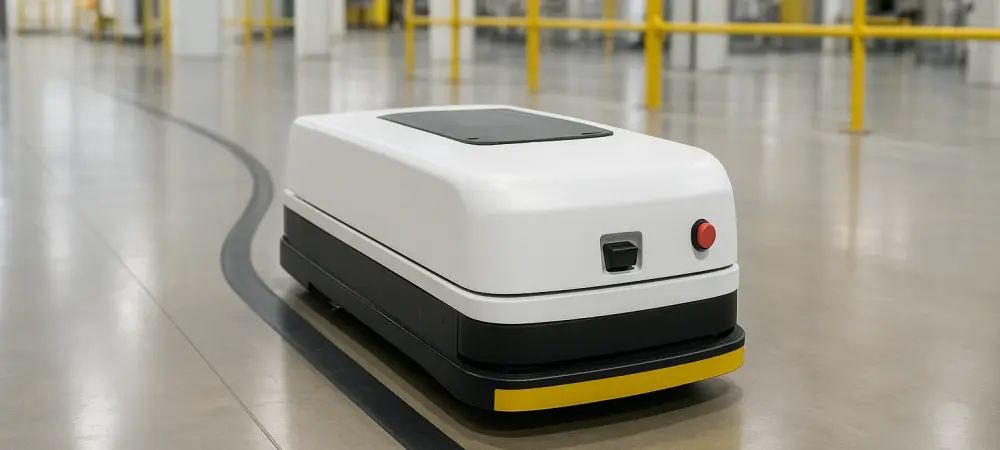
The frantic hum of a bustling fulfillment center often masks a hidden struggle between the rigid efficiency of guided tracks and the unpredictable intelligence of autonomous navigation systems. Modern supply chains frequently prioritize the allure of cutting-edge autonomy, yet the actual performance metrics often tell a different story. While the marketing for Autonomous Mobile Robots (AMRs) suggests a seamless transition away from fixed infrastructure, the reality is that raw processing power cannot always compensate for a crowded floor plan.
This technological crossroads defines the current landscape of logistics. As facilities scale, the choice between traditional Automated Guided Vehicles (AGVs) and AMRs determines the ultimate ceiling for throughput. The decision requires a balance between the reliability of fixed paths and the agility of sensor-based navigation, especially as companies strive to maximize their investments in enterprise software.
The Fallacy of the Smartest Robot in the Warehouse
In the race to modernize fulfillment centers, there is a common assumption that a robot capable of thinking for itself is inherently superior to one that follows a predetermined path. While the marketing brochures for AMRs promise a future free of floor tape and fixed tracks, the reality on the warehouse floor often reveals a more complex truth. Raw intelligence does not always equate to operational efficiency, especially when multiple autonomous units attempt to occupy the same narrow corridor.
Facility managers frequently discover that an AMR’s ability to navigate around obstacles can lead to unexpected localized gridlock. In high-density environments, a robot that pauses to calculate a new route every time it encounters a pallet or a person can disrupt the cadence of the entire operation. This proves that in many industrial settings, the most sophisticated navigation isn’t always the most productive choice.
Why the AGV vs. AMR Debate Matters in a Tight Labor Market
As organizations integrate technologies like Microsoft Dynamics 365 Supply Chain Management, the pressure to automate has shifted from a luxury to a survival tactic. With global labor shortages and the relentless demand for faster fulfillment cycles, the choice between AGVs and AMRs has significant financial and operational stakes. This decision isn’t just about hardware; it is about how a facility manages the flow of goods toward its destination.
Understanding the distinction between infrastructure-dependent navigation and sensor-based autonomy is essential for leaders who need to scale operations without falling into the trap of over-automation. From 2026 to 2028, the industry expects a surge in hybrid deployments that leverage the strengths of both technologies. Proper integration ensures that the robotic fleet complements the human workforce rather than complicating their daily tasks.
Decoding Industrial Mobile Robots: Functional Categories and Technical Realities
The choice between these technologies depends largely on whether a robot operates as part of a rigid system or as a standalone solution. System-Specific Industrial Mobile Robots thrive in structured grids where dynamic obstacle avoidance is unnecessary and potentially disruptive. In these controlled zones, the predictability of an AGV-style movement ensures high-speed repetition that remains unmatched by more flexible navigators.
Conversely, Solutionable Industrial Mobile Robots—such as autonomous forklifts or MiR platforms—are designed for open, diverse environments where they must interact with manual equipment. These units excel at point-to-point transport because they can recalculate paths in real-time, maintaining safety and continuity without requiring expensive modifications to the facility floor. This flexibility allows them to integrate into existing workflows without a total overhaul of the physical space.
Strategic Perspectives on Throughput and Total Cost of Ownership
Industry experts and strategic advisors emphasize that the novelty of a robot’s hardware should never overshadow the physical constraints of the facility. A consensus is emerging: facility layout and traffic density must dictate the technology choice. For instance, in a warehouse with dedicated, unobstructed travel lanes, a traditional AGV can often outperform an AMR by maintaining a consistent, high-speed pace that an autonomous unit might throttle due to safety sensors. Evaluating the Total Cost of Ownership (TCO) over a three-to-five-year period reveals that the smarter choice is often the one that integrates most seamlessly with existing Warehouse Execution Systems. Coordinating traffic rules through centralized software prevents the very bottlenecks that individual autonomous sensors are meant to avoid. Efficiency is ultimately a result of system-wide orchestration rather than individual vehicle autonomy.
A Framework for Selecting the Right Mobile Robotic Fleet
The evaluation process prioritized the mapping of human and equipment traffic to determine if dynamic rerouting served as an asset or a liability for throughput. Analysts identified that in areas where lanes remained clear and dedicated, the lower cost and higher predictability of an AGV provided a better return on investment. The implementation of robust fleet management software served to harmonize different robot types within a single operational logic. By focusing on how these machines interacted with human labor and existing software like Dynamics 365, organizations built resilient supply chains. The shift toward data-driven decisions ensured that the chosen robotic fleet supported long-term scalability and operational harmony. This approach moved beyond marketing terminology to deliver measurable increases in hourly throughput and a more stable bottom line.