

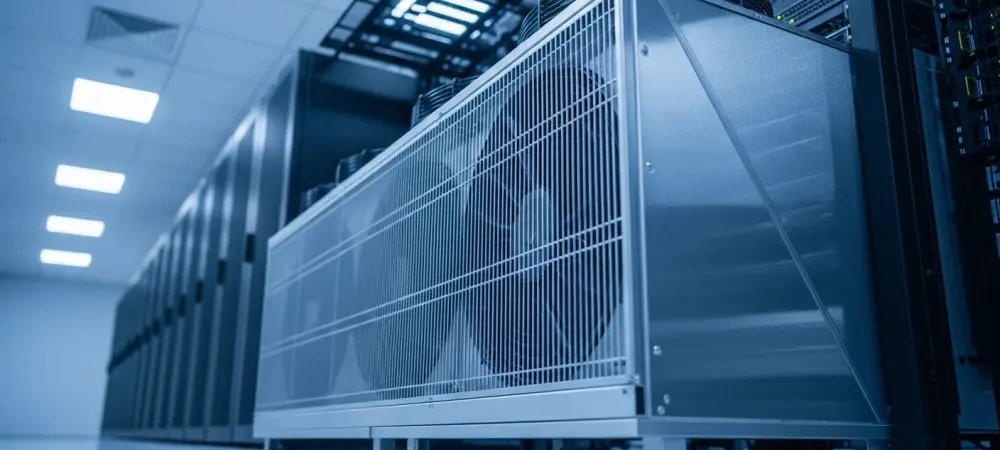
With a deep background in applying artificial intelligence and machine learning to complex industrial challenges, Dominic Jainy is at the forefront of revolutionizing IT infrastructure. Today, we delve into his insights on a landmark project at a Zagreb data center, exploring how an AI-driven cooling system is transforming operations. This conversation will unpack the practical challenges of data center management, the step-by-step process of an intelligent cooling solution, and the significant financial and preventative maintenance benefits that arise from eliminating thermal inefficiencies and predicting equipment failures.
Before implementing the WSCO solution, what specific operational challenges, such as hot spots or high energy use, were most pressing at your Zagreb facility? Could you walk me through how these issues impacted daily operations and the need for a new approach?
The most pressing issues were definitely the persistent “hot pockets” and the sheer inefficiency of our previous cooling approach. You’d have certain areas in the room system where temperatures would spike unpredictably, putting incredibly valuable IT and network equipment at risk. This forced us to run our cooling units at full tilt almost constantly, which was a massive energy drain and drove up our operational costs significantly. Beyond the expense, the constant high-demand operation meant our cooling units required more frequent maintenance, creating a cycle of costly repairs and potential downtime that we knew was unsustainable.
The new system uses AI to automatically regulate fan airflow based on data from thermistors. Can you detail the step-by-step process, from a temperature change being detected at a server cabinet to the AI making a real-time cooling adjustment?
It’s a beautifully dynamic and intelligent process. First, we have a network of thermistors strategically placed to measure temperature changes directly on the server and network cabinets. When a thermistor detects even a slight rise in temperature, that data is instantly fed into our central monitoring system. This is where the White Space Cooling Optimization, or WSCO, solution takes over. The AI analyzes this incoming data stream, understands the specific location and intensity of the heat, and then automatically regulates the fan airflow to target that precise area. It’s not a blunt, facility-wide adjustment; it’s a focused, real-time response that delivers the exact amount of cooling needed, exactly where it’s needed.
With the system able to eliminate up to 99 percent of hot air pockets, how has this improved preventive maintenance? Please share a practical example of how the AI identifies a potentially faulty component before it can cause a significant failure.
That 99 percent elimination rate is a game-changer for reliability. The system’s continuous monitoring and machine learning capabilities allow it to establish a baseline for normal thermal behavior for every single piece of equipment. When a server’s fan starts to degrade, for instance, it might not fail outright, but its cooling efficiency will drop, causing a subtle, localized temperature increase. The AI will immediately flag this anomaly, noticing that this specific cabinet requires more cooling effort than its historical average or its neighbors. This allows us to investigate and replace the faulty component proactively, long before it can lead to a catastrophic failure caused by excessive temperature.
A six-figure savings in electricity consumption is a significant projection. Could you break down how the AI-driven dynamic cooling achieves this? Beyond energy, what other financial benefits do you anticipate from reduced cooling unit operation and lower maintenance costs?
The six-figure savings in euros primarily comes from no longer having to over-cool the entire data center. Instead of a brute-force approach, the AI’s dynamic management means the cooling units operate only when and where necessary, drastically reducing their overall operating hours and, therefore, their electricity consumption. But the benefits extend well beyond the power bill. With the cooling units running less frequently and under less strain, we see a direct reduction in maintenance costs. There’s less wear and tear, which means fewer repairs and a longer lifespan for the equipment. This combination of energy savings and lower maintenance creates a powerful financial impact.
The collaboration with Siemens was key to this project. What were the most critical factors in integrating their AI and sensor technology with your existing infrastructure at the Zagreb data center, and what was the most challenging aspect of that implementation?
The most critical factor was ensuring seamless data flow between their intelligent sensors and our core monitoring systems. The success of the entire WSCO solution hinges on the AI having clean, real-time data to act upon. Integrating the thermistor network without disrupting ongoing operations was paramount. The most challenging aspect was the initial calibration phase. We had to let the AI and its machine learning algorithms run and learn the unique thermal dynamics of our facility. It required patience to build that baseline operational profile, but it was essential for the system to eventually achieve the dynamic and efficient temperature regulation we have today.
What is your forecast for the role of AI and machine learning in managing physical data center infrastructure over the next five years?
I believe AI and machine learning will become the central nervous system for all physical data center operations. We’re moving far beyond simple environmental monitoring into a future of fully autonomous infrastructure management. AI will not only control cooling and power distribution with hyper-efficiency but will also predict physical hardware failures, optimize workload placement based on thermal and energy profiles, and even manage physical security systems. The data center of the near future will be a self-healing, self-optimizing environment where human intervention is the exception, not the rule, leading to unprecedented levels of uptime, efficiency, and sustainability.