

The property restoration industry is undergoing a monumental shift, moving away from a historically reactive, intuition-based model where success was defined by how quickly a company could respond after a disaster call. A new paradigm powered by Artificial Intelligence (AI) and the Internet of Things (IoT) is redefining the very nature of emergency response, transforming it into a proactive, data-driven science. These technologies are no longer futuristic concepts relegated to industry conferences but have become essential, baseline tools for survival and competitive advantage. Companies that fail to integrate these systems risk becoming obsolete as the industry standard evolves to demand predictive deployment, irrefutable digital documentation, and operational hyper-efficiency. The overarching trend identified is a move away from manual processes, visual inspections, and paper-based record-keeping toward automated, precise, and digitally verifiable workflows that benefit restoration firms, property owners, and insurance carriers alike. This technological revolution is creating a clear divide between the restorers of yesterday and the data-driven problem solvers of today.
The New Operational Blueprint: From Reaction to Prediction
Leveraging AI for Proactive Deployment
The most transformative application of AI in disaster restoration is its ability to forecast high-risk zones, fundamentally changing the operational calculus from reaction to prediction. By processing vast datasets encompassing historical loss data, complex weather patterns, and geographic vulnerabilities, advanced algorithms can now pinpoint specific neighborhoods or even city blocks that are most likely to be impacted by an impending storm or weather event. This predictive power allows forward-thinking restoration companies to abandon the traditional centralized dispatch model in favor of a decentralized, pre-deployment strategy. Instead of scrambling crews across a city after calls begin to flood in, they can have trucks and equipment strategically stationed in these identified zones, poised for immediate action. This foresight dramatically cuts down response time, which is the single most critical factor in mitigating water damage before it leads to secondary issues like microbial growth, thereby saving structures and reducing overall claim severity.
Once a service call is received, AI continues to optimize the logistical chain with a level of precision previously unattainable. AI-powered route planning systems dynamically adapt to real-world conditions, accounting for traffic congestion, accidents, construction, and road closures in real time. Shaving even a few minutes off an arrival time can mean the difference between simply drying a structure and performing a costly tear-out of saturated materials. Furthermore, AI addresses the common failure point of arriving at a site with either too much or too little equipment. By analyzing initial damage reports—whether from a property owner’s description or an automated sensor alert—and cross-referencing this with a database of thousands of similar past jobs, the system can accurately predict the necessary equipment load. It auto-generates a precise manifest, ensuring the crew arrives with the exact number of air movers, dehumidifiers, and extraction tools required to begin effective mitigation immediately, eliminating the costly and trust-eroding need for a second trip.
Utilizing IoT for On-Site Prevention and Mitigation
The Internet of Things has fundamentally transformed on-site damage control, turning a series of manual spot-checks into a continuous, automated surveillance and prevention system that operates around the clock. At the forefront of this shift are smart water valves, which act as a property’s first line of defense, often resolving a crisis before the restoration company is even dispatched. By continuously monitoring water flow rates using sophisticated algorithms, these devices can detect anomalies—such as the unique signature of a burst pipe—and automatically shut off the main water supply within seconds. This capability transforms a potential catastrophic flood that could cause tens of thousands of dollars in damage into a manageable puddle, saving property owners and insurance carriers significant financial and emotional distress. With industry data suggesting that a high percentage of water leaks are preventable with such systems, their adoption is now heavily encouraged by insurers through substantial premium discounts, positioning restoration firms as proactive property health managers rather than just emergency responders.
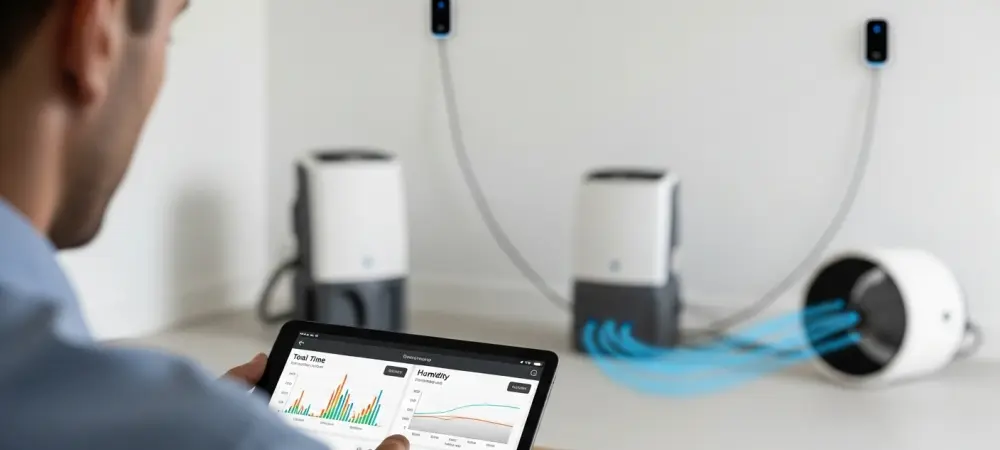
Beyond outright prevention, IoT-enabled environmental sensors have eliminated the critical blind spot in the drying process. Traditionally, technicians would visit a site once a day to take manual readings, leaving a massive 23-hour gap where conditions could deteriorate unnoticed. Mold growth, which can begin within 24-48 hours of water exposure, thrives in such unmonitored environments. IoT-enabled humidity and temperature sensors eradicate this risk by streaming environmental data to the cloud 24/7. If a dehumidifier fails, is inadvertently unplugged, or simply cannot keep up with the moisture load, a project manager is alerted via their smartphone in real-time, day or night. This allows for immediate intervention. Some advanced systems even permit remote adjustments, enabling technicians to increase fan speeds or change settings from the office, optimizing drying curves without a costly and time-consuming site visit. This demonstrates an unparalleled level of proactive management to insurance adjusters and keeps the project firmly on schedule.
The Power of Ironclad DatPrecision and Proof
Revolutionizing Damage Assessment and Documentation
The era of relying on tape measures and hand-drawn sketches, which frequently led to disputes over square footage and material calculations, is definitively over. The introduction of 3D LiDAR scanning has replaced subjective estimations with objective, irrefutable data. These scanners create dimensionally accurate, legally defensible digital replicas of a damaged property with millimeter-level precision, often within a 1-2% margin of manual verification. This “digital twin” of the loss site eliminates arguments over the scope of work and the quantity of materials needed for repairs. Moreover, these scans generate immersive virtual walkthroughs, allowing insurance adjusters to inspect the property remotely from their desks. This virtual access dramatically accelerates the damage verification and approval process, often shortening the payment cycle by days or even weeks and getting property owners back on their feet faster. It shifts the conversation from one of opinion to one of fact.
Water is an insidious force, often migrating behind walls, under floors, and into insulation cavities where it remains completely invisible to the naked eye. Thermal imaging cameras have become an indispensable tool for making this hidden moisture visible. By detecting the subtle temperature differences caused by evaporative cooling where moisture is present, these cameras create a clear, color-coded visual map of all affected areas. This technology allows restoration professionals to non-invasively pinpoint the exact extent of water intrusion without resorting to unnecessary and destructive demolition. When a thermal image is paired with a digital moisture meter for spot verification, this dual-tool approach provides irrefutable proof of loss. Showing a homeowner or an insurance adjuster a thermal image with its distinct “cold blue” signature of hidden moisture provides instant credibility and justifies the full scope of the necessary drying or remediation work, leaving no room for doubt or dispute.
Enhancing Crew Safety and Site Security
Before sending personnel into a potentially unstable or contaminated structure, leading companies now deploy an array of technologies to assess risks from a safe distance. This intelligence-gathering phase is crucial for protecting the most valuable asset of any restoration company: its people. Aerial drones can provide high-resolution imagery of damaged roofs, inspecting for structural weaknesses or compromised areas without risking a fall, which remains a leading cause of injury in the construction and restoration fields. Similarly, ground-based robots or rovers can navigate flooded basements to test the water for contaminants like sewage or chemicals, determining whether standard personal protective equipment is sufficient or if full hazardous materials suits are required. These robots, equipped with specialized sensors, can also check for airborne hazards such as carbon monoxide from generators or explosive gases in confined spaces, ensuring that crews enter a site with full awareness of the risks. This focus on remote assessment not only dramatically improves safety but also significantly reduces corporate liability by creating a documented record of pre-entry site conditions. The same technologies used for initial assessment serve a vital secondary purpose throughout the project’s lifecycle: site security. A vacant property undergoing restoration is a prime target for theft of equipment, building materials, and the owner’s remaining property. Wireless site cameras and the continuous monitoring capabilities of drones and robots provide 24/7 surveillance, acting as a powerful deterrent to would-be thieves and vandals. This dual-use capability adds another layer of value to the technological investment, offering peace of mind to both the property owner and the restoration contractor while protecting the project’s bottom line from unexpected losses due to criminal activity, ensuring the focus remains on restoration, not replacement.
Streamlining the Path to Payment: Automation and Verification
Accelerating the Claims Process
The final and often most frustrating phase of a restoration job—the administrative process of documenting the loss and getting paid—is being systematically dismantled and rebuilt with AI-driven efficiency. Sophisticated AI systems can now analyze thousands of site photos and technician notes in minutes to automatically generate line items for industry-standard estimation software like Xactimate. AI-powered photo recognition can identify and tag damaged materials (e.g., “wet drywall,” “saturated insulation,” “laminate flooring delamination”) without requiring tedious manual input from a project manager. This level of automation virtually eliminates common data entry errors, ensures billing consistency across the entire organization, and slashes the time spent on paperwork from hours to minutes. By delivering complete, accurate, and professionally formatted loss details to insurance adjusters almost instantly, it caters directly to their need for rapid, verifiable information, thereby accelerating claim settlements and improving cash flow.
This acceleration is further enhanced by the move away from insecure and cumbersome communication methods like email attachments. Modern restoration management platforms provide secure, cloud-based portals where all project files—3D scans, sensor logs, high-resolution photos, and detailed reports—are organized in one centralized and easily accessible location. This provides adjusters with a transparent, comprehensive view of the entire project from start to finish. Some advanced systems are even incorporating blockchain technology to create a tamper-proof audit trail, ensuring absolute data integrity and building an unprecedented level of trust between the restorer and the carrier. This streamlined, transparent approach to information sharing removes the friction and delays inherent in traditional claims processing, fostering a more collaborative and efficient relationship between all stakeholders involved in the restoration lifecycle.
Ensuring Finality with Digital Verification
The ultimate power of this technological integration lies in its ability to provide definitive, data-backed proof of a job well done. IoT sensor logs, which record ambient temperature and humidity readings every few minutes throughout the drying process, create a comprehensive and indisputable record of the environmental conditions. This data serves as a powerful liability shield against future mold claims, as it proves that the structure was dried to meet or exceed industry standards. If a claim arises months or even years later, the restoration company can produce a detailed, time-stamped report showing the exact drying curve, effectively ending any dispute before it can escalate into costly litigation. This level of documentation provides finality to the project and protects the company’s reputation and financial health.
This same immutable data provides undeniable justification for equipment rental charges, a frequent point of contention in insurance negotiations. Instead of simply billing for a certain number of air movers and dehumidifiers for a set number of days, restorers can now present a granular report that shows precisely when each piece of equipment was running and the direct impact it had on the drying environment. This evidence-based approach to invoicing leaves no room for adjusters to question the necessity or duration of equipment usage. It transforms the billing process from a negotiation into a simple verification of services rendered based on verifiable data. As a result, invoices are more likely to be paid in full and without dispute, ensuring prompt payment and cementing the restoration company’s status as a transparent and professional partner in the claims process.
The Inevitability of a Data-Driven Future
The adoption of AI and IoT was no longer a matter of choice but of survival. The competitive landscape had been redrawn, and the advantage now belonged to firms that could leverage data to operate faster, more accurately, and with greater transparency. Companies that clung to outdated manual methods found themselves outmaneuvered by competitors who could predict disasters, provide forensic-level documentation, and defend their work with irrefutable digital evidence. The technology had matured, was widely deployed, and was already delivering a significant return on investment through increased efficiency, reduced liability, and accelerated payments. The definitive call to action for restoration professionals was clear: embrace this transformation or risk being rendered obsolete by a new generation of data-driven, technologically empowered competitors who had already defined the new industry standard.