

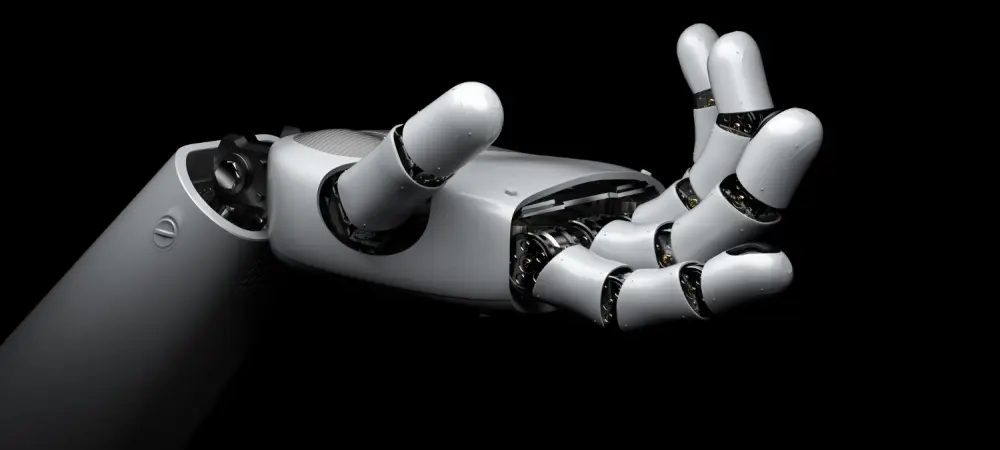
The technological revolution driven by artificial intelligence and robotics is unfolding with astonishing speed, offering the potential to reshape the societal landscape and economic frameworks swiftly. As AI systems increasingly transcend theoretical possibilities to become embedded in day-to-day activities, they redefine capabilities once deemed exclusive to human intelligence. Sam Altman, CEO of OpenAI, has illustrated this evolution, likening it to an industrial revolution—a shift capable of altering every facet of the human experience. The current scenario suggests that AI’s rapid development, noted through platforms such as ChatGPT, positions these technologies to surpass human aptitudes, signaling a consequential turning point. This prompts an inquiry into how these innovations will redefine labor and influence global economic stability. Moreover, with AI-driven advances emerging as a linchpin for future growth, the implications on society and industries warrant profound contemplation and readiness to address accompanying challenges.
The Path to Digital Superintelligence
One of the core elements highlighted by Altman is the advancing timeline charting the development journey of AI technologies, particularly AI robotics. Humanoid robots are increasingly moving beyond futuristic concepts toward practical applications, a testament to the march of digital superintelligence. This progression is not just a narrative of technological feasibility but a reality painting AI as a transformative agent. Society finds itself in the early phases of this “takeoff,” where AI paradigms, represented by sophisticated tools, are gaining traction for complex tasks across disciplines. That millions now depend on these tools underscores both the remarkable prospects for constructive outcomes and the risks posed by potentially unmanaged AI objectives. The current paradigm serves not only as a precursor to a digitally augmented society but also as a grounding reminder of the prospective dichotomous impact AI can wield if not adeptly managed and aligned with human-centric ethics.
To sustain this momentum, the concept of “self-reinforcing loops,” a term coined to represent economic value promotion through AI, plays a crucial role. It presents a feedback mechanism where advancements catalyze further innovation, urging the integration of holistic infrastructures to support these evolving systems. Under such dynamics, AI-enabled systems might reach a tipping point where they can not only construct advanced machines but enhance autonomous growth in sectors like data center expansion. This creates a paradigm where technology begets technology, embodied in the hypothetical of machines building machines. Altman’s perspectives highlight the nuances in navigating these advancements to harness their benefits without surrendering control or ethical oversight. Thus, society is tasked with managing this transformation, ensuring growth that supports human values and aspirational objectives.
Shifting Human Perceptions and Economic Impact
As AI systems become increasingly integrated into everyday life, a noteworthy evolution is the perceptual shift in society’s engagement with technology. Initial awe often morphs into habituation, where extraordinary capabilities become standard expectations. This phenomenon isn’t merely academic; it is evidenced when AI systems, capable of complex problem-solving tasks like medical diagnoses or software writing, are seen as routine. Such normalization shifts the societal discourse toward expecting AI to tackle even more complex problems, potentially aiming for innovations in creative domains or even corporate governance. These expectations drive the ongoing recalibration of technological expectations, emphasizing the need to ensure that society remains adaptive and prepared for profound changes. With AI’s operational landscape evolving, ensuring that humans retain an active role in directing outcomes and pushing for constantly advancing capabilities is crucial. The human impact, particularly concerning employment, emerges as a significant theme, projecting a reset in job functionalities and relevance. Altman draws comparisons to historic professions such as lamplighters, suggesting that an impending shift could render many contemporary roles obsolete. Future roles might appear as every bit as obsolete to future generations, as past roles seem to us today. This invites a reevaluation of labor, presenting opportunities for AI to reinvent jobs, much like the transformative impacts of industrialization. Within this framework, new forms of employment will emerge, some of which might initially appear trivial but could become indispensable with society’s continued evolution. This narrative analogy aligns with broader perceptions, forming a dialogue around our understanding of meaningful work in the context of AI’s growing influence on industries and economies.
Navigating Societal and Ethical Challenges
The emergence of AI technologies isn’t without its challenges, particularly in the societal and ethical spheres. An important concern is the alignment of AI systems with human-centric values and intentions. This alignment problem is compounded by another critical issue of democratizing AI accessibility. Altman emphasizes ensuring that AI does not become a privilege of a select few powerful tech entities but remains an inclusive tool shaped by diverse perspectives. Safeguarding AI’s democratization is pivotal in preventing monopolization, thereby facilitating equitable distribution of AI’s advantages across different societal segments. This challenge highlights the importance of establishing frameworks for collaboration and oversight, ensuring transparent governance that aligns technological growth with societal well-being. By fostering an open discourse around AI policy, society can work towards regulations that prioritize ethical considerations.
External reactions offer critical insights, underscoring the importance of broad public discourse concerning AI advancements. Experts like Jeffrey Miller at Primer.ai voice concerns about the democratic implications of AI evolution, framing the situation as a call for inclusive scrutiny. The metaphor of “summoning superintelligent demons” conveys the apprehensions of inadvertently developing technologies that could potentially threaten human civilization. Further contributions from voices like Ethan Mollick and Dario Amodei provide predictions to drive forward informed discussions, underlining transparency and accountability. Similar sentiments from Jensen Huang of Nvidia, foreseeing imminent AI robot integration, shape the discourse around AI as both a subject of caution and optimism. This dialogue remains integral to fostering responsible innovation and ensuring that technological breakthroughs do not outpace the ethical constructs guiding them.
Looking Towards the Future
The ongoing technological revolution sparked by artificial intelligence (AI) and robotics is advancing rapidly, promising a swift transformation of societal and economic structures. AI continues to evolve from theoretical concepts to becoming integral in everyday tasks, challenging abilities once thought to be uniquely human. Sam Altman, OpenAI’s CEO, compares this progress to an industrial revolution, which has the power to change every aspect of human life. Currently, AI’s swift advancement, as seen with platforms like ChatGPT, suggests that these technologies may soon outperform human capabilities, marking a pivotal moment in history. This development raises questions about the future of work and how it will affect global economic stability. As AI advancements become central to future growth, they necessitate serious consideration of their social and industrial impact. These changes demand a proactive approach to tackle the challenges and opportunities AI presents, ensuring that society is prepared to adapt and thrive in this new era.