

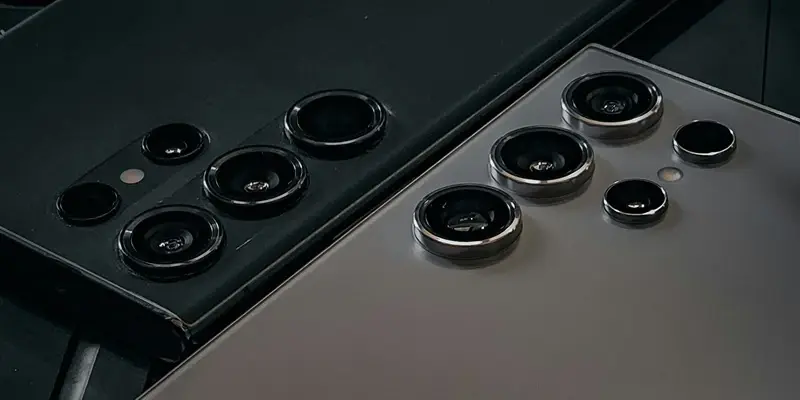
At the recent Galaxy Unpacked event, Samsung unveiled its new Galaxy S25 series to much anticipation, featuring the S25, S25 Plus, S25 Ultra, and the surprising addition of the S25 Edge. A standout moment was when Samsung’s design chief, Hubert Lee, revealed that the new shades of blue seen in these models were inspired by the brilliance of artificial intelligence. This intriguing statement left many wondering about the concept of AI influencing color and design in modern technology products.
The Galaxy S25 and S25 Plus models are available in a striking array of hues, including navy, icy blue, silver shadow, and mint. This minimalist palette creates a visually appealing contrast, especially between the icy blue and navy variants, and the refined titanium silver-blue on the S25 Ultra. The thoughtful color choices suggest a merging of advanced tech with chic aesthetics, reflecting Samsung’s ambition to set new design trends. The design team’s reliance on AI for inspiration underscores the increasing role of technology in crafting not only functional but also aesthetically pleasing devices.
Advanced Camera Capabilities
The S25 Ultra stands out not only for its sleek design but also for its high-end camera capabilities, marking a significant leap forward in smartphone photography. It features an intricate camera array comprising a 50-megapixel ultrawide lens, a 200-megapixel wide-angle lens, dual telephoto lenses (a 50-megapixel 5x/10x telephoto and a 10-megapixel 3x telephoto), and a 12-megapixel selfie camera. This array allows for an extraordinary level of detail and versatility, suitable for both amateur photographers and professionals seeking convenience without sacrificing quality.
In addition to its technical prowess, the S25 Ultra offers exclusive color options such as titanium jet-black, titanium jade-green, and titanium pink-gold when ordered directly from Samsung. These customization possibilities cater to users who desire a personalized touch, blending exceptional camera capabilities with a phone that matches their individual style. This alignment of advanced imaging technology with bespoke design choices represents Samsung’s commitment to both innovation and user-centric experiences.
S25 Edge and Future Trends
The S25 Edge marks another significant development in Samsung’s lineup, combining design and functionality to set new trends. The introduction of the S25 Edge at the Galaxy Unpacked event highlights Samsung’s willingness to experiment and push boundaries. This model, along with its AI-inspired design, showcases potential future trends where technology greatly influences the aesthetics of devices. By integrating AI in design processes, Samsung sets a precedent for future tech development, positioning itself at the forefront of innovation in both form and function.