

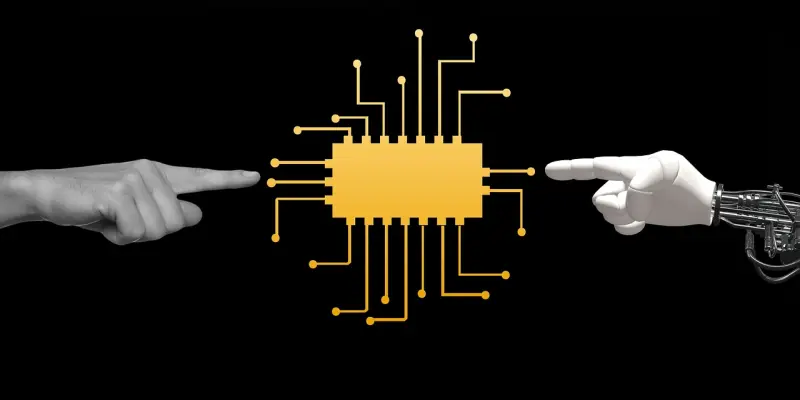
The pervasive presence of artificial intelligence (AI) in both professional and personal spheres has raised critical concerns about the potential erosion of human agency. Defined as our capacity to act autonomously, agency is at risk of diminishing as we increasingly rely on AI technologies. This article delves into the concept of “agency decay” amid AI integration into everyday life.
The Integration of AI in Daily Tasks
From Exploration to Dependency
Initially, AI engagement often begins with exploration, marked by curiosity and experimentation. During this stage, users interact with AI systems without a comprehensive understanding of their capabilities and limitations. This is characterized by low ability to utilize the technology effectively and low affinity for AI’s benefits. Individuals participate with AI out of curiosity, familiarizing themselves with its functionalities through trial and error. As their experience with AI grows, users transition to a more integrated approach, embedding AI into their daily routines.
As individuals deepen their interaction with AI, they progress to the integration stage. This period sees AI tools becoming integral to daily tasks and workflows, with an increased ability to leverage AI’s strengths and a higher affinity for its advantages. The convenience and efficiency provided by AI systems, such as automated scheduling, seamless information retrieval, and advanced data processing, lead users to incorporate these technologies into their everyday activities. As reliance on AI strengthens, the critical evaluation of its outputs often diminishes. The constant use of AI tools facilitates efficiency, but it also starts to subtly erode independent problem-solving abilities and autonomous decision-making.
Agency Decay and Cognitive Offloading
When individuals reach the dependency stage, the once-helpful AI transforms into an indispensable assistant, resulting in high affinity for AI and a diminished ability to perform tasks autonomously. This gradual dependency underscores a critical risk – the erosion of human agency. The transition from exploration to dependency highlights a subtle yet pervasive decline in the capacity for independent action, often only recognized when the ability to function without AI is significantly compromised. This reliance becomes evident in activities where humans once held primacy, such as decision-making processes and complex problem-solving.
Cognitive offloading, the practice of delegating cognitive tasks to AI systems, enhances efficiency but poses a significant risk to cognitive abilities. When memory recall, data analysis, and routine decision-making are consistently offloaded, there is a notable reduction in mental exercise, potentially leading to cognitive atrophy over time. Moreover, the opaque or “black box” nature of AI decision-making processes amplifies this risk. As AI systems often make decisions through complex algorithms that are not transparently understood by users, trust in AI outputs can be undermined. This opacity also hampers the ability of individuals to critically verify information, further diminishing human autonomy and fostering a dependency culture.
Proactive Measures to Preserve Autonomy
Awareness and Appreciation
Awareness is crucial in mitigating the risks associated with AI dependency. It requires individuals and organizations to cultivate a profound understanding of AI’s capabilities, limitations, and the ethical considerations surrounding its deployment. Developing this awareness involves continuous education on how AI systems operate, their potential biases, and the contexts in which human oversight is necessary. By acknowledging the need for human beings to remain actively involved in AI functions, a balance can be struck between leveraging AI’s advantages and maintaining control over decision-making processes.
Appreciation of both human intelligence and AI fosters a collaborative environment where AI serves as an augmentation rather than a replacement of human capabilities. Encouraging collaborative use of AI allows for the strengths of both entities to be harnessed, facilitating effective problem-solving and driving innovation. For example, AI can process vast quantities of data quickly, providing insights that humans can interpret and apply strategically. This synergy ensures that AI remains a tool to enhance human potential rather than diminishing it. By promoting a culture that values the unique contributions of both AI and human intellect, a balanced approach to technology integration is achieved.
Acceptance and Accountability
Embracing AI as a modern necessity involves acceptance and strategic integration within daily operations. This requires adapting organizational structures to ensure AI is utilized effectively without compromising individual autonomy. Acceptance entails recognizing that AI will play a significant and enduring role in various facets of life, from healthcare to transportation, and integrating it in ways that complement human tasks rather than replace them entirely. Strategic integration focuses on using AI to enhance efficiency in areas where routine tasks can be automated, thus freeing up human expertise for more complex and creative endeavors.
Accountability is a foundational element in preserving human agency in the age of AI. Establishing clear lines of responsibility ensures that humans retain oversight and accountability in decision-making processes involving AI systems. Implementing governance frameworks is critical to monitor, audit, and manage AI applications for bias and errors. Such measures include regular evaluations of AI outputs, ensuring transparency in how decisions are made, and involving human judgment in critical junctures. By maintaining rigorous standards for AI deployment, the potential for errors and biases to influence outcomes is minimized, upholding the integrity of human agency and autonomy.
The Balance Between Empowerment and Dependence
The omnipresence of artificial intelligence (AI) in both our professional and personal lives has sparked serious concerns about the potential decline of human agency. Defined as the ability to make our own choices and act independently, human agency is at risk as we grow increasingly dependent on AI technologies. This article explores the idea of “agency decay” in the context of AI becoming an integral part of our day-to-day activities.
As AI systems manage more tasks and decisions for us—from recommending movies to automating complex business processes—the scope of our independent actions seems to shrink. This leads us to question whether our reliance on AI undermines our ability to think and act for ourselves. For example, when an AI system decides the best route for us to take to work, we might lose the need, or even the skill, to navigate on our own. As AI technology continues to advance, it’s crucial to address how we can balance its benefits with preserving our autonomy, ensuring that humans remain at the helm of decision-making processes and retain their essential sense of control.