

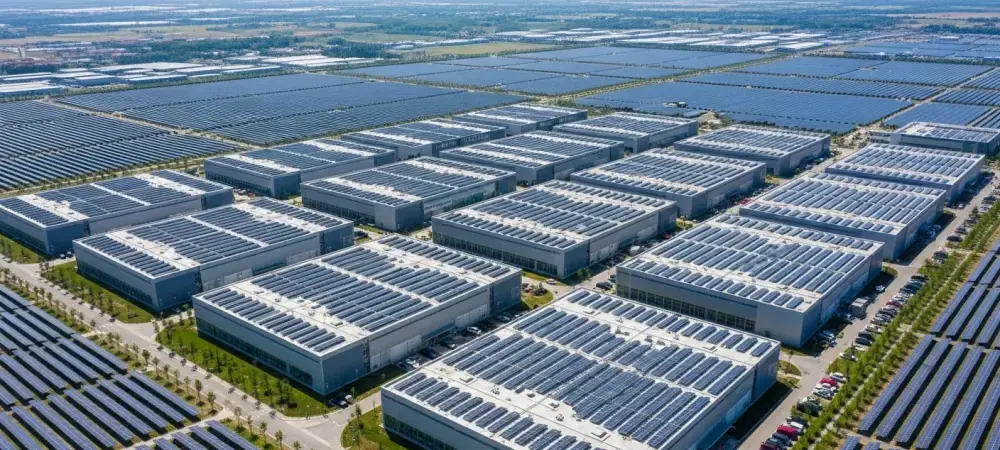
A torrent of concrete, steel, and capital is reshaping landscapes across the globe, signaling a construction boom of a magnitude not seen in generations. This explosive growth is centered on a single, pivotal technology: artificial intelligence. The insatiable appetite of AI for computational power has ignited what many in the industry are calling a “supercycle,” an unprecedented wave of investment and development in the global data center market. This is not merely an expansion; it is a fundamental transformation, turning digital infrastructure into a new class of strategic, power-intensive assets. As tech titans, private equity firms, and national governments pour hundreds of billions of dollars into building these AI factories, a critical tension has emerged. The race to construct facilities on a colossal scale is colliding with the finite capacity of the world’s power grids, forcing a desperate search for energy solutions that can fuel the next era of technological progress without compromising environmental sustainability.
The AI Catalyst: Why Demand is Exploding
From Big Data to Generative AI
The current surge in data center construction is fundamentally different from previous cycles, driven not just by data storage but by the extreme computational demands of generative AI. Training and operating large language models and complex inference engines require a density of processing power, primarily from specialized Graphics Processing Units (GPUs), that dwarfs traditional computing workloads. This has given rise to monumental projects specifically engineered for AI, such as the “Stargate” initiative involving Oracle and OpenAI, which is the driving force behind Vantage Data Centers’ new 902 MW campus in Port Washington, Wisconsin. This development, backed by a $15 billion investment, is a clear indicator that the industry is moving beyond general-purpose facilities and is now building what are essentially massive, dedicated AI factories. These sites are designed from the ground up to support the immense thermal loads and power requirements of thousands of interconnected GPUs running at full capacity, marking a definitive architectural shift in the data center landscape.
This specialization has created a new and lucrative market for AI-focused colocation, attracting infrastructure firms that cater exclusively to the needs of high-performance computing. A prime example of this trend is the significant North American expansion of Nscale, a UK-based AI infrastructure firm. The company’s $865 million investment secures a 40 MW, 10-year colocation agreement at WhiteFiber’s NC-1 data center complex in Madison, North Carolina, a deal structured specifically for AI workloads. Such arrangements highlight the evolving relationship between data center providers and their tenants, moving away from simple space and power leases toward highly specialized, service-level agreements that guarantee the unique cooling, power density, and low-latency interconnectivity essential for AI clusters. This focus on bespoke infrastructure ensures that AI developers can deploy their models efficiently and at scale, further fueling the demand for new facilities that are purpose-built for the computational intensity of the modern AI era.
The Influx of Institutional Capital
The unmistakable profitability and strategic importance of the AI boom have drawn the keen attention of Wall Street, unleashing a powerful wave of institutional capital into the digital infrastructure sector. This is no longer a niche market for tech specialists; it has become a premier asset class for some of the world’s largest financial players. Private equity giants like KKR & Company are making substantial commitments, such as the major investment in the portfolio of Compass Datacenters, an operator backed by Brookfield Asset Management. This move exemplifies a broader trend where financial firms are aggressively competing to acquire stakes in established data center operators, viewing them as stable, long-term revenue generators akin to traditional utilities or real estate. The predictable cash flows from long-term leases with hyperscale tenants, combined with the explosive growth trajectory fueled by AI, have made these assets incredibly attractive to investors seeking high-yield, inflation-resistant opportunities in a rapidly evolving economy.
This financial supercycle extends well beyond private equity, with major institutional investors and sovereign wealth funds now forming powerful joint ventures to dominate the global market. A landmark example is the $9.4 billion European data center partnership formed between Australian real estate giant Goodman Group and the Canada Pension Plan Investment Board. This strategic alliance is not speculative; it is immediately focused on developing four major projects in the critical European hubs of Frankfurt, Amsterdam, and Paris. Such large-scale collaborations underscore a global consensus among institutional investors that AI-ready data centers are not just a fleeting trend but a foundational component of the world’s future economic infrastructure. The massive capital being deployed reflects a long-term vision where control over digital real estate is seen as being just as critical as control over physical ports or energy pipelines, solidifying the data center’s role as a cornerstone of modern investment portfolios.
A Worldwide Build-Out: Beyond Traditional Hubs
North AmericThe Established Epicenter
While North America continues to be the primary engine of hyperscale data center development, the geographic scope of this expansion is undergoing a significant transformation. Established hubs, most notably Loudoun County in Northern Virginia, are still witnessing substantial growth, with projects like Yondr Group’s 96 MW campus reaching new milestones. However, the intense competition for land and the increasing strain on local power grids in these traditional “data center alleys” are compelling developers to explore new frontiers. The American Midwest is rapidly emerging as a vital new territory for monumental AI infrastructure projects. The decision by major players to build massive campuses in states like Wisconsin demonstrates a strategic pivot toward regions that offer abundant land, access to reliable power, and favorable business climates, effectively diversifying the nation’s digital infrastructure footprint away from historically concentrated and increasingly saturated coastal markets.
This geographic diversification is further encouraged by proactive policy shifts at both the state and national levels, as governments recognize the immense economic benefits of attracting these multi-billion dollar investments. In a notable move, the Canadian government has relaxed certain environmental standards for electricity generation, a decision that directly paves the way for Capital Power to potentially expand its Genesee site to support a colossal 1,000 MW hyper data center. This action illustrates an escalating competition among regions to become the next major AI hub, with policymakers using regulatory flexibility as a key incentive to lure developers. Such policies, while controversial, highlight the strategic priority being placed on securing a leadership position in the global AI race, often positioning digital infrastructure development as a matter of national economic competitiveness and a critical driver of future growth and innovation.
Emerging Frontiers and New Investments
The AI-driven data center supercycle is proving to be a truly global phenomenon, with an unprecedented flow of capital now reaching emerging markets that are poised to become the next major digital crossroads. Latin America, in particular, is attracting landmark investments, exemplified by social media giant TikTok’s staggering $37.7 billion commitment to construct a new data center in the state of Ceará, Brazil. This project is not merely an expansion; it represents a strategic entry into one of the world’s fastest-growing digital economies. The scale of the investment and the partnership with leading renewable energy provider Casa dos Ventos from the project’s inception signal a sophisticated, long-term strategy. It underscores the region’s growing appeal, which is built on a combination of large, digitally engaged populations, improving connectivity, and an increasing availability of green energy resources to power these massive facilities sustainably.
Simultaneously, the Middle East is rapidly cementing its status as a critical hub for sovereign cloud capabilities and AI infrastructure, driven by strategic national initiatives to diversify economies away from fossil fuels. This ambition is fueling a surge of investment, with regional players like the UAE’s Khazna Data Centres making bold moves, such as purchasing a large land parcel in Dammam to develop up to 200 MW of capacity for its first entry into the Saudi Arabian market. Further amplifying this trend is Qatar’s landmark $20 billion AI infrastructure project, a partnership between the state-led AI company Qai and Brookfield. This initiative, coupled with agreements like Ooredoo’s deployment of Oracle’s sovereign cloud platform, is designed to build powerful, in-country high-performance computing resources. Such developments are strategically aimed at fostering local AI ecosystems, enhancing data sovereignty, and positioning the region as a formidable competitor in the global technology landscape.
The Energy DilemmPowering the AI Revolution
The Grid Under Strain
The voracious power consumption of new AI-focused data centers is creating an existential challenge for public utility infrastructure worldwide, pushing many national grids to their absolute limits. This tension between digital ambition and energy reality was brought into sharp focus by a pivotal policy reversal in Ireland. After a de facto moratorium, the government has once again allowed new data centers to connect to the electricity grid around the key hub of Dublin. However, this permission comes with a transformative and stringent condition: any new facility must install on-site generation or battery systems capable of meeting its full electricity demand. This dramatic policy shift, which directly impacts major developers like Amazon Web Services as it plans three new facilities, serves as a powerful testament to the acute strain these projects place on public infrastructure. It signals a new era where data center operators can no longer assume unfettered access to the grid and must instead become active participants in energy generation and management.
The challenges seen in Ireland are a microcosm of a broader global issue, as the explosive growth in power demand from data centers outpaces the capacity of existing electrical networks in many established markets. The grid saturation in primary hubs like Northern Virginia, Silicon Valley, and Amsterdam is forcing a fundamental reassessment of site selection strategies and development models. This pressure is accelerating the push into secondary and tertiary markets where power is more readily available and less constrained. Moreover, it is compelling the industry to innovate beyond traditional grid reliance, exploring microgrids, direct power purchase agreements with renewable energy producers, and even nuclear energy as potential long-term solutions. The crisis is clear: the future growth of the digital economy is now inextricably linked to our ability to solve this complex energy equation, making power strategy the single most critical factor in the success of the ongoing data center supercycle.
Innovative Solutions and Strategic Plays
In a direct response to the escalating power crisis, leading technology corporations are executing bold strategies to gain control over their energy supply chains, moving from being passive consumers to active producers. One of the most significant moves in this direction is Alphabet’s landmark agreement to acquire clean energy developer Intersect Power for $4.75 billion. This strategic acquisition is explicitly aimed at securing a vast and reliable supply of electricity to power the company’s energy-intensive AI data centers. By vertically integrating a major renewable energy producer into its operations, Alphabet is not only attempting to meet its ambitious sustainability goals but is also insulating itself from the volatility of energy markets and the physical constraints of public grids. This represents a fundamental shift in corporate strategy, where securing kilowatts has become as crucial as developing algorithms, showcasing how the world’s largest tech firms are now becoming de facto energy companies to fuel their future growth.
While tech giants pursue vertical integration, a new breed of infrastructure innovators is pioneering a radically different approach: decoupling data centers from the traditional power grid altogether. Houston-based GridFree AI is at the forefront of this movement, announcing its first grid-independent site, South Dallas One, which specializes in gas-powered infrastructure. This facility is the initial component of a planned campus projected to command a staggering gross power capacity of nearly 5 GW. This model completely bypasses the delays, regulatory hurdles, and capacity limitations associated with connecting to the public utility network. By generating power on-site, companies like GridFree AI can deliver massive amounts of electricity directly to AI and hyperscale clients far more quickly and reliably than conventional methods allow. This represents a disruptive alternative in the market, offering a compelling solution for clients whose primary concern is speed to market and guaranteed power availability in an increasingly constrained energy landscape.
The Sustainability Mandate
As the data center industry expands at a breakneck pace, governments and regulatory bodies are increasingly intervening to ensure that this growth aligns with national and global sustainability objectives. This proactive approach is vividly illustrated by the government of Singapore’s second Data Center Call for Application, an initiative that makes at least 200 MW of new capacity available to developers. Crucially, this program is not an open call; it is explicitly designed to promote and prioritize the adoption of green energy solutions. Applicants are evaluated on their ability to incorporate technologies like liquid cooling, energy-efficient designs, and connections to renewable power sources. By directly tying the allocation of precious development capacity to stringent environmental performance metrics, Singapore is actively shaping its market to attract sustainable investment and solidify its reputation as a leading global hub for both AI and green technology, setting a powerful precedent for other nations to follow.
This intensifying focus on sustainability is also driving a creative and economically beneficial trend: the repurposing of legacy industrial and energy infrastructure for modern digital use. A compelling symbol of this transition is the potential sale of the former Didcot A coal power plant in the United Kingdom to Amazon for the development of a new data center campus. Such projects represent a powerful form of industrial alchemy, transforming sites once associated with a fossil fuel-based economy into vital nodes of the new digital economy. For landowners, it turns a potential environmental liability into a highly valuable asset. For data center developers, it often provides access to large tracts of land with existing heavy-duty power and water infrastructure. This adaptive reuse not only contributes to urban regeneration but also serves as a tangible manifestation of the broader economic shift, where the physical remnants of the past are being systematically rebuilt to power the future.
This period of intense transformation firmly established that the data center had evolved far beyond a mere component of IT infrastructure. It became a critical, power-intensive asset class that sat at the very intersection of technology, energy, and global finance. The immense computational demand unleashed by artificial intelligence triggered an investment supercycle that not only funded projects of an unprecedented scale but also forced a necessary and urgent confrontation with the limitations of existing power grids. This collision of demand and supply sparked a wave of innovation in energy strategy, from the vertical integration of renewable energy producers by tech giants to the pioneering of grid-independent solutions. In the end, the build-out was never just about constructing buildings; it was about fundamentally re-architecting the world’s digital and energy landscapes to support the next phase of economic evolution.