

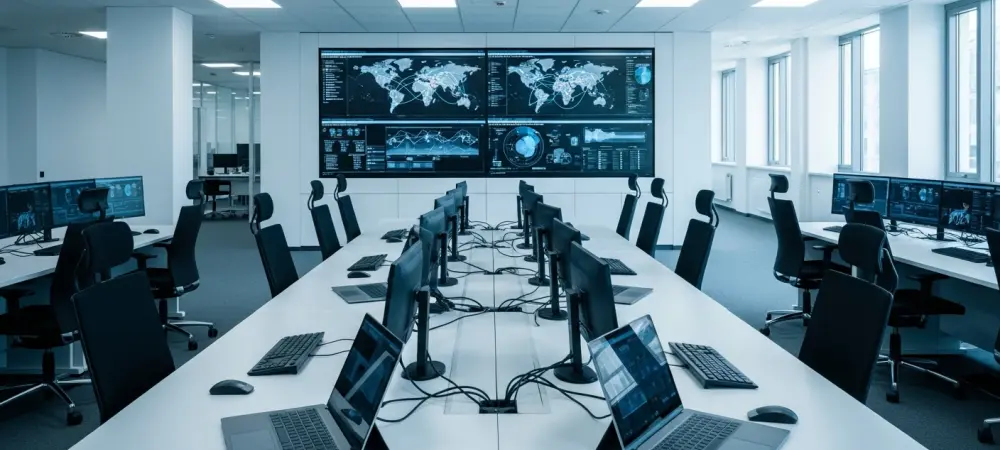
The days of viewing digital transformation as a simple migration from local servers to a distant data center have vanished, replaced by the complex reality of managing thousands of physical security endpoints across global territories. For large-scale enterprises managing critical physical security infrastructure, a wholesale migration is rarely practical because it ignores the physical constraints of the real world. Modern enterprise cloud governance now prioritizes a balanced approach that integrates local control with cloud-based agility. This guide explores the necessity of robust governance frameworks in a hybrid landscape, covering essential strategies for operational resilience, regulatory compliance, and long-term infrastructure oversight.
As organizations expand their footprint, the limitations of a “cloud-only” mandate become glaringly apparent. Physical security is inherently different from standard IT services like email; it relies on tangible hardware that must function regardless of external network stability. A well-constructed governance framework acknowledges that while the cloud offers unparalleled data processing, the edge provides the immediate response necessary for site safety. By merging these two worlds, enterprises create a strategy that is both flexible and remarkably sturdy.
Why Hybrid Governance Is Essential for Today’s Enterprise
Relying solely on a single deployment model can introduce significant risks to a physical security strategy, particularly when dealing with life-safety systems. Adopting a hybrid governance model is essential because it addresses the inherent complexities of managing tangible assets—such as cameras and entry points—across vast geographic locations. Without this balance, a minor internet service disruption could theoretically paralyze a global headquarters, leaving gates unlocked or surveillance feeds blind at the most critical moments. Operational continuity remains the most persuasive argument for this dual-layered approach. Hybrid models ensure that systems remain functional even during internet outages, preventing security gaps at critical entry points by keeping the “intelligence” of the system at the door itself. Furthermore, organizations can meet strict data sovereignty requirements by keeping sensitive footage on-site while utilizing the cloud for less sensitive administrative data. This ensures that legal teams remain satisfied without hindering the efficiency of the security department. Cost efficiency and scalability also play a massive role in the shift toward hybrid environments. Enterprises can scale their storage and processing power on demand without the immediate need for a total hardware overhaul, allowing them to sweat their existing assets while still accessing modern analytics. By distributing workloads between local servers and the cloud, businesses eliminate single points of failure. This redundancy creates a safety net where the cloud supports the local site, and the local site protects the facility if the cloud goes dark.
Best Practices for Implementing a Hybrid Cloud Governance Framework
Establishing a successful hybrid model requires more than just technical integration; it demands a strategic shift in how cloud technology is managed. The following practices provide a roadmap for maintaining control and visibility across mixed environments, ensuring that the technology serves the business rather than the other way around. Governance must be viewed as an ongoing process of refinement, focusing on how data flows between different layers of the infrastructure to maximize both speed and security.
Redefining the Cloud as a Consistent Operating Model
Instead of viewing the cloud as a final storage destination, enterprises should treat it as an operating model. This means using cloud-based management tools to oversee both local hardware and remote data centers through a single, unified interface. This approach ensures that security policies and administrative oversight remain consistent regardless of where the data is physically processed. When the cloud is the dashboard rather than just the hard drive, the organization gains a “single pane of glass” view of its entire security posture.
Case Study: Managing Global Estates via Unified Cloud Dashboards
A global logistics firm with hundreds of warehouses utilized a hybrid operating model to centralize its security oversight. While video recording remained local to ensure 24/7 uptime at each site, the security team used a cloud-based governance platform to push firmware updates and manage access permissions worldwide simultaneously. This prevented the “silo effect” and ensured that every location adhered to the same corporate security standards, regardless of its local internet speed or infrastructure age.
Designing for Graceful Degradation and Local Autonomy
A critical pillar of hybrid governance is ensuring that systems are designed for “graceful degradation.” This means that if the connection to the central cloud is lost, the local site must retain its core security functions, such as door access control and local video recording. Governance frameworks must mandate that hardware choices support this autonomous functionality to prevent total system collapse during network interruptions. A system that cannot think for itself when disconnected is a liability in a high-stakes environment.
Real-World Example: Maintaining Security During Network Outages
During a major regional internet service disruption, a high-security research facility maintained full site integrity because its hybrid governance plan required “edge-first” processing. While high-level analytics and cloud backups were temporarily paused, the local servers continued to manage badge readers and record surveillance footage locally. Once connectivity was restored, the system automatically synced the data back to the cloud without manual intervention or data loss. This seamless transition proved that local autonomy was the bedrock of their resilience. The shift toward hybridity demonstrated that the most successful enterprises were those that stopped chasing a “pure cloud” utopia and started building for the reality of their physical environments. Decision-makers realized that flexibility was not a compromise but a competitive advantage. This evolution in governance provided a clear path for integrating artificial intelligence and advanced analytics at the edge while maintaining the centralized oversight necessary for global compliance. Ultimately, the industry moved toward a future where the distinction between local and remote systems mattered less than the reliability of the security outcomes they produced.