

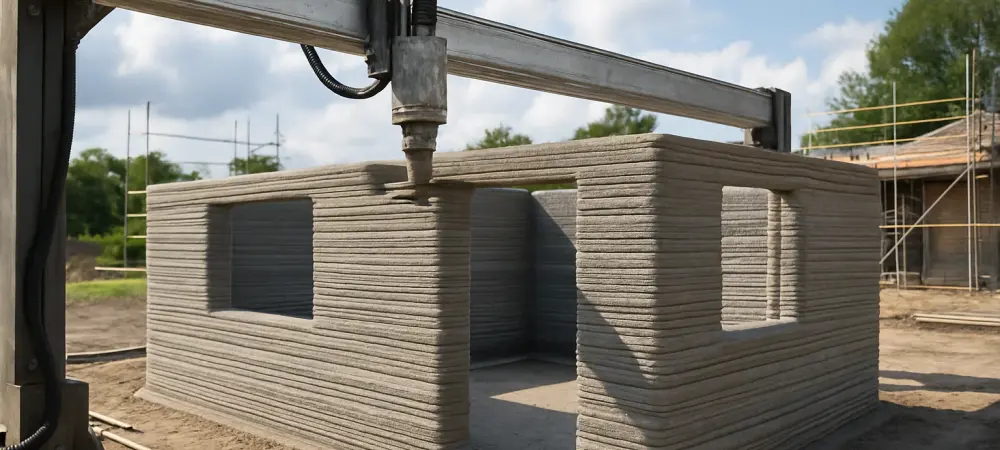
Revolutionizing Construction with a Printer
Envision a world where construction sites have more computers than laborers, working tirelessly to bring architectural ideas to life. This scenario is not far-fetched, as 3D printing begins to redefine building methodologies with potentially profound effects on economic structures and societal practices.
The Need for Innovation in Construction
The construction industry faces unprecedented challenges that demand innovative solutions. Rapid population growth strains existing infrastructure, while finite resources and labor shortages hinder traditional construction methods. The sector has a pressing need for solutions that promote sustainability and efficiency in building practices. As urban areas expand, there is a heightened call for more sustainable construction methods that can meet these escalating demands without placing undue stress on the environment or workforce.
How 3D Printing is Changing the Game
A remarkable advancement leading the charge in this transformation is the BOD2 3D printer, developed by the German company COBOD. This cutting-edge machine has the extraordinary ability to construct entire structures autonomously with minimal human intervention. It demonstrates significant reductions in material waste and can enhance construction speeds significantly. When compared to conventional methods, 3D printing can offer remarkable time and cost savings, creating new benchmarks for efficiency in the construction sector.
Insights from Industry Experts
Leaders in the field, such as COBOD engineers, provide insightful perspectives on the role of 3D technologies in revolutionizing construction. Their collaboration with Technische Universität Braunschweig has been pivotal in commercializing these innovations, thus fulfilling the potential of 3D construction printing. These collaborations underscore the profound shifts in traditional building and emphasize how modern technologies can offer effective solutions in meeting today’s construction demands.
Strategies for Practical Implementation
For construction companies aiming to integrate 3D printing into their processes, there are several viable strategies. Initially, companies should perform a comprehensive assessment of their current methodologies, seeking aspects where 3D printing can be most beneficially applied. Training staff to work alongside evolving technologies and making informed investments in state-of-the-art equipment can pave the way for seamless adoption. By scaling the capabilities of machines like the BOD2, companies can adapt these innovative solutions to projects of varying sizes and complexities.
Conclusion
As 3D printing technology continues to evolve, it becomes increasingly clear that it is reshaping how structures are conceived and constructed. Forward-looking construction firms are embracing this shift by integrating these technologies into their practices, which leads to groundbreaking advancements in efficiency and sustainability. This ongoing evolution in construction practices encourages a reimagining of resource utilization and design ingenuity, setting a new standard for building the infrastructure of tomorrow.