

The Dawning of a New Connectivity Era
The year 2026 is shaping up to be a watershed moment for fifth-generation mobile technology across Latin America. After years of planning, auctions, and initial trials, the region is on the cusp of a significant acceleration in 5G deployment, driven by a confluence of regulatory milestones, substantial investment commitments, and a strategic push to bridge the persistent digital divide. This article explores whether 2026 will indeed mark the turning point for 5G in the region, transforming it from a niche service into a foundational pillar for economic and social development. We will analyze the key drivers, from government-led spectrum auctions to the innovative use cases emerging across diverse markets, and examine the stark disparities that define the continent’s complex technological landscape.
From Auction Blocks to Network Rollouts: The Path to 2026
The current momentum behind 5G in Latin America did not materialize overnight; it is the result of a multi-year process of policymaking, spectrum allocation, and strategic planning by both governments and telecommunications operators. Foundational auctions held in major markets like Brazil, Colombia, and Argentina in the preceding years set the stage, creating both the opportunity and the obligation for carriers to invest in next-generation infrastructure. These early developments were crucial in establishing a competitive environment and signaling a regional commitment to digital transformation. Understanding this preparatory phase is essential, as the investment pledges and coverage mandates from these past auctions are the very commitments now coming to fruition, making 2026 a year of execution and tangible progress.
Decoding the 5G Acceleration
The Power of the Purse: How Investment Mandates Are Fueling Deployment
The most direct catalyst for 5G expansion in 2026 is the tangible outcome of recent spectrum auctions, which have tied network licenses to concrete investment and coverage obligations. In Peru, for instance, contracts for the 3.5 GHz band signed in late 2025 require operators to collectively invest over US$500 million and, critically, to provide 4G services to more than 1,700 rural communities. A key milestone mandates that at least 25% of these commitments must be met during 2026, forcing a rapid pace of deployment. Similarly, Paraguay is witnessing an investment surge following its auction, with Claro launching its 5G network and new entrant Nubicom committing US$200 million to build out its infrastructure, a move expected to ignite further competition and investment from incumbents.
The Next Frontier: A Packed Agenda of Spectrum Allocation
The momentum from past auctions is being amplified by a new wave of spectrum allocation planned for 2026, promising to broaden the 5G footprint even further. Mexico has unveiled an ambitious strategy with three separate auctions targeting distinct needs: private industrial networks, rural connectivity, and traditional mobile broadband. This multifaceted approach showcases a sophisticated understanding of 5G’s diverse applications. Elsewhere, Ecuador’s spectrum renewal agreement has unlocked significant investment pledges, with Millicom earmarking US$350 million for network expansion. Meanwhile, Bolivia is scheduled to award its 5G spectrum in March 2026, and both Brazil and Chile are advancing public consultations for future allocations, ensuring the pipeline for 5G growth remains robust for years to come.
A Region of Contrasts: Navigating the Performance Divide
Despite widespread progress, the 5G landscape in Latin America is far from uniform. A significant performance gap has emerged between early adopters and more recent entrants. Brazil stands out as the undisputed regional leader, boasting a median 5G download speed of 430.83 Mbps and a high availability rate of 38.5%, thanks largely to its early rollout of a standalone 5G network. In contrast, countries like Colombia and Argentina, which held auctions in 2023, are still in the nascent stages of deployment, with 5G availability lingering at just 1.6% and 3%, respectively. This disparity highlights the immense challenges that remain in translating spectrum acquisition into widespread physical coverage and driving consumer adoption of 5G-compatible devices.
The Future in Focus: Key Trends Shaping the 5G Landscape
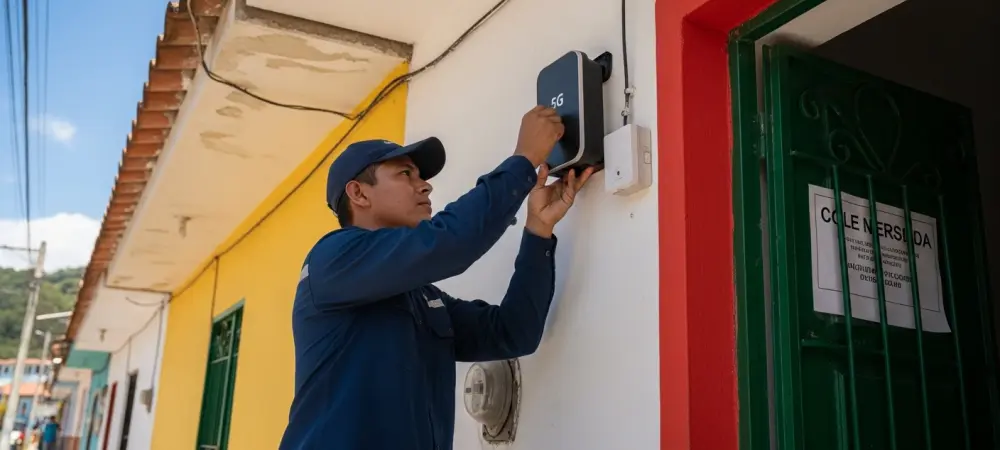
Looking ahead, two powerful trends are set to define the evolution of 5G in Latin America. First is the rapid adoption of 5G Fixed Wireless Access (FWA) as a potent alternative to fiber optics, particularly for delivering high-speed broadband to homes and businesses in rural or hard-to-reach areas. Operators like América Móvil, Telefónica, and AT&T are already leveraging FWA in nearly a dozen countries, accelerating efforts to close connectivity gaps. Second, the technology supplier ecosystem remains remarkably open and competitive. Unlike in other parts of the world, most regional governments have not restricted vendors. This has allowed a diverse mix of suppliers, including Huawei, Ericsson, and Nokia, to compete for contracts, fostering innovation and a dynamic market for both public and private 5G network deployments across critical industries like mining, logistics, and manufacturing.
Strategic Imperatives for a Connected Future
This analysis has revealed several critical takeaways. First, government-led spectrum allocation, when tied to clear investment and coverage mandates, is the primary engine of 5G expansion. Second, 2026 represents a crucial year of execution, where operators must deliver on past promises, leading to a visible acceleration in network availability. However, significant regional disparities will persist, demanding tailored strategies for market entry and growth. Finally, emerging technologies like FWA and private networks present immense opportunities to address both social and industrial connectivity challenges. For stakeholders, this means operators must pivot from network rollout to driving consumer adoption, governments must maintain a clear and predictable regulatory environment, and businesses should begin exploring how 5G can transform their operations.
The Verdict: A Foundational Year for a Digital Decade
While 2026 will not be the year that 5G becomes ubiquitous across every corner of Latin America, it will unequivocally be the year the technology achieves critical mass. The convergence of post-auction investment mandates, new spectrum availability, and the rise of innovative applications like FWA marks a definitive shift from planning to widespread implementation. The progress made this year will lay the essential groundwork for the next decade of digital transformation, impacting everything from industrial competitiveness to social inclusion. Therefore, 2026 is best understood not as a finish line but as the moment the starting gun is fired on Latin America’s 5G-powered future.