

As the artificial intelligence boom strains global power grids to their breaking point, Ireland has pivoted from a complete ban on new data centers to a revolutionary policy that redefines the cost of digital expansion. This analysis examines the landmark decision to end the de facto moratorium on new grid connections, detailing a stringent new framework that transforms data centers from simple energy consumers into integral components of the national energy infrastructure, setting a potential global precedent for sustainable digital growth.
From Unchecked Growth to Grid-Lock
Ireland’s rapid ascent as a European data center capital was a story of unchecked success until it collided with the physical limits of its energy grid. A favorable corporate environment and excellent transatlantic connectivity attracted major technology firms, concentrating development heavily around the Dublin area. This boom, however, led to an unsustainable surge in electricity demand, with data centers growing from consuming 5% of the national supply to nearly 25% within a decade. In 2021, the state grid operator, EirGrid, warned that this trajectory posed a direct threat to national energy security, risking widespread blackouts. Consequently, the government implemented a de facto moratorium, halting new connections and casting a shadow of uncertainty over the industry’s future.
The New Regulatory Framework Analyzing the Core Mandates
The On-Site Generation Imperative and Its Capital Impact
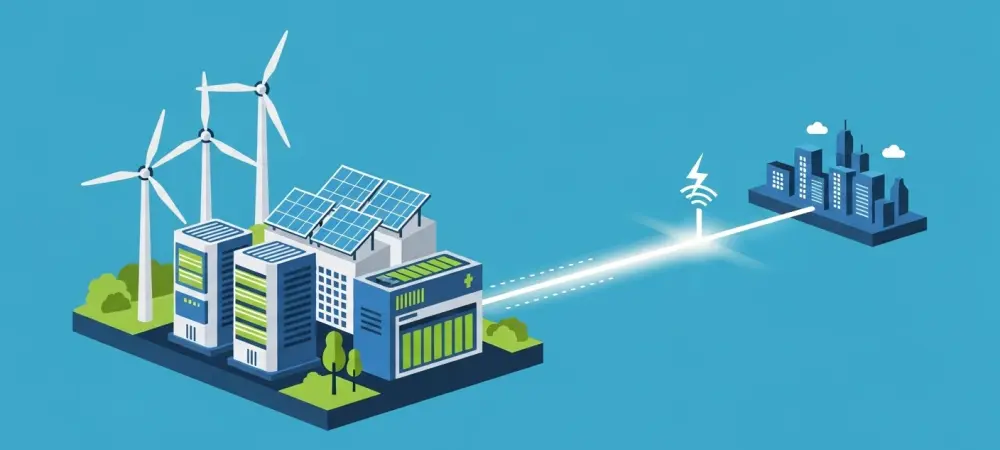
Under the new policy, the days of data centers simply plugging into the public grid are over. A core mandate requires all new facilities to develop and operate on-site power generation or large-scale battery storage capable of meeting their full demand. This “behind-the-meter” approach is designed to insulate the national grid from the sector’s immense load, particularly during peak hours. For market participants, this represents a monumental shift in capital expenditure, fundamentally altering project economics and favoring well-capitalized players who can absorb the significant upfront costs of building private power infrastructure.
Grid Support Obligations as a New Operational Model
Furthering the principle of self-reliance, the regulations obligate new data centers to function as “virtual power plants,” capable of exporting electricity back to the grid when requested. This requirement transforms them from passive loads into active, dynamic participants in Ireland’s energy ecosystem. This mandate creates a new operational model where facilities can potentially generate revenue by providing essential grid stabilization services. This shift is supported by forthcoming legislation that will enable large energy users to generate and transmit their own power, cementing a future where data centers are not just self-sufficient but also contributors to grid resilience.
The Green Mandate Reshaping Energy Procurement
A critical component of the new framework is a strict decarbonization requirement designed to align digital expansion with national climate targets. New data centers must procure at least 80% of their annual electricity from newly built renewable energy projects. This is a crucial distinction, as it prevents operators from merely purchasing certificates from existing wind or solar farms. Instead, it forces the industry to directly fund the expansion of Ireland’s green energy capacity, ensuring that every megawatt of new data demand is paired with a corresponding investment in sustainable generation, thereby hardwiring the sector’s growth to the country’s decarbonization journey.
A Global Precedent and Future Market Trajectory
Ireland’s “bring-your-own-power” model is rapidly emerging as a potential blueprint for other nations grappling with the energy demands of the AI revolution. The policy directly confronts the conflict between rapid technological growth and the constraints of legacy energy infrastructure. Its success could inspire other governments to impose similar self-sufficiency and grid-support mandates on energy-intensive industries. This trend would fundamentally reshape data center design, investment strategies, and site selection globally, accelerating a move toward a model where digital and energy infrastructures are co-developed from inception.
Strategic Imperatives for Market Players
The key takeaway from Ireland’s policy shift is that while the market has reopened, the barrier to entry has been raised substantially. For technology companies and data center operators, this new environment demands a strategic overhaul. Energy strategy is no longer a secondary consideration but a primary pillar of business planning that must be addressed at the earliest stages of project development. The market players most likely to succeed will be those who view on-site power generation and grid-support functions not as regulatory burdens, but as essential components of a resilient and competitive business model.
A Redefined Digital-Energy Nexus and Its Market Legacy
In lifting its moratorium, Ireland did more than simply create a new pathway for development; it fundamentally redefined the relationship between digital infrastructure and national energy security. The tough new rules represented a bold attempt to reconcile the country’s economic ambitions as a premier technology hub with its non-negotiable commitments to grid stability and environmental sustainability. This forward-thinking policy served as a critical test case, demonstrating that the immense power of the digital economy could indeed be leveraged to build a more resilient and renewable energy future. The high cost of entry ultimately reshaped the market, favoring integrated energy and technology players and setting a new global standard for responsible digital growth.