

The frantic search for a power outlet in the middle of a busy workday is becoming a relic of the past as battery capacities finally catch up to our digital demands. With the official debut of the iQoo Z11 series, the mobile industry is witnessing a dramatic leap in endurance that targets the heart of the mid-range market. By integrating a staggering 9,020 mAh battery into its flagship model, iQoo is not merely incrementalizing its Z-series; it is fundamentally rewriting the expectations for how long a modern smartphone should stay powered.
This release signals a significant transition where multi-day performance is no longer a niche feature found only in cumbersome, ruggedized devices. Instead, it is being positioned as a core requirement for mainstream users who prioritize gaming, content creation, and high productivity. As mobile software becomes more resource-intensive, the Z11 series serves as a bold response to the “low-battery anxiety” that has plagued smartphone users for over a decade.
The End of Low-Battery Anxiety: A New Era for the Mid-Range Market
For years, consumers have been forced to choose between sleek designs and long-lasting power, but the iQoo Z11 series aims to bridge that gap. The inclusion of a 9,020 mAh battery represents a massive departure from the industry-standard 5,000 mAh cells, providing enough energy to sustain heavy workloads without frequent trips to the charger. This shift is particularly relevant for the younger demographic that relies on their devices for non-stop entertainment and social connectivity.
By focusing on the mid-range segment, iQoo is democratizing high-end endurance features that were previously unavailable at this price point. This strategic move forces competitors to reconsider their own battery standards, potentially sparking a new hardware arms race centered on longevity. In a world where mobile devices are our primary tools for everything from banking to navigation, the peace of mind offered by such a high capacity cannot be overstated.
Silicon-Carbon Technology: The Secret Behind Mobile Endurance
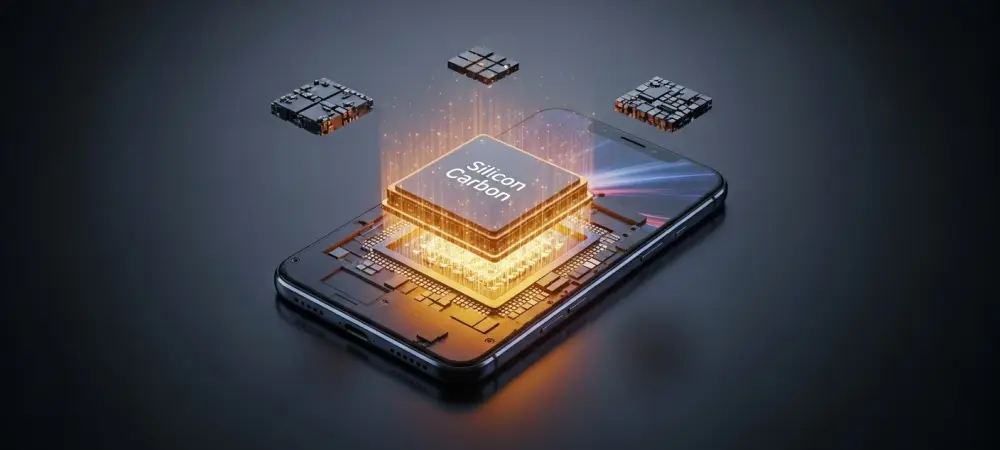
The remarkable 9,020 mAh capacity found in the Z11 is not a result of simply making the phone thicker; rather, it is the result of a pivot toward silicon-carbon battery chemistry. Traditional lithium-ion batteries often struggle to balance energy density with a slim form factor, frequently hitting a physical ceiling. However, silicon-carbon anodes allow for much higher energy storage within the same physical footprint, enabling iQoo to pack more power into a chassis that remains comfortable to hold and use.
As high-refresh-rate displays and 5G connectivity continue to drain power at high rates, this evolution in battery hardware is essential. This technology also tends to offer better thermal management, which is a critical factor for maintaining performance during extended gaming sessions. By adopting this advanced chemistry, iQoo has ensured that the Z11 remains a modern, pocketable device while delivering a battery life that was once thought impossible for a standard smartphone.
Performance Tiers: Dissecting the iQoo Z11 and Z11x Specifications
The series is intelligently divided into two distinct tiers to cater to a variety of performance needs and financial considerations. The premium iQoo Z11 is built for power users, featuring the MediaTek Dimensity 8500 chipset and a stunning 165Hz AMOLED display. With configurations offering up to 16GB of RAM, this model is clearly designed to handle the most demanding mobile games and multitasking scenarios currently available in the mobile ecosystem.
In contrast, the iQoo Z11x provides a more accessible entry point for those who still want exceptional battery life but can compromise on raw processing power. It utilizes the Dimensity 7400 processor and a 7,050 mAh battery, which remains far above the average for its class. While it sports a 120Hz LCD panel instead of the premium AMOLED, both devices ship with the latest Android 16-based OriginOS 6, ensuring that software efficiency and modern features are consistent across the entire lineup.
Redefining the Smartphone: The Power Source and 90W Charging
A battery of this scale requires a sophisticated charging solution to remain practical, and iQoo has addressed this by implementing 90W wired fast charging. This technology ensures that even a cell as large as 9,020 mAh can be topped up in a reasonable timeframe, minimizing downtime for the user. Beyond just self-sustenance, the Z11 series features reverse charging capabilities, which effectively turns the phone into a portable power bank for secondary accessories like wireless earbuds or smartwatches.
Complementing this massive power reservoir is a robust camera system, led by a 50MP main sensor equipped with Optical Image Stabilization (OIS). This combination of long-lasting energy and high-quality imaging makes the device a versatile tool for travelers and digital nomads who may not always have access to a power grid. Whether recording long-form video or navigating through unfamiliar cities, the hardware is designed to remain active through the most grueling schedules.
Navigating Configuration Options: Pricing and Global Availability
Consumers interested in the Z11 series have several tiers to choose from based on their specific storage requirements and budget constraints. The flagship Z11 starts at approximately $285 (CNY 1,999) for the base version, while the top-tier 512GB variant is priced at roughly $463 (CNY 3,199). These price points are highly competitive, especially considering the specialized battery technology and the high-performance Dimensity chipset included in the package. The Z11x offers even more aggressive pricing, starting at $217 (CNY 1,499), making it one of the most affordable ways to secure a device with a 7,000+ mAh battery. Currently, these handsets are available through official channels in China, serving as a template for how high-capacity hardware can be successfully integrated into the global mid-range market. The launch proved that the industry was ready to move past the limitations of traditional battery sizes in favor of true multi-day independence.