

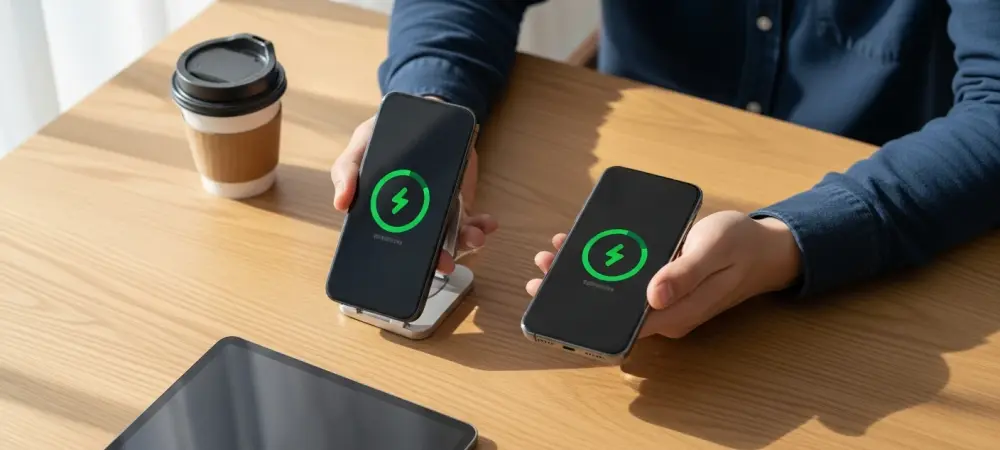
When a new smartphone looks, feels, and operates almost exactly like its predecessor, the decision to upgrade transforms from an exciting prospect into a careful calculation of value. This is the precise scenario shaping the conversation around Apple’s upcoming iPhone 17e, a device that, by all credible accounts, will be a near-perfect reflection of the iPhone 16e it is set to replace. The comparison between these two models is not a matter of revolutionary versus obsolete but rather a study in subtle, internal refinement. At the heart of this analysis lies a single question: Can a faster processor and a new charging feature justify a new purchase when everything on the surface remains unchanged?
Setting the Stage: An Introduction to Apple’s Affordable iPhones
Apple’s “e” series of iPhones, which succeeded the long-running SE line, represents the company’s strategic effort to offer a modern iOS experience at a more accessible price point. The iPhone 16e, launched in February of last year, established this new direction by blending capable hardware with a familiar design. Now, its successor, the iPhone 17e, is poised to continue this legacy. However, information from trusted sources suggests this will be an iterative update focused squarely on internal power rather than external innovation.
This comparative analysis is shaped by insights from key industry observers. Leaks from the Weibo tipster Fixed Focus Digital provide a crucial look into the manufacturing process, while corroborating reports from Mark Gurman of Bloomberg offer context on Apple’s broader strategy. This includes the company’s ongoing ambition to replace third-party components from suppliers like Qualcomm with its own in-house technology. Together, these sources paint a clear picture of two devices that are more alike than different, forcing a closer look at what truly constitutes a meaningful upgrade.
Feature-by-Feature Breakdown
Core Performance: The A19 vs. A18 Chipset
The most significant distinction between the iPhone 17e and the iPhone 16e lies deep within their circuitry. The upcoming iPhone 17e is expected to be powered by Apple’s next-generation A19 chip, a direct and predictable generational leap over the A18 processor found in the iPhone 16e. This upgrade is positioned not as a minor tweak but as the central justification for the new model’s existence. For Apple, this strategy reinforces its commitment to providing robust performance and long-term software support even in its more budget-conscious offerings. This focus on processing power ensures that the iPhone 17e will be faster, more efficient, and better equipped to handle future iOS updates and demanding applications. While the day-to-day experience for tasks like web browsing or messaging may feel similar to the already-capable iPhone 16e, the benefits of the A19 chip will become apparent in processor-intensive activities like gaming, video editing, and advanced computational photography. This internal enhancement is the primary selling point, promising longevity and a higher performance ceiling for new buyers.
Design and Display: A Tale of Two Identical Phones
For anyone hoping for a fresh look, the iPhone 17e is set to be a disappointment. Leaks from Fixed Focus Digital indicate that Apple will reuse the exact same manufacturing “mould” as the iPhone 16e. This means the external chassis, physical dimensions, and button layout will be completely identical. Consequently, the new device will sport the same 6.1-inch display as its predecessor, a screen size that offers a good balance between usability and portability.
Furthermore, the display technology itself is expected to be carried over without any changes. Both models feature a standard 60Hz refresh rate, meaning Apple is once again reserving its fluid ProMotion technology for the more expensive Pro lineup. The design of the front panel also remains unchanged, with the iPhone 17e retaining the traditional display notch to house the Face ID sensors and front-facing camera. This decision to forgo the more modern Dynamic Island further solidifies the 17e’s identity as a modest, cost-effective refresh rather than a significant step forward in design.
Functional Upgrades: Charging, Connectivity, and Camera
While the core design and camera hardware are expected to be holdovers, the iPhone 17e introduces a couple of key functional improvements. The most user-facing of these is the inclusion of MagSafe. This brings Apple’s convenient magnetic wireless charging and a robust ecosystem of compatible accessories to its affordable iPhone line for the first time, a feature notably absent from the iPhone 16e. The other significant upgrade is happening behind the scenes, with the potential integration of Apple’s own in-house cellular and wireless chips. This marks a strategic move away from its reliance on third-party supplier Qualcomm, giving Apple greater control over its device’s performance and efficiency.
Beyond these additions, the specifications sheet for the iPhone 17e reads like a copy of the 16e’s. The camera system is anticipated to be identical, featuring a capable 48-megapixel main rear camera with optical image stabilization (OIS) and a 12-megapixel front camera. Other essential features, such as the durable IP68 rating for water and dust resistance and the 18W wired charging speed, are also expected to remain unchanged. These shared characteristics underscore the iterative nature of the update, where the most notable changes are functional conveniences rather than fundamental hardware overhauls.
The Upgrade DilemmIs a Performance Bump Enough?
The minimal-change approach of the iPhone 17e presents a significant challenge for consumers, particularly for current owners of the iPhone 16e. The decision to upgrade is complicated when the primary benefit—a faster processor—is not something that is always tangible in everyday use. Without any changes to the design, display quality, or camera system, the real-world difference between the two models may be imperceptible for many users. The value of the A19 chip truly emerges only in specific, high-demand scenarios. This makes the iPhone 17e a difficult sell as a year-on-year upgrade. The lack of any aesthetic innovation or major new features means that existing iPhone 16e users have very little incentive to make the switch. For them, the upgrade offers a boost in raw power that may not translate into a noticeably better experience, making it hard to justify the cost. The conversation, therefore, shifts away from existing users and toward those new to the ecosystem or coming from much older devices.
Conclusion: Recommendations for Potential Buyers
The comparison between the iPhone 17e and iPhone 16e ultimately distilled down to a handful of targeted upgrades. The analysis confirmed that the core experience—defined by the device’s design, display, and camera—remained identical across both generations. The key differentiators were the introduction of the more powerful A19 chip and the added convenience of MagSafe in the newer model. These two enhancements formed the entire basis of the iPhone 17e’s value proposition. For owners of the iPhone 16e, the verdict was clear: upgrading was not a logical investment. The performance gains offered by the A19 chip, while measurable, were unlikely to fundamentally alter the daily user experience in a way that would justify the cost of a new device that looked and felt exactly the same. In contrast, for new buyers or individuals using significantly older iPhones, the iPhone 17e presented a much more compelling case. With its launch price expected to match the iPhone 16e’s at $599, it offered a faster, more future-proof device with the added utility of MagSafe for the exact same cost, making it the superior choice for anyone entering the market.