

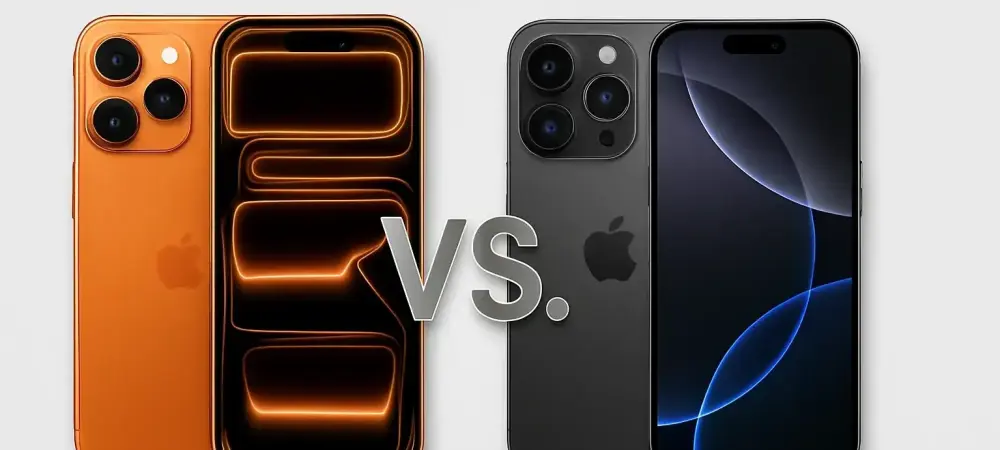
What if a single device could redefine how daily tasks, creative projects, and professional workflows are handled? Apple’s latest flagship, the iPhone 17 Pro, enters the arena with bold promises of innovation, challenging the already stellar iPhone 16 Pro. With cutting-edge technology packed into a sleek frame, this comparison captures the attention of tech enthusiasts and casual users alike. The stakes are high as Apple pushes boundaries in performance, design, and functionality, setting the stage for a battle of features that could sway upgrade decisions.
Why This Comparison Matters
The rivalry between successive iPhone Pro models isn’t just about specs on paper—it’s about how these devices shape modern lifestyles. From content creators capturing cinematic footage to professionals relying on seamless multitasking, Apple’s Pro lineup has become a benchmark for premium smartphones. The leap from the iPhone 16 Pro to the 17 Pro highlights Apple’s relentless drive to innovate, making this matchup a critical discussion for anyone invested in staying at the forefront of technology.
This comparison holds weight because it addresses real-world implications. With smartphones now integral to work and personal life, choosing between these models impacts productivity, creativity, and even budget considerations. Understanding the upgrades offers clarity on whether the newest model justifies its price or if last year’s device still holds strong.
Design and Display: A Visual Revolution
The iPhone 17 Pro introduces a striking unibody design with a full-width camera plateau at the back, a departure from the iPhone 16 Pro’s more traditional square camera module. This aesthetic shift, paired with Ceramic Shield 2 for enhanced durability, gives the newer model a refined edge. Weighing 204 grams and measuring 150×71.9×8.75mm, it feels subtly different from the 16 Pro’s 199 grams and 149.6×71.5×8.25mm frame, yet both maintain an IP68 rating for dust and water resistance.
Display advancements further set the iPhone 17 Pro apart. While both devices boast a 6.3-inch Super Retina XDR screen with 120Hz ProMotion, the 17 Pro achieves a dazzling peak brightness of 3,000 nits compared to the 16 Pro’s 2,000 nits. Add an anti-reflective coating, and visibility in harsh lighting becomes noticeably better, catering to users who demand clarity in every environment.
Performance Power: A Leap in Processing Might
Under the hood, the iPhone 17 Pro’s A19 Pro chip redefines mobile computing with a 40% performance boost over previous benchmarks. Featuring a 6-core CPU, 6-core GPU, 12GB of RAM, and advanced Neural Accelerators, it outpaces the iPhone 16 Pro’s A18 Pro chip, which offers a 15% improvement with 8GB of RAM. The addition of a vapor chamber cooling system in the 17 Pro ensures sustained performance during intensive tasks like gaming or video editing.
This raw power translates into tangible benefits for users. Whether running complex apps or leveraging AI-driven features on iOS 26, the 17 Pro promises smoother operation and future-proofing for upcoming software demands. In contrast, the 16 Pro, while still robust with iOS 18, may lag behind as app requirements evolve over the next few years from 2025 onward.
Camera Capabilities: Redefining Mobile Photography
For photographers and videographers, the iPhone 17 Pro’s camera system is a game-changer. Its triple 48-megapixel setup delivers 4x and 8x optical zoom, stretching to 40x digital zoom, alongside pro-grade video features like Genlock for precise synchronization. A creator on social media recently noted that this zoom range captured intricate details of distant subjects, something previously unthinkable on a smartphone.
The iPhone 16 Pro, while impressive with a mix of 48-megapixel and 12-megapixel sensors and a 5x optical zoom, lacks the same depth in zoom and advanced video tools. Additionally, the 17 Pro’s 18-megapixel front camera surpasses the 16 Pro’s 12-megapixel offering, enhancing selfies and video calls with sharper clarity and AI-adjusted field-of-view capabilities. This makes the newer model a clear choice for content creation professionals.
Battery and Charging: Powering Through the Day
Battery life often decides a smartphone’s practicality, and here the iPhone 17 Pro excels with up to 33 hours of video playback, compared to the 16 Pro’s 27 hours. This improvement, driven by the efficiency of the A19 Pro chip, means less frequent charging for power users. Fast charging also gets a boost, reaching 50% in just 20 minutes with a 40W adapter, against the 16 Pro’s 30 minutes using a 20W adapter.
Such enhancements cater to those constantly on the move. Whether streaming content for extended periods or juggling multiple apps, the 17 Pro ensures fewer interruptions. This edge in endurance could be a deciding factor for users prioritizing longevity over other features when comparing these two devices.
Making the Right Choice: Tips for Buyers
Deciding between the iPhone 17 Pro, starting at $1,349 for 256GB, and the iPhone 16 Pro, launched at $1,199 for 128GB, requires evaluating personal needs. For those engaged in heavy gaming or professional-grade photography, the 17 Pro’s superior A19 Pro chip and 8x optical zoom justify the higher cost. Casual users, however, might find the 16 Pro’s capabilities more than adequate for everyday tasks.
Budget plays a crucial role in this decision. The price gap of over $150 might steer some toward deals on the discontinued 16 Pro through authorized resellers. Future-proofing is another angle—the 17 Pro’s advanced hardware ensures relevance for longer, especially with emerging apps and features. Visiting an Apple Store to experience the redesigned camera plateau and brighter display firsthand can also tip the scales, as ergonomics often influence final choices.
Reflecting on this showdown, the journey from the iPhone 16 Pro to the 17 Pro showcases Apple’s knack for blending subtle refinements with bold leaps in technology. Moving forward, potential buyers should weigh their specific demands—be it raw power, camera prowess, or battery stamina—against their financial comfort. Exploring in-store demos or seeking expert opinions at tech forums could provide deeper insights. As smartphone capabilities continue to evolve, staying informed about such upgrades remains key to making a choice that aligns with both present needs and future aspirations.