

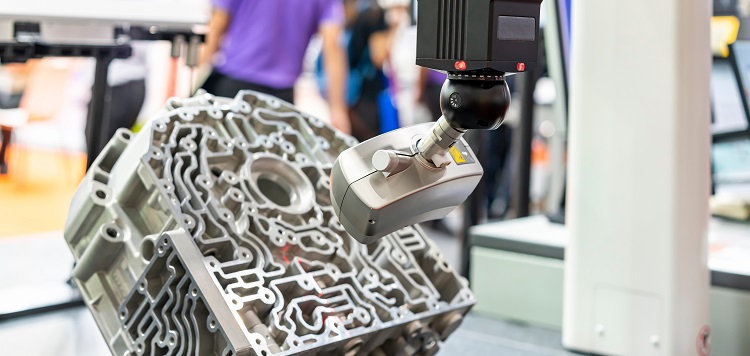
CAPTURE 3D, a leading provider of 3D scanners and inspection solutions, has announced the release of the latest addition to its product line: the ZEISS ScanBox Series 5. This automated 3D scanning and inspection solution is designed to increase throughput and productivity while minimizing production costs. In this article, we will take a closer look at the ZEISS ScanBox Series 5 and explore its features and benefits.
The Need for Automation in Modern Manufacturing
Automation has become a critical aspect of modern manufacturing due to the ever-increasing complexity of manufacturing processes, which requires a streamlined and efficient approach to keep up with demand. Manufacturers are looking for ways to optimize production processes by reducing labor costs, increasing speed, and minimizing the potential for errors. As a result, automation has become the go-to solution for modern manufacturing.
The ZEISS ScanBox Series 5 solution
The ZEISS ScanBox Series 5 is the ideal solution for manufacturers who are looking to develop a reliable automation strategy. Its features are designed to increase throughput, productivity, and cost savings. The Series 5 models replace the former successful models of the ScanBox series with enhanced optical 3D measuring machines.
The ZEISS ScanBox Series 5 comes in three different versions that cater to the various part or tooling size requirements of manufacturers. The different versions include the ScanBox 4105, ScanBox 5125, and ScanBox 6145, each designed for specific part sizes.
ATOS 5 Blue Light 3D Scanner
One of the most remarkable features of the ZEISS ScanBox Series 5 is its ATOS 5 blue light 3D scanner. The system efficiently digitizes complex parts, providing detailed surface measurements and analysis that allows for quick and accurate inspection data.
Easy to program
One of the significant advantages of the ZEISS ScanBox Series 5 is its ease of use. Even those who have little experience in robotics can program the machine easily. The Virtual Measuring Room (VMR) software module simplifies programming, which reduces the learning curve for new users.
Expandable Layout and Components
The control tower, rotation table, and robot modules are identical across each ZEISS ScanBox Series 5 model, which allows users to expand the layout by adding additional working areas or components as needed. This feature is essential as it saves on production costs and space while providing flexibility for future changes or growth.
Operator station and swivel arm
The operator station includes a new variable swivel arm incorporated into the control tower, which provides an ergonomic and efficient workspace for users.
Applications in Various Industries
The ZEISS ScanBox Series 5 has been widely used in various industries, including aerospace, automotive, consumer goods, medical, and power generation. The machine makes it easier for manufacturers to inspect and verify the quality of parts during the production process.
The ZEISS ScanBox Series 5 is a game-changing automation solution that streamlines manufacturing processes, increases productivity, and reduces costs. With its unique features, including the ATOS 5 blue light 3D scanner, expandable layout and components, and easy programming, this machine has become a popular choice for manufacturers across different industries. The demand for automation in modern manufacturing is growing, and the ZEISS ScanBox Series 5 is well-positioned to meet this demand, making it an invaluable asset for any manufacturing business.