

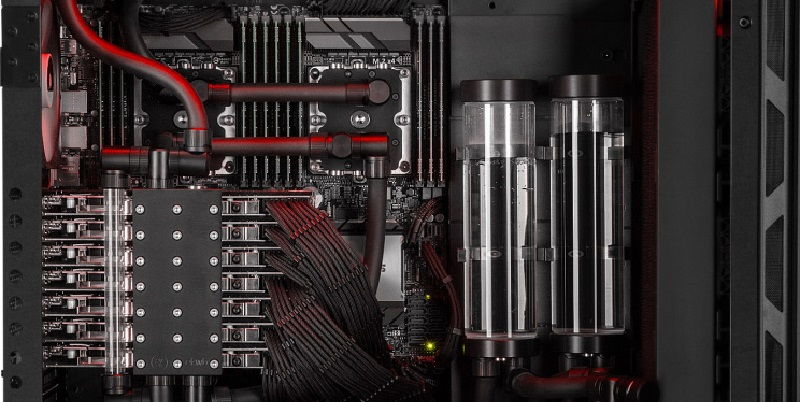
In the realm of high-performance computing, a sleek and sophisticated machine has emerged, designed specifically for the demanding tasks of 3D rendering and machine learning. While it may not be suitable for gaming, this workstation is a force to be reckoned with in the world of professional applications.
Unique GPU Configuration
One of the standout features of this workstation lies in its unique GPU configuration. The developers have detuned the graphics processing units (GPUs) to consume only 300W of power each, presenting a remarkable 150W reduction from their stock counterparts. While this lower power consumption may negatively impact gaming performance, its effect on workstation applications is minimal, ensuring optimal efficiency for tasks such as 3D rendering and machine learning.
Powerful CPU
At the heart of this powerhouse of a machine lies the Threadripper Pro 5995WX, a central processing unit (CPU) that boasts an astounding 64 cores and 128 threads. This high-performance CPU is also included in the cooling loop, ensuring that it maintains optimal temperatures even during intense workloads.
Cooling System
Efficient cooling is of utmost importance for a workstation that deals with resource-intensive tasks. To address this, four radiators from EKWB and a total of 15 Noctua fans are employed to cool both the Threadripper CPU and the seven detuned GPUs. To strike a balance between cooling capacity and space optimization, two radiators sit at the bottom of the full-tower Phanteks Enthoo Elite chassis, alongside the pump. The pièce de résistance is a massive 560mm radiator in the front, accommodating four 140mm fans and extending the entire length of the tower, with an additional radiator positioned on top for optimal thermal dissipation.
Power Supply
To keep this cutting-edge machine powered, two 2,000W power supplies from SuperFlower are included. These power supplies come with modular cabling and boast an impressive 80 Plus Platinum efficiency rating, ensuring both stability and energy efficiency.
The ASUS Pro WS SAGE WRX80 motherboard serves as the backbone of this workstation, providing robust support for the powerful Threadripper Pro CPU and enabling fast and reliable data transfer. In terms of storage, a generous 4TB of NVMe storage is included, ensuring ample space for large data sets, projects, and files. Additionally, the workstation boasts 128GB of DDR4-3200 memory, allowing for smooth multitasking and seamless data handling.
Pricing Information
While this powerful workstation undoubtedly comes with a hefty price tag, it reflects the cutting-edge components and top-notch performance it offers. The cost of this machine is €28,999, which is approximately $31,400 in US dollars. It is an investment for professionals who demand the ultimate in computing power for 3D rendering and machine learning.
In conclusion, the sleek and formidable workstation designed for the specific needs of 3D rendering and machine learning has captured the attention of professionals seeking unparalleled performance. With a unique GPU configuration, a powerful Threadripper Pro CPU, and a meticulous cooling system, this workstation is ready to take on the most resource-intensive tasks. While it may not be designed for gaming, it stands as a testament to the advancements made in high-performance computing. As technology continues to advance, we can expect even greater capabilities and innovations in workstations, pushing the boundaries of what is possible in the world of professional computing.