

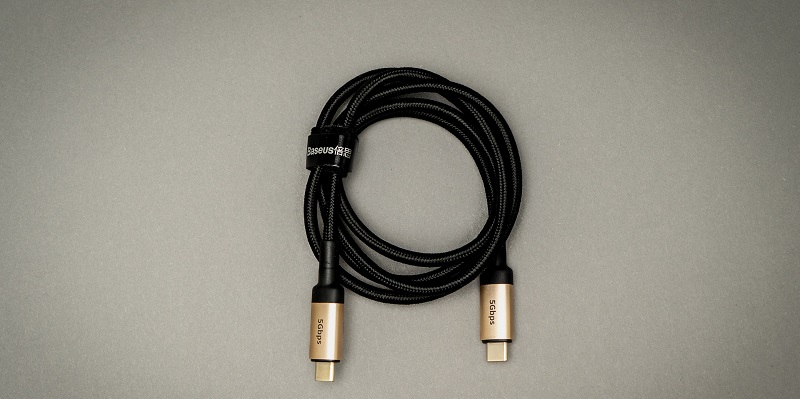
In the fast-evolving world of technology, high-speed connections have become crucial for creators, gamers, and professionals alike. Intel, a leader in the industry, recognized this need and announced the arrival of Thunderbolt 5, the fifth generation of its popular interface for high-speed connections. This breakthrough advancement finally breaks the bandwidth logjam that kept Thunderbolt 3 and 4 limited to 40Gb/s. With Thunderbolt 5, users can expect a doubling of the bandwidth, going from 40Gb/s to a staggering 80Gb/s. Intel’s Thunderbolt 5 not only enhances data transfer speeds but also introduces exciting new features and capabilities.
Breaking the Bandwidth Logjam
Until now, Thunderbolt 3 and 4 faced limitations in their bandwidth capacities. Thunderbolt 5 marks a significant milestone by resolving this issue. With this breakthrough advancement, Thunderbolt 5 opens up new possibilities, enabling faster data transfer rates and enhanced connectivity. The long-awaited breakthrough in bandwidth allows for a seamless experience in handling high-quality content, extensive data storage, and more.
Arrival of Thunderbolt 5
Intel plans to release the first Thunderbolt 5 controller sometime in 2024. This news has generated great anticipation among users eagerly awaiting the enhanced capabilities of Thunderbolt 5. With this release, Intel aims to further solidify its position as a provider of cutting-edge technology in the world of high-speed connectivity.
Doubling the bandwidth
One of the most exciting aspects of Thunderbolt 5 is its doubled bandwidth. While Thunderbolt 3 and 4 offered 40Gb/s, Thunderbolt 5 pushes the boundaries by providing an astounding 80Gb/s. This significant increase in bandwidth empowers users to transfer data at lightning-fast speeds, facilitating seamless file transfers, creative workflows, and improved productivity.
Bandwidth Boost Feature
Alongside its increased bandwidth, Thunderbolt 5 also introduces a new feature called “Bandwidth Boost.” This innovative feature aims to enhance the display experience by providing up to 120Gbps. With Bandwidth Boost, users can immerse themselves in vibrant, high-resolution visuals, as well as enjoy a seamless multi-monitor setup without compromising.
Enhanced Display Support
With Thunderbolt 5, Intel takes display support to the next level. This powerful interface allows users to run three 4K 144Hz monitors simultaneously, providing an unparalleled visual experience. Additionally, Thunderbolt 5 supports multiple 8K monitors, allowing professionals and enthusiasts to create content or indulge in immersive gaming with exceptional clarity and detail.
Thunderbolt 5 vs. USB 4
In the realm of high-speed connectivity, Thunderbolt 5 stands out from its counterparts, such as USB 4. While USB 4 offers 80Gb/s as an optional specification, Thunderbolt 5 solidifies this bandwidth capability. Thunderbolt 5’s fixed specification ensures users can rely on its exceptional speed and performance, making it the ideal choice for those seeking uncompromised connectivity for demanding tasks.
Target Audience and Use Cases
Intel developed Thunderbolt 5 with creators and gamers in mind. The robust capabilities and doubled bandwidth cater to the needs of professionals engaging in content creation, photo and video editing, and 3D rendering. Gamers benefit from Thunderbolt 5’s high refresh rate support, providing a buttery-smooth gameplay experience. The increased bandwidth also enables superior networking between PCs and significantly enhances the performance of external storage and eGPUs.
Enhanced Gaming Support
Gaming enthusiasts will be delighted to know that Thunderbolt 5 supports refresh rates of up to 540Hz, specifically designed for 1080p gameplay. The high refresh rates ensure a competitive advantage, enabling gamers to react swiftly and effortlessly, resulting in an immersive gaming experience like never before.
Expanded Networking and Storage Capabilities
Beyond its impressive bandwidth, Thunderbolt 5 elevates networking and storage capabilities. It offers double the networking bandwidth for PC-to-PC connections, enabling faster file transfers and smoother collaboration between devices. Additionally, Thunderbolt 5 provides double the PCIe Gen 4 bandwidth for external storage solutions and eGPUs. Whether it’s handling massive video files, accessing cloud storage, or leveraging the power of an external GPU, Thunderbolt 5 ensures smooth and reliable performance.
Intel’s announcement of Thunderbolt 5 marks a significant milestone in the realm of high-speed connectivity. With its doubled bandwidth, Thunderbolt 5 propels industries forward, enabling professionals, creators, and gamers to unlock their full potential. The introduction of Bandwidth Boost, enhanced display support, and superior networking and storage capabilities make Thunderbolt 5 a game-changer in the industry. As Intel continues to push the boundaries of technology, Thunderbolt 5 sets the stage for a new era of high-speed connections, ultimately transforming the way we work, create, and play.