

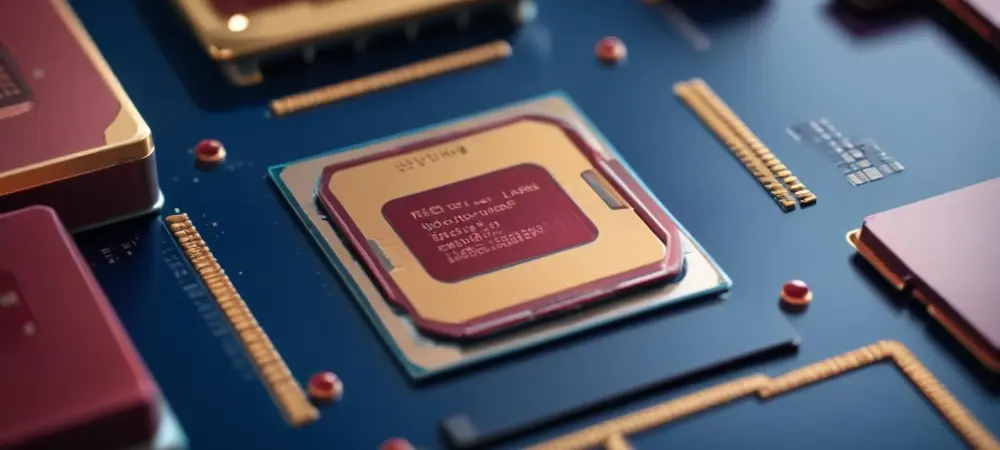
The anticipation surrounding high-performance computing is reaching new heights as Intel prepares to introduce its cutting-edge Diamond Rapids CPU models. Scheduled for release in 2026, these processors promise to revolutionize the industry with a hefty 192 P-Cores organized across four tiles, boasting a thermal design power (TDP) of 500 watts. They will employ Intel’s advanced 18A lithography process and feature eight or sixteen DRAM channels, along with compatibility for PCIe 6.0 technology. This technological leap matches the trajectory set by AMD’s future Venice CPUs. Positioned as a vital component of the Oak Stream server platform, Diamond Rapids will utilize a new LGA 9324 socket. These developments set the stage for a significant leap in computational abilities, marking a stark rivalry with AMD’s Zen 6 Venice models, which may feature up to 256 cores. In the current landscape, AMD’s Ryzen 7 9800X3D remains a top choice for high-end users in gaming and demanding tasks.
Technical Advancements and Compatibility
Intel’s Diamond Rapids CPUs are expected to deliver unparalleled efficiency and performance benchmarks that redefine industry standards. A notable advancement is the improved AMX efficiency, which aims to optimize data processing tasks vital for industries relying on massive computational resources. Additionally, the processors will support native TF32 and FP8 data types, enhancing their utility in deeply complex computational environments such as artificial intelligence and machine learning. Compatibility remains a focus, with these CPUs supporting both 2-socket and 4-socket configurations, providing scalability and flexibility. The inclusion of PCIe 6.0 support ensures high-speed data transfer capabilities, aligning with future requirements of data centers while keeping pace with AMD’s potential offerings.
Challenges and Future Considerations
While Diamond Rapids is set to greatly enhance both single and multi-core performance, several challenges persist. Intel has yet to officially declare key milestones such as tape-in or power-on, causing some uncertainty about the precise launch date within 2026. This ambiguity makes market watchers and potential consumers cautious, especially given the fierce competition from AMD. AMD’s forthcoming Zen 6 Venice CPUs represent strong competition in terms of core count and processing abilities. Tech enthusiasts are focused on how these advancements will be applied in real-world scenarios, as opposed to just theoretical improvements. As Intel continues refining the Diamond Rapids series, it’s crucial to observe how these innovations are transformed into tangible performance, effectively meeting the rising needs of data-intensive industries. The release of these CPUs could cause a significant shift in industry standards; however, current options like the Ryzen 7 provide more immediate solutions for those with pressing performance needs.