

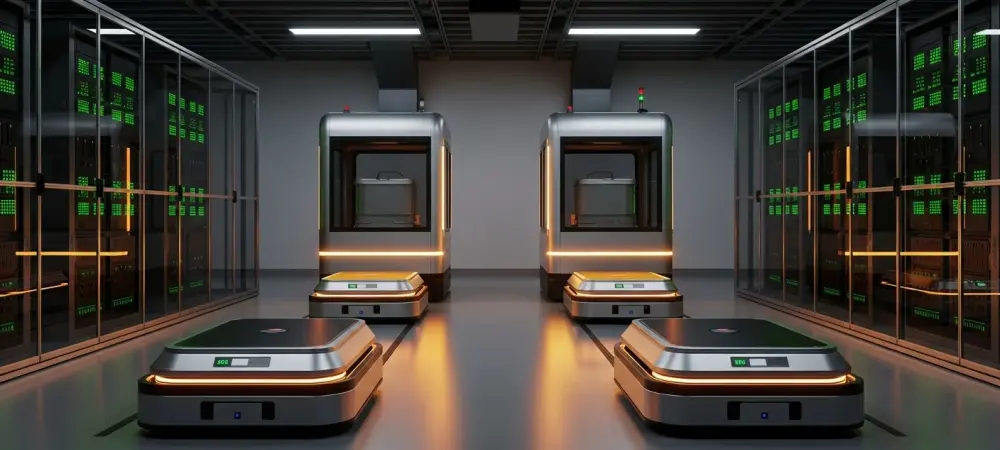
The industrial landscape is undergoing a fundamental transformation as traditional automation gives way to cognitive systems that process data with the same nuance once reserved for human operators. For decades, factories relied on rigid, rule-based instructions to complete repetitive tasks with speed and precision, but the advent of intelligent automation has moved the sector toward adaptive judgment. Machines are no longer merely performing scheduled motions; they are functioning as thinking components of a broader production ecosystem that learns and evolves. This shift is defined by a transition from fixed sequences to responsive workflows where machinery perceives its environment through sophisticated sensor arrays. By leveraging computer vision and machine learning, modern systems recognize subtle changes in their surroundings and adjust parameters in real time. Consequently, the factory floor is evolving into a self-optimizing decision engine that reasons based on live data, maximizing throughput and reducing errors.
Driving Operational Efficiency: Predictive Insights and Quality
The most immediate impact of this technology is found in predictive maintenance, which has become a primary driver of industrial return on investment across the manufacturing sector. By continuously monitoring variables like vibration, temperature, and energy consumption through high-frequency sensors, AI models identify potential equipment failures before they result in catastrophic downtime. This proactive approach allows companies to reduce maintenance costs significantly while ensuring that production lines remain operational during the most critical windows of market demand. Instead of replacing parts based on a generic schedule, engineers now rely on precise health scores generated for every individual motor or actuator. This precision prevents the premature disposal of functional components and minimizes the risk of unexpected seizures that could halt an entire facility. The result is a more resilient supply chain that maintains consistent output regardless of machine age or heavy usage cycles. Advanced quality control further enhances this efficiency by utilizing AI-driven vision systems to catch defects early in the manufacturing process rather than during final inspection. Instead of discovering errors at the end of the line, these intelligent systems identify anomalies as they occur, preventing the waste associated with processing faulty parts through subsequent stages. This ensures that intelligence is baked into every step of the workflow, prioritizing precision and resource conservation above all else. Modern optical sensors can detect micro-cracks or pigment inconsistencies that are invisible to the human eye, flagging problematic items for immediate removal or automated rework. By integrating these checkpoints into the assembly flow, manufacturers drastically reduce their scrap rates and improve overall customer satisfaction. The data collected from these inspections also feeds back into the control system, allowing the machines to recalibrate their settings.
The Synergy: Digital Connectivity and Agentic AI
Intelligent automation relies on the profound synergy between the Internet of Things, artificial intelligence, and advanced robotics to bridge the gap between code and physical action. This interconnectedness allows for unprecedented levels of flexibility, making small-batch or personalized production financially viable because the system can reconfigure itself without manual intervention. In this environment, a production line can switch from manufacturing consumer electronics to medical devices with minimal downtime, as software-defined manufacturing replaces physical hardware adjustments. This agility is essential in a global market characterized by fluctuating consumer preferences and rapid technological advancement. The integration of high-speed connectivity ensures that every movement is synchronized. The next frontier in this evolution is the emergence of agentic AI, which can plan and execute complex, multi-step workflows autonomously without constant human intervention or prompts. These systems do more than just flag problems or follow basic commands; they independently schedule repairs, order replacement parts, and reroute production flows to avoid bottlenecks. Because these machines make high-consequence decisions that affect the safety and profitability of the plant, manufacturers are now prioritizing strict governance and human-in-the-loop oversight to maintain accountability. This creates a supervisory relationship where workers act as managers of an autonomous workforce rather than manual laborers. The software agents analyze historical performance and current market demand to optimize the factory’s output for maximum profit. This layer of autonomous reasoning represents the peak of industrial intelligence, where the factory functions as a singular, cohesive entity.
Strategic Integration: Moving From Pilot to Scale
To successfully adopt these technologies, experts suggest avoiding overly ambitious projects that are difficult to scale or lack a clear path to measurable value for the business. Instead, a focused approach that targets a specific production line or a critical asset class allows manufacturers to prove the value of the technology quickly and with limited risk. This incremental strategy builds the internal expertise and executive confidence necessary to roll out intelligent workflows across the entire organization over the next few years. By starting small, teams can iron out integration challenges between legacy hardware and modern software before attempting a site-wide transformation. This method also allows for the gradual accumulation of high-quality data, which is the foundational requirement for training effective machine learning models. As early successes are documented, the business case for broader automation becomes undeniable, facilitating larger capital allocations and expansion.
The transition to a decision-driven factory required a significant cultural shift and robust change management to ensure that the workforce evolved alongside the technology. Operators learned to trust algorithmic recommendations, and maintenance teams developed new technical skills to manage autonomous systems that relied on code as much as mechanical parts. The ultimate goal became the creation of an environment where human expertise and machine intelligence worked in tandem to continuously optimize the plant floor. Manufacturers that prioritized this dual development of people and systems successfully navigated the complexities of the modern industrial era. These companies moved beyond simple cost-cutting and instead focused on building resilient, flexible production engines that responded to real-time market signals. The resulting infrastructure provided a blueprint for future industrial design, emphasizing the necessity of integrated intelligence over isolated automation. Leaders turned facilities into cognitive assets.