

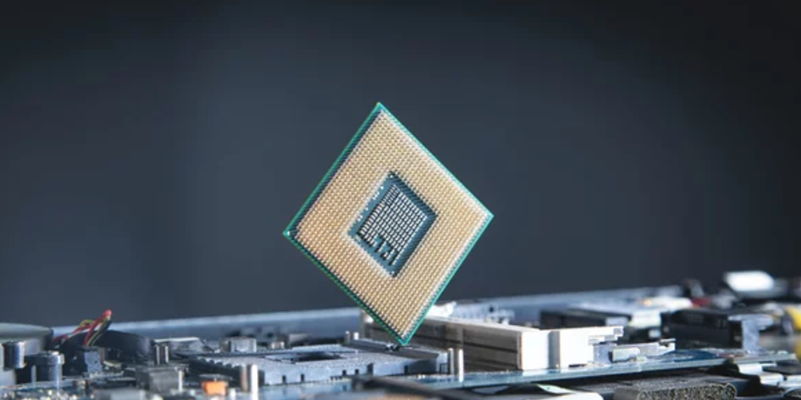
Intel, the renowned chipmaker, recently unveiled its new performance metrics, offering a glimpse into its upcoming 5th Gen Emerald Rapids and next-gen Granite Rapids Xeon CPUs. With these releases, Intel aims to push the boundaries of processor efficiency and power. This article delves deep into the specifications, features, and improvements of Intel’s highly anticipated 5th Gen Emerald Rapids Xeon CPUs.
Comparison: 5th Gen Emerald Rapids vs. 4th Gen Sapphire Rapids
Intel presented its latest performance metrics by comparing the upcoming 5th Gen Emerald Rapids CPUs with the current 4th Gen Sapphire Rapids chips. The comprehensive analysis showcased the advancements in HPC metrics for the Xeon Max CPUs in comparison to AMD’s EPYC Genoa 96-core chips. This head-to-head evaluation underscored Intel’s commitment to staying at the forefront of the competitive CPU market.
Compatibility and Platform Advancements
The Intel 5th Gen Emerald Rapids CPUs will be pin-compatible with the Sapphire Rapids CPUs, allowing for seamless integration on the Eagle Stream platform. This compatibility ensures a simple upgrade path, enabling businesses to leverage the enhanced capabilities of the new processors without significant system overhauls.
Workload-Optimized Performance and Energy Efficiency
Intel prides itself on delivering workload-optimized performance and energy-efficient computing solutions. With the 5th Gen Emerald Rapids Xeon CPUs, the company promises impressive advancements in both of these areas. These processors have been meticulously designed to meet the rising demands of modern workloads while ensuring optimal energy efficiency.
Enhanced Features and Capabilities
The 5th Gen Xeons bring notable advancements in features and capabilities. With support for CXL 1.0 and 2.0, these CPUs can harness the benefits of high-speed interconnectivity and data sharing. Additionally, the inclusion of up to 80 PCIe Gen 5.0 lanes enables lightning-fast data transfer, unlocking a world of possibilities for data-driven applications and high-performance computing.
Unleashing the Power: Speed Improvements with Emerald Rapids
Intel boldly claims a 40% speedup in performance with the Emerald Rapids CPUs when compared to their Sapphire Rapids counterparts. With this significant boost, users can expect faster processing speeds, improved multitasking capabilities, and enhanced overall system performance.
Notable Features Within the Emerald Rapids CPUs
The 5th Gen Xeon “Emerald Rapids” CPUs are packed with exciting features. These include a staggering up to 3x larger Last-Level Cache (LLC) cache, ensuring lightning-fast access to critical data. Moreover, the increased memory speed and higher CPU core count, with up to 64 cores, further strengthen the processors’ ability to handle complex workloads with ease. The introduction of the CXL Type 3 high bandwidth interface also enhances data transfer speeds and responsiveness, catering to the demands of modern applications.
AI Acceleration and Performance Boost
One of the most eagerly anticipated aspects of the 5th Gen Emerald Rapids Xeon CPUs is their AI acceleration capabilities. Intel’s commitment to advancing AI-related tasks is evident in the integration of Intel AMX, which offers built-in AI acceleration. This integration is expected to deliver a tremendous performance boost across inference and training, enabling businesses to harness the power of AI with minimal latency.
Unparalleled Performance Improvement
In comparison to the 56-core Sapphire Rapids CPU, Intel’s 5th Gen Emerald Rapids Xeon CPU is projected to offer up to a remarkable 40% improvement in performance. Advanced architectural enhancements and innovative design choices contribute to this significant jump in processing power, cementing Intel’s position as a leader in the CPU market.
Intel’s unveiling of the 5th Gen Emerald Rapids Xeon CPUs marks an exciting milestone in the advancement of computing technology. With a focus on optimized performance, energy efficiency, enhanced features, and AI acceleration, these processors are set to redefine the boundaries of what is possible. As businesses look to embrace the demands of future workloads and applications, Intel’s processors promise to deliver unparalleled performance, solidifying their position as the go-to choice for high-performance computing needs.
In summary, Intel’s 5th Gen Emerald Rapids Xeon CPUs showcase remarkable advancements in processing power, memory speed, and AI acceleration. With their compatibility, enhanced features, and projected 40% performance improvement, these CPUs are ready to revolutionize the industry, offering businesses increased productivity and efficiency like never before. As the CPU market evolves, Intel continues to push boundaries, solidifying its position as a leader in the rapidly progressing world of computing.