

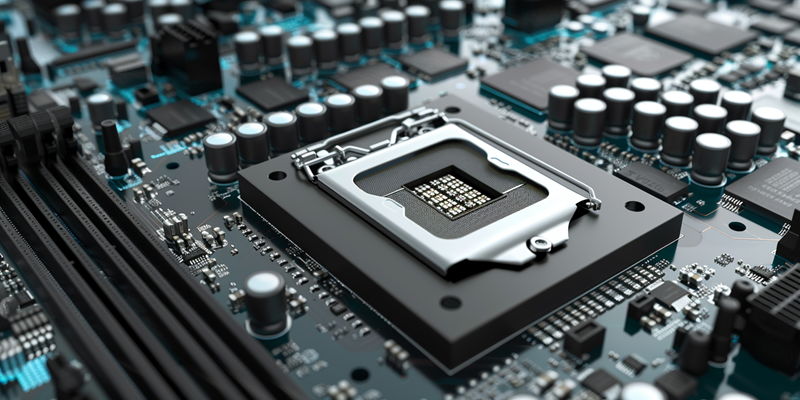
The launch of Intel’s next-generation Lunar Lake CPUs is electrifying the tech community with the promise of pioneering the future of portable computing. Tentatively slated for release in the third quarter of 2024, these chips are engineered to redefine thin and light PC platforms through a synergy of cutting-edge architecture and remarkable power efficiency. With over 7 million units of their predecessors shipped, the prospects for Lunar Lake CPUs are bright. This next wave of microprocessors is set to raise the benchmark for mobile computing, offering significant architectural enhancements, energy-saving technologies, and a powerful AI computing experience.
Next-Generation Core Architecture
The underlying strength of Lunar Lake lies in its newly developed CPU cores. The Lion Cove P-Cores and Skymont E-Cores embody Intel’s relentless pursuit of excellence in computational efficiency and power. Though exact performance metrics remain under wraps, industry expectations are soaring due to the potential improvements in instructions per cycle (IPC).
A revamped ‘Thread Director’ lies at the heart of these CPUs, ensuring that task management and core performance harmonize optimally. By dynamically adjusting to computational demands, Lunar Lake provides efficiency and speed, which are crucial for multitasking and high-performance applications. Users anticipate that these CPUs will support the most demanding software effortlessly, retaining Intel’s position at the cutting edge of CPU performance.
Integrated Graphics and AI Processing Overhaul
The GPU segment of the Lunar Lake CPUs introduces the transformative Xe2 architecture — Battlemage. This marks a significant milestone for integrated graphics, promising a 3.15x performance boost over the previous generation. The acceleration of AI processes via Intel’s second-generation XMX Engines further enhances Lunar Lake’s graphical capabilities, allowing it to handle graphic-intensive tasks such as gaming and content creation more effectively.
In addition to these graphical improvements, the next-gen NPU cores in Lunar Lake are set to deliver AI processing power at an astonishing 45 TOPS, four times that of Meteor Lake’s NPUs. By combining GPU and NPU strengths, Lunar Lake CPUs offer a comprehensive 105 AI TOPS, showcasing an exceptional capability to handle AI-centric workloads.
Power Efficiency and On-Package Memory Innovation
Intel doesn’t only focus on performance enhancements with Lunar Lake; significant strides in power efficiency are also a central feature. The new “Advanced Low Power Island” technology is a game-changer, designed to drastically cut down power consumption. Such innovations are key for thin and light PCs, where a balance between performance and battery life is paramount.
The CPU’s memory setup brings adaptability to the fore with on-package memory options. Tests on early samples have indicated the presence of versatile SKUs and TDP levels, hinting at a variety of configurations that would cater to diverse user demands. Whether prioritizing performance or energy conservation, Lunar Lake’s flexible memory options—ranging from power-conservative 17W chips to high-powered versions—indicate a thoughtfully scalable approach in its design.
Benchmarking Lunar Lake’s Capabilities
Intel’s internal benchmarks paint a promising picture for the Lunar Lake CPUs. Outperforming the competition—including prior Intel generations, AMD’s Ryzen, and Qualcomm’s Snapdragon—Lunar Lake shows substantial gains in AI TOPS and graphics compared to the Snapdragon X Elite and Meteor Lake GPUs, respectively. Its computing performance also surpasses that of the Ryzen 7 8840U and even the Snapdragon X Elite in early comparisons.
These early indicators suggest that Lunar Lake could likely be the leader of the pack upon release. It stands to redefine the standard for performance and power in mobile computing applications. Nevertheless, the true testament to its supremacy will be in its real-world application and ability to deliver on the benchmarks it currently sets.
The Road Ahead with Intel’s CPU Lineup
Intel’s highly anticipated Lunar Lake CPUs are igniting excitement among tech enthusiasts as they gear up to revolutionize mobile computing. Expected to hit the market in late 2024, these next-gen processors are set to be a game-changer for AI-driven, thin, and lightweight PCs, thanks to their advanced architecture and exceptional energy efficiency.
Building on the success of their predecessors, which have already seen over 7 million shipments, Lunar Lake CPUs aim to establish new standards in the portable computer landscape. They promise to deliver substantial architectural improvements, incorporate energy-conserving features, and offer a robust AI processing capability.
The upcoming release signals Intel’s commitment to pushing the envelope in the semiconductor industry. With their new chips, the company seems poised to deliver faster, smarter, and more power-efficient computing solutions that cater to the growing demand for high-performing portable devices. As the third quarter of 2024 approaches, the anticipation for Lunar Lake CPUs continues to grow, with the tech world eagerly waiting to see how these processors will transform the face of mobile computing.