

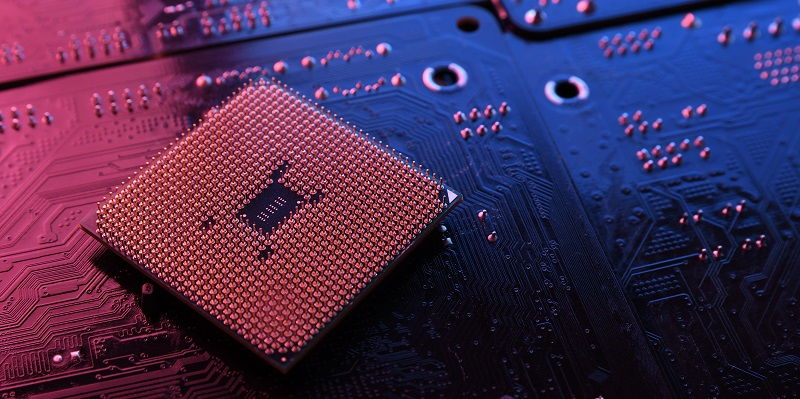
The upcoming release of Intel’s highly anticipated next-gen Core i9-14900K Desktop CPU has sparked excitement among tech enthusiasts and professionals alike. Leaked benchmarks show that this processor offers a significant performance boost over its predecessor, the Core i9-13900K. In this article, we will delve into the details, highlighting the key features, clock speeds, pricing, and most importantly, the impressive benchmarks. Let’s dive in!
Overview of the Intel Core i9-14900K desktop CPU
Setting the stage for Intel’s 14th Gen stack, the Core i9-14900K Desktop CPU is expected to be the fastest chip in the lineup. While sharing similar specifications with the Core i9-13900K, this processor has been meticulously tuned for higher clocks and power limits, enabling a substantial performance improvement. With 24 cores and 32 threads in an 8+16 configuration, the Core i9-14900K promises to deliver unparalleled computing power.
Clock speeds and performance boosts
The Intel Core i9-14900K Desktop CPU boasts impressive clock speeds, starting at a base frequency of 3.2 GHz. However, its true potential lies in the Thermal Velocity Boost feature, which can push the clock speed up to an astounding 6.0 GHz. With this remarkable capability, the CPU gains a significant edge over its predecessors and even competes with top-tier offerings from rival manufacturers.
Pricing and availability
While enthusiasts eagerly await the release of the Core i9-14900K, recent reports suggest a retail price of $695 USD. This signifies a 15.8% increase compared to its predecessor. While the higher cost may deter some budget-conscious buyers, the enhanced performance justifies the investment for professionals who rely on cutting-edge computing power for their demanding tasks.
Benchmarks and Performance Analysis
The leaked benchmarks of the Intel Core i9-14900K Desktop CPU have caused quite a stir in the tech community. One notable aspect is the chip’s ability to operate at an impressive 6 GHz out of the box, which is equal to the performance of the Core i9-13900KS. Furthermore, the CPU achieves a commendable score of 978 points in single-core tests. However, it’s the multi-core performance that truly sets the Core i9-14900K apart, with an outstanding score of 18,117.5 points. These benchmark results firmly establish the Core i9-14900K as the fastest chip released to date, both in single-core and multi-core performance.
In conclusion, the anticipation surrounding the release of Intel’s Core i9-14900K Desktop CPU is well-founded. The leaked benchmarks reinforce the promises of a significant performance boost over its predecessor, rivaling and surpassing the competition in both single-core and multi-core tasks. With clock speeds reaching an impressive 6.0 GHz and an eight-core and sixteen-thread configuration delivering exceptional computing power, the Core i9-14900K sets new standards for desktop CPUs.
However, it is crucial to consider the accompanying price increase, which may dampen the enthusiasm of some buyers. Nonetheless, professionals and power users seeking unmatched performance will find the investment worthwhile. As the fastest chip in its class, the Core i9-14900K Desktop CPU is poised to revolutionize computing capabilities, empowering users to seamlessly handle the most demanding tasks with ease. With the release approaching, it won’t be long before we witness the true potential of this cutting-edge processor.