

Navigating the Shift from Monolithic Systems to Connected Networks
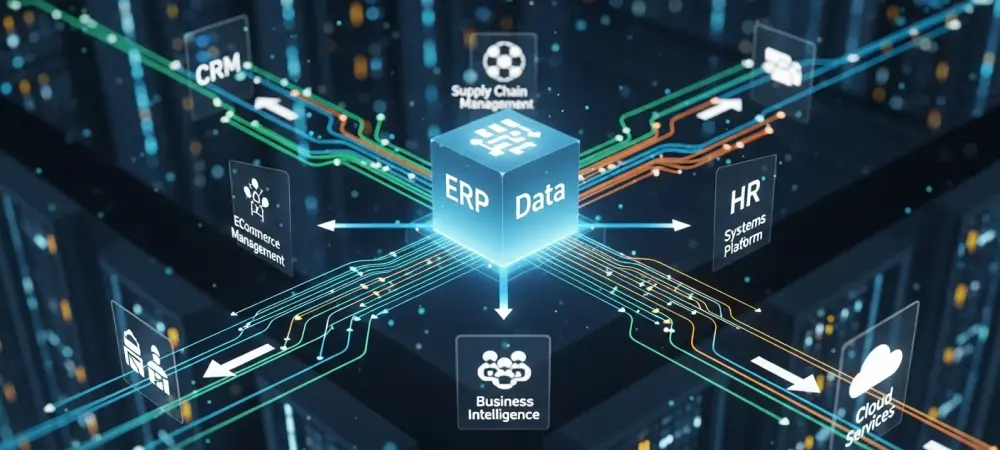
The rapid decentralization of corporate information has fundamentally altered the way global organizations interact with their primary systems of record, moving away from isolated databases toward dynamic, fluid environments. Historically, Enterprise Resource Planning (ERP) systems functioned as the solitary “center of gravity” for an organization, acting as the definitive and isolated source of truth for financial and operational records. Today, however, the role of the ERP has shifted from a closed silo to a critical anchor within a vast, interconnected data ecosystem. This transformation is driven by the realization that static historical records are insufficient for navigating a market defined by volatility and rapid technological advancement. Modern enterprises are now tasked with weaving together transactional integrity and the agility of the cloud to maintain a competitive edge.
The current corporate landscape necessitates a departure from the traditional mindset that viewed the ERP as a self-contained universe. Instead, the focus has shifted to the strategic integration of ERP data into a broader environment of cloud applications, external market signals, and artificial intelligence, illustrating how businesses can maintain data integrity while unlocking new layers of corporate value. As organizations strive to become more data-driven, the ability to synthesize structured ERP data with unstructured external insights has become a primary indicator of operational maturity. This article explores the architectural shifts required to achieve this harmony and examines how the definition of a “system of record” is being rewritten to accommodate a more distributed, intelligent future.
Maintaining the relevance of the ERP requires a sophisticated understanding of how information flows through a modern enterprise. It is no longer enough to simply store data; organizations must ensure that this data is accessible, interpretable, and actionable across a multitude of platforms. By treating the ERP as an anchor rather than a fortress, businesses can leverage the foundational trust of their financial systems while embracing the innovative potential of the wider data ecosystem. This evolution represents a significant milestone in the journey of digital transformation, signaling a shift toward a more holistic and integrated approach to corporate intelligence.
The Evolution of the ERP: From Operational Backbone to Ecosystem Anchor
For decades, the ERP system was the undisputed ruler of the enterprise IT stack, providing the essential structure needed to manage complex global operations. Every critical transaction—booking an order, moving inventory, or processing a supplier payment—was captured within its rigid framework, creating a reliable but often inflexible history of business activity. These systems were not merely repositories; they were the primary tools for analyzing production, revenue, and financial health, serving as the ultimate authority for executive decision-making. The value of the ERP lay in its consistency and its ability to enforce standardized processes across sprawling international organizations.
However, as digital transformation accelerated and the volume of available data exploded, the “single lens” model provided by traditional ERPs began to show its limitations. The rigid schemas that ensured data integrity also created barriers to innovation, making it difficult to incorporate new types of information or respond to real-time market changes. Modern technology leaders now recognize that while the ERP remains essential for maintaining the structural integrity of the business, it is no longer sufficient on its own to drive strategic growth. The industry has shifted toward a model where ERP data is one of several anchor points, supporting a more diverse and flexible array of analytical tools and applications. The challenge has moved beyond simple “modernization” to the architectural integration of transactional data with more fluid, real-time signals from logistics networks and customer platforms. This transition requires a fundamental rethinking of how data is stored and shared, moving away from proprietary formats toward more open and interoperable standards. Understanding this history is vital, as the goal is now to harness the structured rigor of the ERP without losing the “semantics”—the underlying business meaning—of the data as it flows into more flexible environments. By contextualizing the ERP within a broader network, organizations can preserve the reliability of their core systems while gaining the agility needed to thrive in a modern economy.
Bridging the Gap Between Transactional Records and Strategic Insights
Analyzing the “What” versus the “Why” in Business Performance
A critical perspective in modern data strategy is the inherent limitation of ERP data when viewed in isolation, as these systems primarily serve as historical ledgers rather than predictive engines. ERP systems are exceptionally proficient at recording what happened—for instance, showing a decline in profit margins or a sudden drop in inventory levels during a specific quarter. They provide a high-fidelity snapshot of the organization’s financial state, but they rarely offer the contextual depth required to explain the root causes of these fluctuations. To find the underlying reason for a performance shift, organizations must look toward data residing outside the ERP, such as port congestion reports, fluctuating supplier performance metrics, or regional demand spikes found in external market intelligence tools. By combining internal records with external signals, companies move from a reactive posture to a proactive operating model that anticipates challenges before they manifest in the balance sheet. For example, an ERP might show that a specific product line is underperforming, but only by integrating social media sentiment or competitor pricing data can a business understand that the issue is related to brand perception rather than supply chain efficiency. This synthesis of “what” and “why” allows leadership to make more informed decisions, moving beyond simple cost-cutting measures toward strategic pivots that address the actual drivers of market behavior. The integration of these disparate data streams is the foundation of a modern intelligence strategy.
Moreover, the ability to correlate internal operational data with macro-economic indicators provides a layer of resilience that was previously unattainable. When an enterprise can see how global shipping delays recorded in external platforms will eventually impact the inventory levels tracked in their ERP, they can adjust their procurement strategies in advance. This level of foresight transforms the ERP from a lagging indicator of performance into a vital component of a real-time feedback loop. Ultimately, bridging the gap between transactions and insights requires a commitment to breaking down the barriers between internal systems and the vast world of external data.
Overcoming the Fragmentation of Multi-Vendor SaaS Stacks
As business units have adopted specialized Software-as-a-Service (SaaS) applications to solve niche problems, operational data has become scattered across dozens of independent environments. Most modern enterprises now operate on a multi-vendor stack, perhaps using one provider for finance, another for customer relationship management (CRM), and a third for human resources. This fragmentation means no single system contains the complete narrative of the business, leading to a “data sprawl” that can obscure the true state of operations. While these specialized tools offer superior functionality for specific tasks, they often operate as new silos, replicating the very problems that integrated ERPs were originally designed to solve.
The integration challenge today involves weaving these disparate threads back together to create a unified view, ensuring that real-time expectations for operational insights are met despite the decentralized nature of the modern cloud. When a salesperson enters a deal in a CRM, the financial implications must be immediately reflected in the ERP’s revenue forecasts, and the inventory requirements must be communicated to the supply chain management system. Achieving this level of synchronization requires a robust integration layer that can translate data between different vendor formats while maintaining strict governance and security standards. Without this connectivity, the enterprise remains a collection of disconnected parts rather than a cohesive whole.
Furthermore, the rise of the multi-vendor stack has placed a premium on the role of middle-tier data platforms that act as a bridge between specialized applications. These platforms allow organizations to aggregate data from various SaaS tools and the core ERP, providing a centralized location for cross-functional analysis. This approach mitigates the risks of fragmentation by ensuring that every department is working from the same set of facts, regardless of which software they use for their daily tasks. By focusing on interoperability, businesses can enjoy the benefits of best-of-breed applications without sacrificing the comprehensive oversight provided by a unified data architecture.
The Competitive Struggle for the Enterprise Data Layer
The shift toward a “neutral” data layer has sparked a significant conflict between traditional ERP giants and independent data platform providers, each vying for control over the organization’s most valuable asset. Major vendors like SAP, Oracle, and Microsoft are aggressively expanding their capabilities, attempting to package ERP data into curated “data products” to keep customers within their proprietary environments. These vendors argue that their deep understanding of the underlying ERP schema allows them to provide more integrated and secure analytics solutions. By offering pre-built models and “one-click” integrations, they aim to reduce the complexity of data management for their clients while reinforcing their position as the center of the IT ecosystem. Conversely, independent platforms like Snowflake and Databricks position themselves as neutral ground, arguing that data is most useful when it is free from vendor bias and accessible to any application. These providers emphasize flexibility and the ability to combine ERP data with a nearly infinite variety of external sources without being locked into a single software provider’s roadmap. The value proposition of the neutral platform centers on the idea that the “data layer” should be independent of the “application layer,” allowing companies to swap out specific tools as their needs evolve without losing their historical data or analytical models. This methodology appeals to organizations that prioritize long-term sovereignty and technical agility.
Enterprises must navigate these competing methodologies, deciding whether to favor the speed of pre-defined vendor models or the long-term flexibility of bespoke, cross-system architectures. This decision is rarely an all-or-nothing choice; many organizations opt for a hybrid approach that uses vendor-specific tools for core financial reporting while leveraging neutral platforms for advanced AI and machine learning initiatives. The outcome of this struggle will define the next decade of enterprise IT, as businesses weigh the benefits of deep integration against the risks of vendor lock-in. Regardless of the chosen path, the ability to manage and move data across these competing environments is now a core competency for any modern IT organization.
The Future of ERP: Event-Driven and Agentic Architectures
The trajectory of ERP development is moving toward “agentic” and event-driven architectures that fundamentally change the system’s role from a passive recorder to an active participant. In this state, systems will no longer just record historical transactions after they occur; they will respond to operational signals in real-time using autonomous AI agents. For example, if a sensor on a manufacturing floor detects a machine failure, an event-driven ERP could automatically trigger a series of actions: pausing production schedules, notifying the maintenance team, and re-routing supply chain orders to an alternative facility. This level of automation reduces the latency between a real-world event and the corporate response, allowing the business to operate at the speed of the market.
This evolution will be shaped by the ability to connect an ERP event, such as a shipping delay, with an operational signal, such as a change in a customer’s buying pattern, instantly. We can expect to see a landscape where the primary differentiator between market leaders and laggards is the fluidity of their data architecture and their ability to automate complex decision-making processes through integrated intelligence. In this environment, the ERP functions as a nervous system, sensing changes across the organization and coordinating a unified response. This shift requires not only advanced technology but also a cultural change in how businesses perceive risk and autonomy in their digital systems.
Moreover, the rise of agentic architectures implies that the ERP will become increasingly invisible to the average user. Instead of manually entering data into complex forms, employees will interact with intelligent agents that handle the transactional heavy lifting in the background. These agents will use the rich historical data stored in the ERP to make recommendations, identify anomalies, and optimize workflows without constant human intervention. As these systems become more sophisticated, the focus of the enterprise will shift from managing the process of record-keeping to managing the outcomes of automated intelligence. The future of the ERP is not just a better database, but a more capable and autonomous partner in the business.
Strategic Frameworks for Effective Data Integration
To successfully integrate ERP data into the modern ecosystem, organizations should adopt several best practices that prioritize clarity, consistency, and long-term sustainability. First, it is essential to establish clear “Data Ownership” to ensure accountability as information moves from transactional systems to analytics platforms. Without a designated owner, data quality often degrades as it travels across different departments, leading to errors that can compromise the integrity of high-level reports. By assigning responsibility for specific data domains, businesses can ensure that the information used for decision-making is accurate, up-to-date, and compliant with relevant regulations. Second, organizations must prioritize the preservation of “Semantics”—ensuring that a metric like “Gross Revenue” retains the same definition across all departments to avoid “semantic drift” and conflicting reports. This is a common challenge in large enterprises where different business units may have slightly different ways of calculating key performance indicators. Establishing a centralized semantic layer allows the organization to define these terms once and apply them universally, ensuring that everyone is speaking the same language when discussing business performance. This consistency is crucial for building trust in the data and for enabling effective cross-functional collaboration. Finally, businesses should seek a balanced vendor strategy that avoids over-reliance on a single provider while still leveraging the strengths of their core platforms. A dual approach involves using curated models from ERP providers for rapid deployment in specific areas—such as financial auditing or compliance—while maintaining a neutral data layer for cross-functional innovation and AI-driven initiatives. This strategy ensures both the speed of implementation and the sovereignty over the company’s most valuable asset. By maintaining control over their data architecture, organizations can adapt more quickly to new technologies and market shifts, ensuring that their ERP remains a source of strength rather than a point of failure.
Consolidating the Modern Data Strategy
The transition from a monolithic “single center of gravity” to a “connected ecosystem” represented a significant evolution in how information was managed and utilized within the enterprise. It was clear that while the ERP remained an indispensable system of record, its historical isolation had become a liability in a fast-paced environment. Organizations that successfully integrated their transactional data with broader market signals positioned themselves to capitalize on the transformative potential of real-time analytics. This architectural shift allowed leadership to move beyond the limitations of historical reporting, enabling a more dynamic and responsive approach to business strategy.
Effective integration strategies prioritized the preservation of business context, ensuring that the semantic value of data was not lost as it moved across different platforms. The struggle between proprietary vendor models and neutral data layers was managed through a balanced approach that favored both operational speed and long-term flexibility. By establishing clear ownership and governing metrics with a unified semantic layer, businesses eliminated the confusion caused by conflicting data sources. This clarity was essential for fostering a culture of data-driven decision-making, where the focus remained on strategic execution rather than debates over the accuracy of the numbers.
Ultimately, the goal of modernizing the ERP ecosystem was to create a single, reliable version of the truth that served every part of the organization. As systems moved toward more agentic and event-driven models, the ability to automate complex processes based on real-time data became a primary competitive advantage. The successful organizations were those that viewed their data not just as a record of the past, but as a fuel for future innovation. By embracing the complexity of a connected network, these enterprises transformed their foundational systems into a powerful engine for growth and resilience in a constantly evolving global market.