

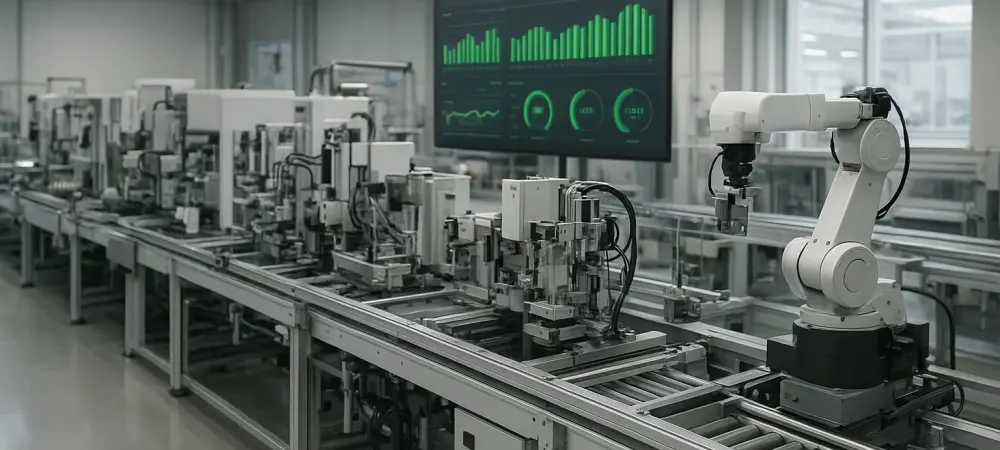
The rhythmic hum of a high-speed production line often masks a ticking clock of mechanical wear that remains invisible until a catastrophic failure suddenly halts operations entirely. In the demanding environment of modern industrial manufacturing, the cost of downtime is measured in lost output and disrupted supply chains. Organizations find that their greatest vulnerability often stems from manual, disconnected systems used to track equipment health rather than the machines themselves.
Beyond Manual Spreadsheets: The Shift to Data-Driven Maintenance
The hidden cost of industrial downtime often arises from the failure of human memory and the inherent limitations of manual tracking systems. In production environments where reliability is paramount, relying on paper logs or “best-guess” service dates creates risks that modern organizations cannot afford. Moving toward proactive maintenance is now a fundamental necessity for maintaining a competitive edge.
Transitioning away from spreadsheets allows for a granular view of asset health that was previously impossible. When data serves as the foundation for maintenance, subjective observations disappear, ensuring service occurs exactly when needed. This approach transforms the shop floor into a predictable environment where machine health remains a known variable rather than a constant source of operational anxiety.
Bridging the Gap Between Production Data and Asset Longevity
Maintenance tracking has historically been a siloed activity, frequently disconnected from the actual pulse of the factory floor. By integrating maintenance directly into Microsoft Dynamics 365 Business Central, Insight Works addresses core inefficiencies in asset management. This ensures that the digital record of a machine always synchronizes with its physical reality on the production floor.
Linking machine centers to maintenance protocols ensures service intervals reflect actual usage rather than arbitrary dates. Automated synchronization removes the risk of manual entry errors that plague isolated systems. This aligns with the 2026 release wave strategy, which emphasizes reducing manual labor across the supply chain through intelligent automation.
Mechanical Intelligence: How Maintenance Manager Orchestrates Efficiency
The Maintenance Manager application acts as a sophisticated resource planner that treats maintenance with the same rigor as a production order. By utilizing triggering parameters like runtime or output counts, the system initiates tasks based on real-time operational data. This mechanical intelligence converts the maintenance department from a cost center into a strategic asset. The system automatically reserves machine downtime to prevent planning conflicts within scheduling tools like Graphical Scheduler or MxAPS. Furthermore, it leverages standard warehouse functions to track the movement and receiving of mobile equipment. Modeling maintenance orders after production orders ensures a unified user experience and a consistent data structure.
Expert Perspectives on Modernizing Operational Execution
Industry leaders recognize that the primary bottleneck in asset preservation is the tracking mechanism, not the technical skill of the crew. Brian Neufeld has noted that most programs fail due to data gaps rather than mechanical negligence. When information is fragmented or delayed, even the most skilled technicians cannot intervene in time to prevent failures. Transitioning to proactive service models requires a cultural shift toward a data-backed prevention strategy. Experts suggest that treating maintenance as an integral part of the production lifecycle is superior to using isolated administrative tools. A unified platform provides the transparency needed to understand how machine health directly impacts the organizational bottom line.
Implementation Strategies for Manufacturing and Distribution
Adopting an automated maintenance framework requires a strategic approach to align software with existing shop floor workflows. Organizations generally require a Business Central Premium license to unlock these advanced maintenance capabilities. Mapping production metrics to service intervals connects machine center output directly to automated triggers.
Managing downtime involves using blocked capacity data to improve the accuracy of delivery lead times. When maintenance is scheduled with precision, sales teams provide more realistic promises to clients. Refining asset visibility through granular location data also allows managers to track equipment across multiple warehouses, ensuring resources are optimally allocated.
The implementation of the Maintenance Manager application successfully bridged the gap between asset management and production planning. The solution empowered organizations to extend equipment lifespans while maintaining consistent performance across the board. This transition solidified the role of maintenance as a core manufacturing component. Moving forward, the focus shifted toward utilizing unified datasets to refine predictive capabilities and operational agility.