

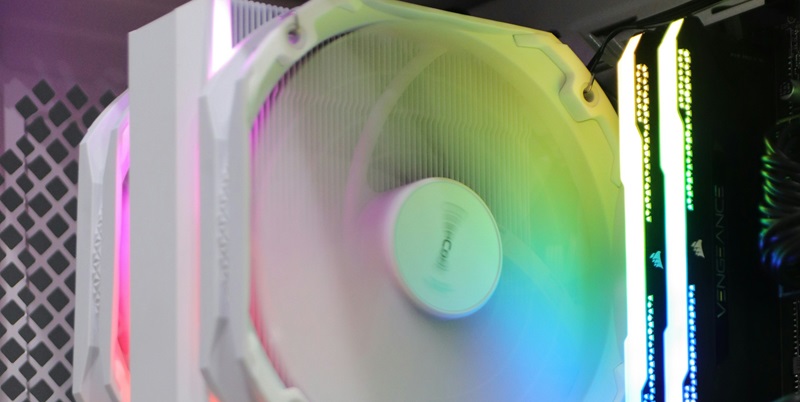
Air coolers are essential components for keeping our computer systems cool and running efficiently. Now, a German company has introduced an innovative air cooler that includes a built-in system monitoring display. The cooler, currently available through Caseking, promises to revolutionize the way we monitor and control our PC’s temperature.
Description of the Display
The star of the show is the air cooler’s impressive display. Measuring six inches diagonally, this large LCD screen boasts a resolution of 1,920 by 1,080, providing clear and detailed visuals. What sets this display apart is its capability to import data from your PC and present it on the screen. Additionally, with the purchase of the cooler, customers are granted a license for the AIDA64 monitoring software, enhancing their ability to track and manage system performance.
Not only does this display offer real-time monitoring of temperature, fan speeds, and other vital statistics, but it also has the potential to serve as a second monitor. However, given its phone-sized dimensions, it may not be the most practical option for extended use as a display.
Lack of Detailed Information
While the display is undeniably impressive, the product listing does not provide extensive information about the monitoring capabilities it offers. Customers are left speculating about the exact range of monitoring functions available. It would be intriguing to know whether it can display real-time CPU and GPU temperatures, voltages, and component utilization.
Robust Cooling Performance
Beyond the innovative display, this air cooler exhibits exceptional cooling capabilities. The listed cooling capacity of 260W makes it suitable for handling the demands of top-tier CPUs manufactured by both Intel and AMD. This robust performance ensures that even during intense gaming sessions or resource-intensive tasks, the cooler can effectively dissipate heat and maintain optimal temperatures.
Socket Compatibility
To cater to a wide range of users, the cooler supports various socket types. For AMD users, compatibility includes the AM4 and AM5 sockets, which are commonly found in modern CPUs. Intel users can also take advantage of this cooling solution, with support offered for sockets such as 1366, 1200, 115X, 1700, and 2011.
Pricing Concerns
Despite its impressive features, the cooler’s price tag may be a deterrent for some potential buyers. Listed at 299 euros or roughly $325 US, it is undoubtedly a premium product. However, it is essential to consider the unique system monitoring display and the high cooling capacity it offers. Whether this price is justified by the added functionality will largely depend on individual needs and budget.
Speculating on the Future
As this air cooler enters the market with its groundbreaking display, many wonder how this innovation will be received and if it will spark a revolution in the industry. Will other manufacturers follow suit and incorporate displays into their designs? Only time will tell if this air cooler becomes more widely available internationally or if it’s just the beginning of an era where displays seamlessly integrate into air cooler designs.
The introduction of a system monitoring display in an air cooler represents an exciting advancement in PC cooling technology. With its impressive six-inch LCD screen and high-resolution visuals, this German air cooler has the potential to transform the way users monitor and control system performance. While the lack of detailed information about the monitoring capabilities is a drawback, the cooler’s robust cooling performance and compatibility with popular CPU sockets make it an appealing option. However, the premium price may be a hurdle for some buyers. Regardless, this innovative air cooler has certainly piqued the interest of tech enthusiasts, and only time will tell if it becomes a game-changer in the industry.