

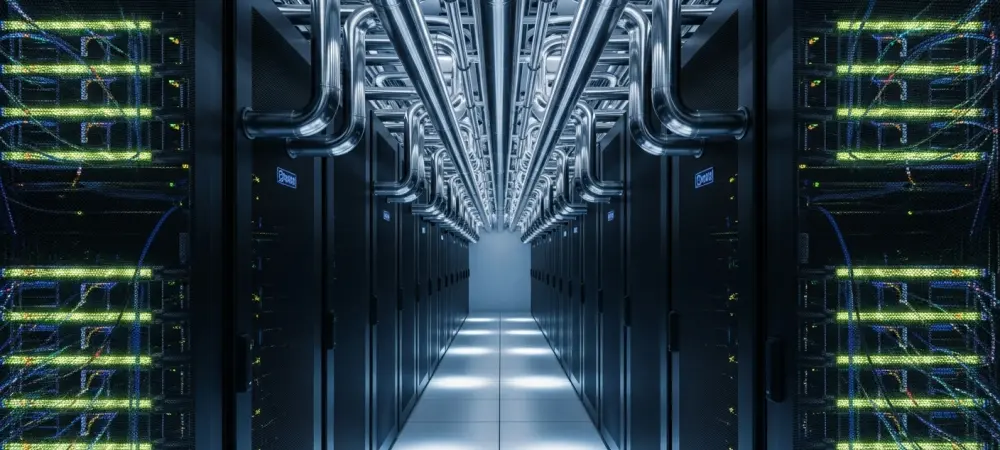
The current seven hundred billion dollar commitment by global hyperscalers to expand artificial intelligence infrastructure represents the single largest concentrated investment in industrial history, yet it rests on a foundation of precarious electrical grids and speculative demand forecasts. Major cloud providers are aggressively scaling up, constructing massive complexes that redefine the limits of industrial architecture. These mega-projects, such as the proposed campus in Utah, serve as critical benchmarks for the industry’s ambition. They represent a fundamental shift in how physical space is utilized, moving from traditional server storage to high-density GPU clusters that require specialized cooling and power delivery systems.
Strategic Shifts and the Data Behind the Expansion
Emergence of Edge Computing and Specialized AI Silicon
While central data centers continue to grow, a subtle but powerful transition toward localized processing is beginning to reshape the compute landscape. Consumer behavior is increasingly favoring devices capable of performing AI tasks on-device, from smartphones to laptops. This shift is driven by the development of more efficient silicon that allows for high-performance inference without the latency or privacy concerns of a round-trip to the cloud.
The rapid fall in inference costs has accelerated this decentralized compute paradigm. As specialized AI silicon becomes more ubiquitous in consumer electronics, the necessity for every minor AI interaction to be routed through a centralized warehouse is diminishing. This transition suggests that the future of AI may not be a single massive brain in a remote desert, but a distributed network of intelligence that lives closer to the end-user.
Quantitative Projections for Compute Demand and Energy Consumption
Market data reveals a widening execution gap between the capital committed to these projects and the operational reality of bringing them online. Current forecasts suggest that the primary constraint will not be software capability or market interest, but the physical availability of electricity. The projected 175-gigawatt supply deficit by 2033 highlights a structural imbalance that could stall the current construction boom if alternative energy sources are not secured.
Furthermore, the industry faces a significant performance indicator mismatch regarding asset lifespans. Traditional real estate assets are designed to remain functional for several decades, but the hardware housed within them becomes obsolete within three to four years. This creates a high-stakes environment where infrastructure must be flexible enough to accommodate multiple generations of rapidly evolving technology without requiring a complete rebuild.
Identifying Structural Vulnerabilities and Physical Constraints
The Looming Power Grid Crisis and Connection Delays
The aging U.S. electrical grid stands as the most formidable barrier to the continued expansion of the data center sector. Designed for a different era, the current infrastructure struggles to support the concentrated power loads required by generative AI workloads. Many developers are encountering multi-year timelines for grid interconnection, which directly impacts project viability and the anticipated returns for investors who expected rapid deployment.
To mitigate these delays, some major players are exploring strategies for energy independence. On-site generation, ranging from massive solar arrays to small modular nuclear reactors, is no longer a futuristic concept but a commercial necessity. These solutions offer a way to bypass the bottlenecks of the public grid, though they introduce their own sets of regulatory and technical challenges that require significant expertise to navigate.
The Financial Fragility of Layered Leasing and Demand Mirages
A rigorous analysis of the current market suggests that some of the reported demand may be a byproduct of layered leasing agreements. In these arrangements, capacity is leased and sub-leased through multiple tiers, which can obscure the actual level of end-user consumption. This structure carries the risk of creating a demand mirage, where the amount of space under contract exceeds the amount of compute power actually being utilized for revenue-generating activities.
Speculative building in secondary markets also poses a significant risk to capital stability. When facilities are constructed in regions that lack a specialized technical workforce or reliable natural resources, they risk becoming white elephants. These expensive, underutilized assets can drag down the balance sheets of infrastructure companies if the anticipated wave of enterprise AI adoption fails to materialize in those specific geographies.
Navigating the Regulatory and Environmental Maze
Local Opposition and the Geopolitics of Resource Permitting
Aggressive expansion is increasingly meeting stiff resistance from local communities concerned about the impact on local resources. Water scarcity is a particularly sensitive issue, as traditional data center cooling methods require millions of gallons of water daily. In regions already facing drought conditions, the competition for water between tech giants and local agriculture is leading to restrictive new regulations and long-term litigation.
Regulatory permissiveness, which once allowed for rapid site selection, is giving way to a more scrutinizing environment. Local governments are beginning to demand more significant contributions to public infrastructure in exchange for permitting rights. Developers who fail to account for these geopolitical shifts may find their projects stalled by legal challenges or unexpected environmental compliance costs late in the construction phase.
Compliance Standards for Sustainable and Resilient Infrastructure
Evolving standards for carbon reporting and energy efficiency are transforming the technology sector from a deregulated frontier into a highly monitored industry. Investors now prioritize facilities that can demonstrate a clear path to net-zero operations. This trend is driving innovation in liquid cooling and heat-reuse technologies, which are becoming standard requirements for any new high-density data center project.
Beyond environmental concerns, security measures have become a paramount focus for protecting high-value AI assets. As these facilities house the proprietary models and sensitive data of the world’s largest corporations, they are increasingly targeted by both physical and cyber threats. Building resilience into the physical architecture—including redundant power feeds and hardened perimeter security—is now a non-negotiable aspect of modern design.
Predicting the Future: Centralized Giants vs. Decentralized Networks
Lessons from History: Avoiding the Fiber-Optic and Railroad Bubbles
Historical parallels provide a cautionary tale for those investing in the current AI build-out. The 19th-century railroad expansion saw massive amounts of capital poured into redundant tracks that eventually led to a market crash. Similarly, the dot-com era fiber-optic boom resulted in thousands of miles of dark fiber that took years to utilize. The current trajectory of data center construction shows signs of similar over-building.
Identifying these signs of redundant capacity requires a careful look at geographic planning. When multiple firms build massive facilities in the same cluster without a clear understanding of the local grid’s limitations, the risk of stranded assets increases. Learning from these historical cycles is essential for developers who wish to avoid the pitfalls of previous infrastructure-driven economic bubbles.
Technological Evolution and the Shift Toward Efficient Inference
Innovation in model training and architecture could ultimately reduce the long-term need for the massive physical footprints currently being planned. If researchers discover ways to train high-performing models using a fraction of the current compute power, the demand for warehouse-scale facilities may peak sooner than expected. This technological evolution favors a more flexible approach to infrastructure that can adapt to changing computational requirements.
Future growth is likely to occur in specialized, smaller-scale data centers optimized for specific industry verticals. Instead of one-size-fits-all warehouses, we may see the rise of purpose-built facilities for healthcare, finance, or autonomous systems. These localized hubs would provide the low latency and high security required for mission-critical AI applications, complementing the larger centralized clouds.
Synthesizing the Path Forward for AI Infrastructure
The report investigated the structural vulnerabilities that threatened the sustainability of the current data center expansion. It found that while the promise of artificial intelligence remained intact, the physical constraints of power delivery and resource management were often underestimated. Investors and developers prioritized rapid growth over long-term stability, which led to significant delays in grid interconnection and a reliance on speculative demand models that lacked transparency.
Strategic recommendations focused on the necessity of diversifying energy sources and embracing the rise of edge computing. The analysis suggested that future success depended on the ability to integrate on-site power generation and modular designs that could withstand rapid hardware obsolescence. By shifting focus from sheer scale to operational resilience, the industry mitigated the risk of creating stranded assets in an increasingly volatile market. Ultimately, the alignment of physical capacity with genuine market demand proved to be the defining challenge for the sector. The transition from a centralized building boom to a more distributed and efficient infrastructure model offered a sustainable path forward. Decision-makers who recognized the importance of local community integration and environmental stewardship secured a competitive advantage as the regulatory landscape matured.